
Chief Justice
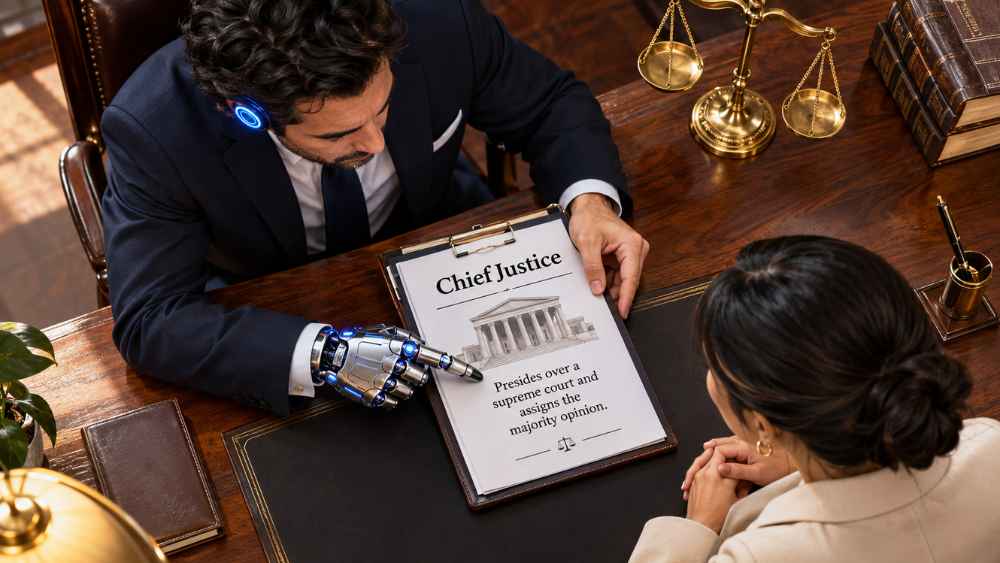
“The Chief Justice presided over the court’s session and, after joining the majority, assigned the opinion to a justice in that majority.”
What Is a Chief Justice?
A Chief JusticeSupreme CourtThe Supreme Court of the United States is the nation’s highest federal court. It reviews selected cases involving the Constitution and federal law, resolves important federal legal questions, and sits at the top...View definition is the presiding justice of a supreme or high court under the governing constitution or statuteStatutory LawStatutory law is written law enacted by a legislative body through the formal lawmaking process. Federal and state statutes can create rights, duties, prohibitions, causes of action, procedures, penalties, and remedies, and courts...View definition .
Responsibilities differ among federal and state systems.
Therefore, the title combines judicial and administrative functions.
Standard Chief Justice — Sample Contract Language
Suppose the U.S. Supreme Court issues a decision with the Chief Justice in the majority.
Who Is the Chief Justice of the United States?
The Chief Justice of the United States presides over the U.S. Supreme Court when participating in a case.
The office also carries national judicial-administration responsibilities.
Therefore, the role extends beyond deciding Supreme Court cases.
What Is the Judicial Conference Role?
The Chief Justice of the United States presides over the Judicial Conference of the United States.
The Conference is the federal judiciary’s national policymaking body.
Therefore, the Chief Justice has an important administrative role. See U.S. Courts on the Judicial Conference.
Does the Chief Justice Control Other Justices’ Votes?
No. Each justice has an independent vote in cases.
The Chief Justice does not command the judicial conclusions of colleagues.
Therefore, presiding status does not create extra merits votes.
What Is Opinion Assignment?
When the Chief Justice is in the majority, the Chief Justice can assign the majority opinionMajority OpinionA majority opinion states the reasoning and result supported by more than half of the judges participating in an appellate decision and can provide binding precedent.View definition .
If not, the most senior justice in the majority generally assigns it.
Therefore, seniority affects opinion administration.
What Happens at Presidential Impeachment Trials?
The Constitution provides that the Chief Justice presides when the President of the United States is tried by the Senate.
The Senate decides the impeachmentCross ExaminationCross Examination is questioning of a witness by an opposing party after direct examination. Federal Rule 611 generally permits leading questions and allows inquiry into the subject of direct testimony and credibility, while...View definition trialLawsuitA lawsuit is a legal dispute brought before a court for a decision or remedy. Civil lawsuits can involve pleadings, service, discovery, motions, settlement, trial, judgment, and possible appeal.View definition .
Therefore, the role is procedural rather than a judicial verdict.
What About State Chief Justices?
State constitutions and statutesPrimary AuthorityPrimary Authority is law issued by an institution with official power to create or state legal rules. Constitutions, statutes, regulations, court decisions, and court rules can be primary authority, while binding effect depends...View definition define each state chief justice’s powers, selection, and term.
Administrative responsibilities can include judicial councils or court-system leadership.
Therefore, state roles vary considerably.
Chief Justice vs. Chief Judge
Chief Justice commonly refers to the head of a supreme court.
Chief JudgeJudgeA Judge is a judicial officer who presides over legal proceedings, applies law, manages procedure, rules on motions and evidence, and issues orders or judgments. Trial, appellate, Article III, magistrate, bankruptcy, and state...View definition is widely used for lower appellate, district, and specialized courts.
Therefore, titles depend on the court.
Chief Justice Example
Suppose the U.S. Supreme Court issues a decision with the Chief Justice in the majority.
The Chief Justice assigns the opinion to a justice in that majority.
Therefore, the office has an internal administrative function in addition to voting.
Why Does the Chief Justice Matter?
The Chief Justice combines ordinary judicial duties with leadership responsibilities for a court or judicial system.
The exact authority is legally defined.
Therefore, the title should not be treated as unlimited supervisory power.