
Court Reporter
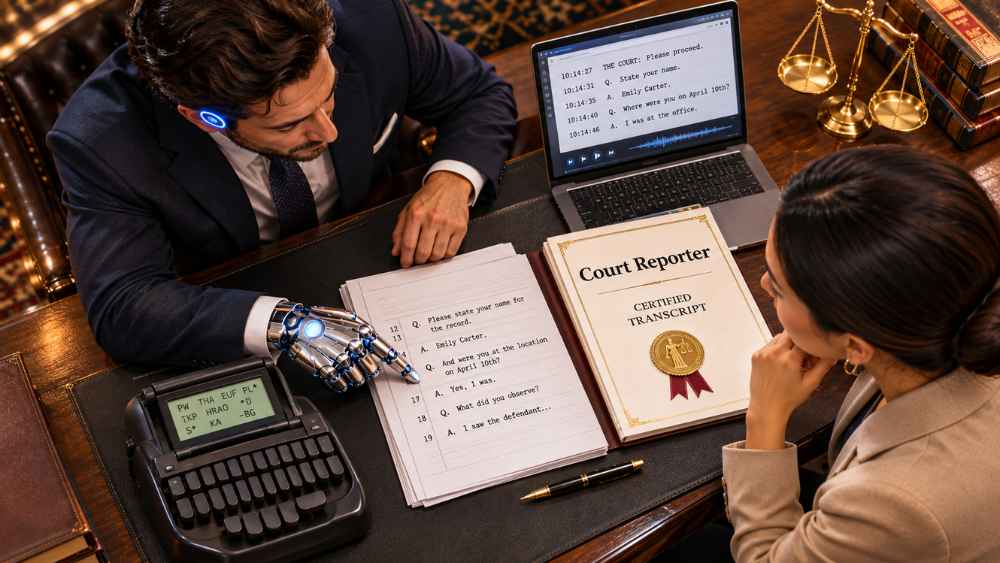
“The Court Reporter recorded the hearing verbatim and later prepared the certified transcript requested for the appeal.”
What Is a Court Reporter?
A Court ReporterDeposition DefinitionA deposition is sworn testimony given outside the courtroom before trial. Attorneys question a witness, called the deponent, while a court reporter records the answers for use in discovery, motions, or trial when...View definition records court proceedings verbatim and can prepare official transcripts.
Federal law and judiciaryBenchThe bench is the judge's raised courtroom desk and is also a common legal term for a judge, group of judges, or the judiciary.View definition policy govern federal courtFederal CourtA federal court is a court within the U.S. federal judicial system. Federal courts have limited jurisdiction, so they hear only cases authorized by the Constitution or federal law, including many federal-question and...View definition reporting.
Therefore, court reporters preserve the spoken record. See Federal Court Reporting Program.
Standard Court Reporter — Sample Contract Language
The reporter records the proceeding and later prepares a requested transcript.
What Proceedings Are Recorded?
Federal law requires recording of criminal proceedings in open court and most other open-court proceedings.
Judges can direct recording of additional proceedings.
Therefore, the official record extends beyond trials.
How Are Proceedings Recorded?
Authorized methods can include stenotype, shorthand, stenomask, or electronic sound recording.
The district judgeFederal District CourtA Federal District Court is a United States trial court that hears federal civil and criminal cases within jurisdiction granted by Congress and the Constitution.View definition selects the permitted method.
Therefore, court reporting is not limited to one technology.
What Is a Transcript?
A transcript is the written verbatim record produced from the proceeding.
Parties can request transcripts subject to applicable fees and procedures.
Therefore, transcripts support appeals, motions, and later review.
What Is Realtime Reporting?
Realtime reporting converts spoken proceedings into near-immediate text during the proceeding.
Availability varies by court and reporter.
Therefore, realtime service is useful but not universal.
What Is the Court Reporter Statute?
28 U.S.C. § 753 governs major federal court-reporting duties and transcript requirements.
Judicial ConferenceChief JusticeA Chief Justice is the presiding justice of a supreme or high court. The Chief Justice of the United States also presides over the Judicial Conference and carries administrative responsibilities beyond ordinary Supreme...View definition policy adds administrative standards.
Therefore, federal reporting is both statutory and procedural.
Who Owns and Preserves the Record?
Court reporters maintain and safeguard required notes, recordings, and transcript materials under law and policy.
Records later become part of court files as required.
Therefore, preservation duties are formal.
Can a Transcript Be Corrected?
Procedures exist for resolving transcript errors or disputes about the record.
The court can play a role when parties disagree.
Therefore, transcript accuracy matters to appellate reviewCourt of AppealsA court of appeals is a court that reviews decisions from lower courts. Federal courts of appeals usually examine the existing record for legal error rather than conducting a new trial or hearing...View definition .
Court Reporter vs. Court Clerk
A court reporter creates the verbatim proceeding record.
A clerk maintains the docket and broader court recordsClerk of CourtA Clerk of Court manages a court’s major nonjudicial functions, including dockets, records, filings, notices, fees, jury administration, and operational systems. The clerk supports judicial work but does not decide the merits of...View definition .
Therefore, the roles are complementary but distinct.
Court Reporter Example
Suppose a witness testifies during a federal trialLawsuitA lawsuit is a legal dispute brought before a court for a decision or remedy. Civil lawsuits can involve pleadings, service, discovery, motions, settlement, trial, judgment, and possible appeal.View definition .
The reporter records the proceeding and later prepares a requested transcript.
Therefore, lawyers can cite the testimony accurately on appeal.
Why Does a Court Reporter Matter?
Court reporters create a reliable record of what occurred in court.
That record supports review, accountability, and procedural fairness.
Therefore, accurate reporting is essential to appellate and trial practice.