
Stare Decisis
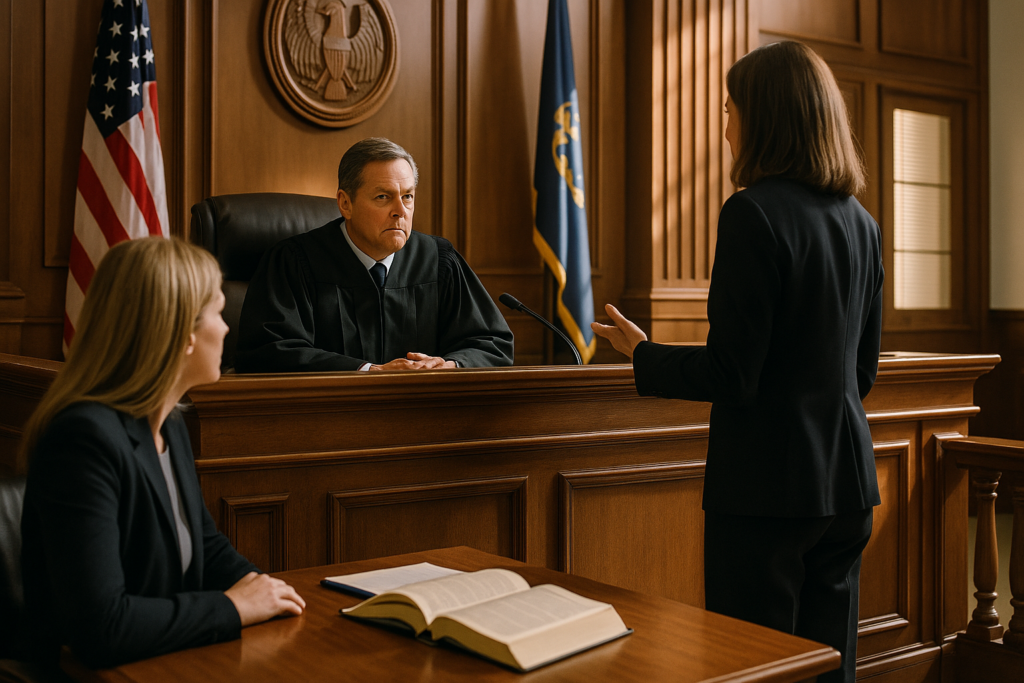
“The district court followed stare decisis and applied the circuit court’s earlier interpretation of the federal statute.”
What Is Stare Decisis?
Stare decisisSupreme CourtThe Supreme Court of the United States is the nation’s highest federal court. It reviews selected cases involving the Constitution and federal law, resolves important federal legal questions, and sits at the top...View definition is the legal doctrineBlack Letter LawBlack letter law means established legal rules that are widely recognized and relatively settled. The phrase describes doctrinal certainty, but lawyers still need controlling authority for the relevant jurisdiction.View definition that courts should follow prior judicial decisionsCase LawCase law is law developed through judicial decisions. Court opinions interpret statutes, constitutions, regulations, contracts, and prior decisions, and some rulings become binding precedent for lower courts.View definition when the same legal issues arise. It supports consistency and predictability.
The phrase comes from Latin and is commonly associated with following precedentMajority OpinionA majority opinion states the reasoning and result supported by more than half of the judges participating in an appellate decision and can provide binding precedent.View definition . However, stare decisis is not an absolute rule.
Cornell Law School’s Legal Information Institute explains stare decisis as the principle of adhering to precedent. See Cornell LII’s stare decisis overview.
Standard Stare Decisis — Sample Contract Language
Suppose a federal circuitCircuit CourtCircuit Court can mean different institutions depending on the jurisdiction. In federal practice, the phrase commonly refers to a U.S. Court of Appeals, while many states use circuit court for a general-jurisdiction trial...View definition has already interpreted a statuteStatutory LawStatutory law is written law enacted by a legislative body through the formal lawmaking process. Federal and state statutes can create rights, duties, prohibitions, causes of action, procedures, penalties, and remedies, and courts...View definition in a published opinion. A district courtDistrict CourtA U.S. district court is the primary trial court in the federal court system. District courts hear qualifying federal civil and criminal cases, decide motions, conduct trials, and enter judgments that may later...View definition later faces the same legal question.
What Does Stare Decisis Mean?
Stare decisis means courts generally respect earlier rulings on the same legal question. The doctrine helps similar cases receive similar treatment.
For example, a lower court usually follows a controlling appellate decision on the same issue.
Therefore, precedent can constrain judicial decision-making.
How Does Stare Decisis Work?
Courts first identify relevant earlier decisions. They then determine whether those cases are binding or persuasive.
If binding precedentMandatory AuthorityMandatory authority is law a court must follow when applicable. Its binding force depends on jurisdiction, hierarchy, subject matter, and current validity, so researchers must distinguish it from merely persuasive authority.View definition squarely controls, a lower court usually follows it. If the facts differ materially, the court may distinguish the earlier case.
Therefore, applying stare decisis often requires careful comparison.
What Is Vertical Stare Decisis?
Vertical stare decisis requires lower courts to follow controlling decisions from higher courts within the same hierarchy.
For example, a U.S. district courtFederal District CourtA Federal District Court is a United States trial court that hears federal civil and criminal cases within jurisdiction granted by Congress and the Constitution.View definition generally follows controlling precedent from its federal circuit court.
It must also follow U.S. Supreme Court holdings on federal law.
What Is Horizontal Stare Decisis?
Horizontal stare decisisLegal PrecedentLegal precedent is an earlier court decision that guides or controls later courts addressing similar legal issues. Whether a precedent is binding depends on court hierarchy, jurisdiction, the issue decided, and the later...View definition concerns whether a court follows its own prior decisions. This issue often arises in appellate courts.
For example, the Supreme Court can consider whether to retain or overrule one of its own precedents.
Therefore, horizontal stare decisis allows more room for reconsideration than vertical stare decisis.
Why Does Stare Decisis Matter?
Stare decisis promotes stability in the legal system. People and businesses can rely more confidently on settled legal rules.
It also supports equal treatment across similar disputes. In addition, it can reduce repeated litigationLegal DisputeA legal dispute is a disagreement or controversy involving claimed legal rights, duties, liabilities, property, or remedies. It can be resolved through negotiation, mediation, arbitration, administrative proceedings, litigation, or settlement depending on the...View definition over already resolved legal questions.
However, excessive rigidity can preserve outdated or incorrect rules.
Is Stare Decisis Legally Binding?
Binding precedent can require lower courts to follow higher courts. Therefore, vertical stare decisis has strong practical force.
However, a court considering its own precedent can have authority to overrule it.
The exact force of precedent depends on court hierarchy and jurisdiction.
What Is Binding Precedent?
Binding precedent is an earlier decision that a court must follow. It usually comes from a higher court with authority over the later court.
For example, a state trial courtCourt of Common PleasA Court of Common Pleas is a state trial court name used in several jurisdictions; its exact jurisdiction depends on state law and local court structure.View definition generally follows its state supreme courtState Supreme CourtA State Supreme Court is usually the highest court in a state's judicial system and the final authority on state-law questions. It commonly exercises discretionary appellate review, creates binding state precedent, and can...View definition on state-law questions.
Therefore, identifying the issuing court is essential.
What Is Persuasive Precedent?
Persuasive precedent can influence a court without binding it. It may come from another jurisdiction or a lower court.
For example, one federal circuit can consider another circuit’s reasoning.
However, the court can reject persuasive authorityRestatement of LawA Restatement of Law is an American Law Institute publication that organizes and explains legal doctrine, especially common law. Restatements are persuasive rather than automatically binding, although courts can adopt particular Restatement rules...View definition when another approach is more convincing.
Can a Court Overrule Precedent?
Yes. A court with authority can overrule an earlier decision in a later case.
Overruling means the earlier legal rule no longer controls to the extent rejected.
However, courts often consider stare decisis before changing settled law.
What Factors Can Matter When Overruling Precedent?
The factors vary by court and legal context. Courts can consider workability, reliance, legal development, and consistency with other law.
For example, a precedent that creates repeated confusion can face criticism for poor workability.
However, no single universal formula governs every overruling decision.
What Does Distinguishing a Case Mean?
A court distinguishes a precedent when meaningful factual or legal differences make the earlier rule inapplicable.
For example, an earlier contract case may involve materially different language.
Therefore, the later court can reach a different result without overruling the earlier case.
What Is the Difference Between Overruling and Distinguishing?
Overruling rejects an earlier legal rule. Distinguishing accepts the earlier rule but finds that it does not govern the new facts.
Therefore, distinguishing preserves the precedent while limiting its application.
What Is the Holding of a Case?
The holdingCase BriefA case brief is a structured summary of a judicial opinion covering material facts, procedure, issue, rule, holding, reasoning, and disposition.View definition is the legal rule necessary to decide the case. Holdings can create precedent.
By contrast, unnecessary comments are generally called dicta.
Therefore, stare decisis applies most strongly to actual holdings.
Does Dicta Create Binding Precedent?
Generally, dicta do not bind later courts like a holding. However, dicta from a higher court can still be highly persuasive.
Therefore, lawyers must identify which parts of an opinion were necessary to the decision.
Stare Decisis in the Supreme Court
The Supreme Court follows stare decisis but can overrule its own precedents. The doctrine therefore promotes continuity without making prior decisions permanent.
For example, the Court can reconsider constitutional precedent in a later case.
However, overruling usually receives detailed legal analysisLegal MemorandumA legal memorandum is an organized written analysis of a legal issue based on facts, research, and relevant authority. It typically frames the question, states a brief answer, presents material facts, analyzes governing...View definition .
Stare Decisis in Federal Courts
Federal district courts follow controlling Supreme Court and circuit precedentBinding PrecedentBinding Precedent is a judicial holding that a lower court must follow when it controls the legal issue within the relevant hierarchy and jurisdiction. Its force depends on the deciding court, the actual...View definition . Federal courts of appeals also follow Supreme Court
Circuit courts generally treat their own published precedents as binding unless overruled through an authorized process.
Therefore, federal courtFederal CourtA federal court is a court within the U.S. federal judicial system. Federal courts have limited jurisdiction, so they hear only cases authorized by the Constitution or federal law, including many federal-question and...View definition hierarchy strongly shapes stare decisis.
Stare Decisis in State Courts
State courts apply their own precedent rules. A state’s highest court has final authority over that state’s law.
Lower state courts generally follow controlling decisions from higher courts in the same system.
Therefore, state-law research must focus on the relevant state hierarchy.
Stare Decisis vs. Res Judicata
Stare decisis concerns the precedential effect of earlier legal decisions. Res judicata concerns the final effect of a judgmentCivil LawsuitA civil lawsuit is a noncriminal court action in which a plaintiff seeks a legal remedy from a defendant. The process can include jurisdiction, pleadings, service, discovery, motions, settlement, trial, judgment, enforcement, and...View definition on the parties.
Therefore, stare decisis can affect later cases involving different parties.
Res judicata instead focuses on claims already resolved between particular parties or their privies.
Stare Decisis vs. Law of the Case
Law of the case concerns rulings made earlier in the same litigation. Stare decisis concerns precedent from earlier judicial decisions.
Therefore, the doctrines operate at different levels.
Stare Decisis Example
Suppose a federal circuit has already interpreted a statute in a published opinion. A district court later faces the same legal question.
Under vertical stare decisis, the district court follows the circuit’s controlling rule.
However, a party can still argue that the new case is materially different.
Why Is Stare Decisis Important?
Stare decisis helps make law more stable and predictable. Therefore, courts do not start from zero each time the same legal question appears.
However, the doctrine still allows legal change through distinguishing and overruling.
The key questions are practical. What precedent exists? Is it binding? What did it actually hold? Has it been overruled or limited?