
Workers Compensation
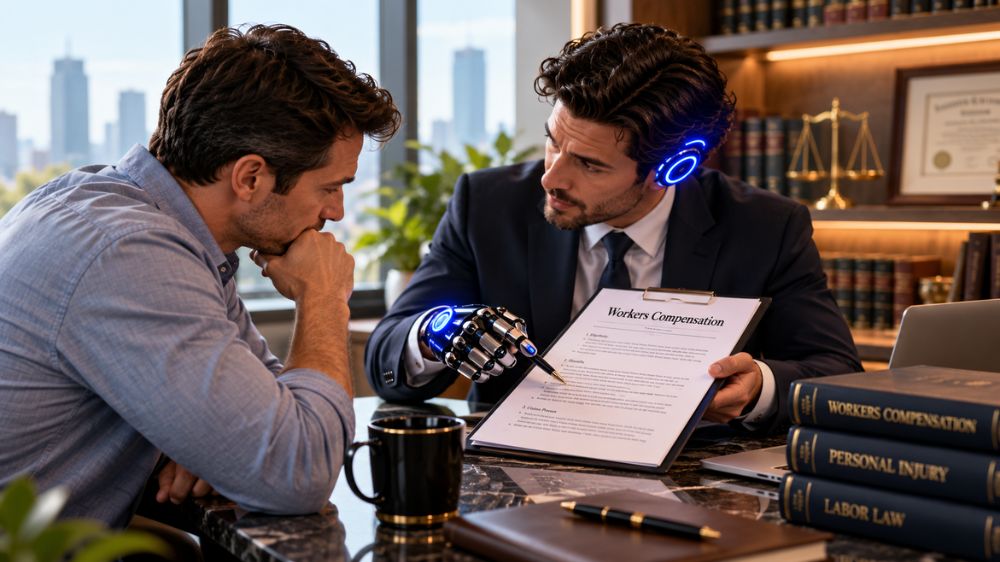
“The employee filed a workers compensation claim after suffering a job-related injury that required medical treatment and time away from work.”
What Is Workers Compensation?
Workers compensation is a system that provides benefits for many job-related injuries and illnesses. It can cover medical care, partial wage replacement, disability benefits, and death benefits.
Most workers compensation programs are governed by state law. Therefore, eligibility, benefits, deadlines, and procedures vary by jurisdictionLegal DisputeA legal dispute is a disagreement or controversy involving claimed legal rights, duties, liabilities, property, or remedies. It can be resolved through negotiation, mediation, arbitration, administrative proceedings, litigation, or settlement depending on the...View definition .
The U.S. Department of Labor also administers several federal programs. See the Office of Workers’ Compensation Programs.
Standard Workers Compensation — Sample Contract Language
Suppose a warehouse worker falls from a ladder while performing assigned duties. The worker breaks an arm and misses several weeks of work.
How Does Workers Compensation Work?
An injured employee usually reports the injury and starts a claim. The employer or insurer then reviews the claim under the applicable rules.
If the claim qualifies, the worker can receive benefits allowed by law. However, the exact process differs by state or federal program.
What Injuries Can Workers Compensation Cover?
Workers compensation can cover sudden workplace accidents and some occupational illnesses. For example, a warehouse worker may hurt a back while lifting equipment.
In addition, repeated workplace exposure can cause a covered occupational disease. The worker must still satisfy the required work connection.
What Benefits Can Workers Compensation Provide?
- Medical benefits: Payment for qualifying treatment related to the work injury.
- Temporary disability: Partial wage replacement while the worker recovers.
- Permanent disability: Benefits for lasting impairment under applicable law.
- Vocational rehabilitation: Help returning to suitable work when available.
- Death benefits: Benefits for qualifying dependents after a work-related death.
Therefore, workers compensation can provide more than medical reimbursement alone.
Who Is Covered?
Many employees fall within state workers compensation systems. However, exemptions can apply to certain workers or businesses.
For example, some laws treat business owners, agricultural workers, or domestic workers differently. Federal employees use a separate federal program.
Are Independent Contractors Covered?
True independent contractors are often outside ordinary employee coverage. However, the label in a contract does not always control.
Courts and agencies can examine the actual working relationship. Therefore, worker misclassificationIndependent ContractorAn independent contractor is a self-employed person or business providing services without employee status under the applicable legal test. Classification depends on actual facts, and tax, wage, labor, and state laws can use...View definition can become important in a claim.
Do You Have to Prove Employer Negligence?
Usually, no. Workers compensation generally does not require the same negligenceBreach of DutyA breach of duty occurs when a person or entity fails to meet a legal duty owed to another person. In negligence cases, breach is usually one element alongside duty, causation, and damages,...View definition proof as a personal injury lawsuitLawsuitA lawsuit is a legal dispute brought before a court for a decision or remedy. Civil lawsuits can involve pleadings, service, discovery, motions, settlement, trial, judgment, and possible appeal.View definition .
The worker instead focuses on coverage and whether the injury is work-related. However, statutory defenses and exclusions can still apply.
Can You Sue Your Employer?
Workers compensation often provides the main remedyCause of ActionA Cause of Action is a recognized set of legal elements supporting a right to judicial relief. Its elements can arise from statutes, constitutions, regulations, or case law, and the claimant generally must...View definition against an employer for a covered injury. This is commonly called the exclusive remedyLiquidated DamagesLiquidated damages are a contractually agreed amount or formula payable after a specified breach. Courts generally enforce them when they reasonably compensate for difficult-to-measure losses rather than operating as an unlawful penalty.View definition rule.
However, exceptions vary by state. Therefore, a separate lawsuit can still exist in limited situations.
Can You Sue a Third Party?
Sometimes. A work injury can involve someone other than the employer.
For example, a delivery worker injured by another driver may have both a compensation claim and a third-party claim. Reimbursement or lien rules can then affect recovery.
What Is a Workers Compensation Claim?
A workers compensation claim is the formal request for benefits. Filing requirements can include accident reports, medical records, and wage information.
Therefore, prompt reporting and accurate documentation are important.
How Soon Should an Injury Be Reported?
Workers should generally report job injuries promptly. State laws can impose specific notice deadlines.
A late report can affect legal rights. Therefore, the applicable deadline should be checked quickly.
What Is Maximum Medical Improvement?
Maximum medical improvement, or MMI, generally means the condition has stabilized. Further major improvement is not expected from treatment.
MMI can affect disability ratings and benefit decisions. However, its legal effect varies by jurisdiction.
Can a Claim Be Denied?
Yes. An employer or insurer can dispute work connection, notice, employee status, medical causation, or another requirement.
However, a denial can often be challenged through an administrative appealCourt of AppealsA court of appeals is a court that reviews decisions from lower courts. Federal courts of appeals usually examine the existing record for legal error rather than conducting a new trial or hearing...View definition process.
Can an Employer Retaliate for Filing a Claim?
Many jurisdictions prohibit retaliationEqual Employment Opportunity Commission (EEOC)The Equal Employment Opportunity Commission (EEOC) is the federal agency that enforces major U.S. employment discrimination laws, investigates charges, promotes voluntary resolution, and may litigate violations.View definition for exercising workers compensation rights. Therefore, firing or punishing a worker because of a lawful claim can create separate liability.
The exact protection depends on state or federal law.
Workers Compensation vs. Disability Insurance
Workers compensation focuses on covered job-related conditions. Disability insurance can cover qualifying disabilities from other causes.
Therefore, the source of the condition matters.
Workers Compensation Example
Suppose a warehouse worker falls from a ladder while performing assigned duties. The worker breaks an arm and misses several weeks of work.
The employee reports the accident and files a claim. If covered, the system may pay medical expensesCompensatory DamagesCompensatory Damages reimburse proven loss or injury and are often called actual damages. They can include economic and noneconomic losses, subject to causation, certainty, foreseeability, mitigation, statutory limits, and the governing measure of...View definition and wage benefits.
Why Does Workers Compensation Matter?
Workers compensation creates a structured system for workplace injuries and illnesses. Therefore, workers can often seek benefits without proving ordinary negligence.
However, deadlines and benefits vary by jurisdiction. Coverage, work connection, and timely filing all matter.