
Cause of Action
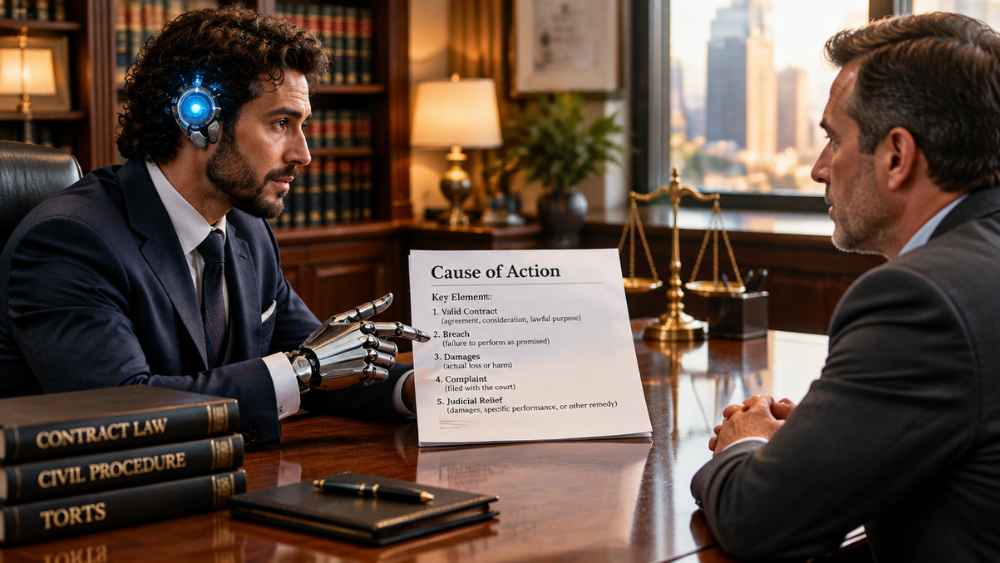
“The complaint pleaded a breach-of-contract Cause of Action by alleging a valid agreement, the defendant’s breach, and resulting losses.”
What Is a Cause of Action?
A cause of actionLegal DisputeA legal dispute is a disagreement or controversy involving claimed legal rights, duties, liabilities, property, or remedies. It can be resolved through negotiation, mediation, arbitration, administrative proceedings, litigation, or settlement depending on the...View definition is a recognized set of legal elementsPrima FaciePrima Facie means that evidence is sufficient on its face to establish a claim, fact, or legal issue unless rebutted. The required showing depends on the cause of action, statute, or procedural doctrine.View definition that supports a right to judicial relief.
The elements can arise from statutesPrimary AuthorityPrimary Authority is law issued by an institution with official power to create or state legal rules. Constitutions, statutes, regulations, court decisions, and court rules can be primary authority, while binding effect depends...View definition , constitutions, regulations, or judicial precedentMajority OpinionA majority opinion states the reasoning and result supported by more than half of the judges participating in an appellate decision and can provide binding precedent.View definition .
Therefore, a plaintiffCivil CourtCivil court is a general term for a court handling noncriminal disputes involving people, businesses, organizations, or government entities. Civil cases can involve contracts, injuries, property, employment, civil rights, and other disputes and...View definition must connect facts to each required element. See Cornell LII’s cause of action overview.
Standard Cause of Action — Sample Contract Language
Suppose a seller breaches a signed supply agreementSupply AgreementA Supply Agreement governs recurring purchases of goods and defines specifications, pricing, forecasts, orders, delivery, quality, warranties, shortages, and change control.View definition and causes measurable losses.
Cause of Action vs. Claim
Courts often use “claim” and “cause of action” in related ways.
A claim can refer more broadly to requested legal relief based on facts.
Therefore, terminology varies by procedural context.
What Are Elements of a Cause of Action?
Elements are the required facts or legal propositions a claimantPlaintiffA Plaintiff is the party who initiates a civil lawsuit and asks a court for legal relief. The plaintiff generally files the complaint, establishes standing and jurisdiction, serves the defendant, proves the elements...View definition must establish.
Each cause of action has its own element list.
Therefore, missing one required element can defeat the claim.
Where Do Elements Come From?
Elements can come from statutes, regulations, constitutional provisions, or case lawCase LawCase law is law developed through judicial decisions. Court opinions interpret statutes, constitutions, regulations, contracts, and prior decisions, and some rulings become binding precedent for lower courts.View definition .
Some claims combine statutory text with judicial interpretation.
Therefore, researchers should identify the authoritative source for every element.
What Is a Statutory Cause of Action?
A statutory cause of action arises from legislationStatutory LawStatutory law is written law enacted by a legislative body through the formal lawmaking process. Federal and state statutes can create rights, duties, prohibitions, causes of action, procedures, penalties, and remedies, and courts...View definition creating enforceable rights or remedies.
The statute can define elements, defenses, damagesLegal RemedyA legal remedy is the relief a court or other authorized tribunal can provide after a legal right has been violated. Remedies can include damages, injunctions, restitution, specific performance, rescission, declarations, and other...View definition , and deadlines.
Therefore, statutory text should be read before relying on case summaries.
What Is a Common-Law Cause of Action?
A common-law cause of action develops through judicial decisions rather than a single statute.
Examples can include negligenceBreach of DutyA breach of duty occurs when a person or entity fails to meet a legal duty owed to another person. In negligence cases, breach is usually one element alongside duty, causation, and damages,...View definition , fraud, and conversion.
Therefore, state precedent often defines the elements.
What Is a Constitutional Cause of Action?
Some lawsuits seek relief for constitutional violations through authorized legal mechanisms.
The available cause of action can depend on statutes and Supreme CourtSupreme CourtThe Supreme Court of the United States is the nation’s highest federal court. It reviews selected cases involving the Constitution and federal law, resolves important federal legal questions, and sits at the top...View definition doctrine.
Therefore, a constitutional right does not always create an automatic damages claim.
What Is a Private Right of Action?
A private right of action allows a private person to sue to enforce a legal right.
Some statutes expressly create private actions.
Therefore, statutory violation alone does not always authorize private litigation.
What Is an Implied Right of Action?
An implied right of action is a judicially recognized suit not expressly stated in statutory text.
Modern federal courts approach implication cautiously.
Therefore, researchers should look first for express enforcement language.
What Is Standing?
StandingJudicial ReviewJudicial review is the power of courts to examine government action and determine whether it complies with the Constitution, statutes, and other controlling law. It can apply to legislation, executive action, and administrative...View definition asks whether the plaintiff has a sufficient personal stake to invoke judicial power.
Standing differs from whether the plaintiff states a valid cause of action.
Therefore, a plaintiff can have standing yet lose on the merits.
Cause of Action vs. Standing
Standing concerns the proper party and judicial controversy.
Cause of action concerns whether law authorizes relief on the alleged facts.
Therefore, both issues can arise independently.
Cause of Action vs. Remedy
A cause of action establishes a legal basis for relief.
A remedy is the relief available if the claim succeeds.
Therefore, damages, injunctions, and declarations are remedies rather than causes of action by themselves.
Cause of Action vs. Defense
A cause of action seeks affirmative relief.
A defense defeats or limits another party’s claim.
Therefore, the same facts can sometimes support both a defense and a separate claim.
What Is a Complaint?
A complaintCivil LawsuitA civil lawsuit is a noncriminal court action in which a plaintiff seeks a legal remedy from a defendant. The process can include jurisdiction, pleadings, service, discovery, motions, settlement, trial, judgment, enforcement, and...View definition is the pleadingPleadingA pleading is a formal court document stating a party’s claims, defenses, or responses in a civil case. Federal Rules 7 and 8 identify permitted pleadings and govern claims, admissions, denials, affirmative defenses,...View definition that usually begins a federal civil action.
It states claims for relief and the factual basis supporting them.
Therefore, causes of action are commonly pleaded in separate counts.
What Does Rule 8 Require?
Federal Rule of Civil Procedure 8 requires a short and plain statement showing entitlement to relief.
It also requires a demand for the relief sought.
Therefore, federal pleading begins with Rule 8. See Federal Rule of Civil Procedure 8.
What Is Plausibility Pleading?
Federal complaints must allege enough factual matter to state a plausible claim for reliefComplaintA Complaint is the pleading that ordinarily begins a civil lawsuit and states the plaintiff’s claims for relief. Federal complaints generally identify jurisdiction, factual allegations, legal claims, and requested relief while complying with...View definition .
Legal conclusions alone receive less weight.
Therefore, pleading should connect concrete facts to required elements.
What Is Rule 12(b)(6)?
Rule 12(b)(6)Motion to DismissA motion to dismiss asks a court to end all or part of a case because of a legal or procedural defect. In federal civil cases, Rule 12 lists grounds including jurisdiction, venue,...View definition allows dismissal when a pleading fails to state a legally sufficient claim for relief.
The court generally tests legal sufficiency rather than resolving disputed facts.
Therefore, pleading defects can end a cause of action early. See Federal Rule of Civil Procedure 12.
What Is Failure to State a Claim?
A complaint fails to state a claim when the alleged facts do not support a legally recognized right to relief.
Missing elements can create that defect.
Therefore, identifying elements before drafting is essential.
What Is a Count?
A count is a separately organized claim within a complaint or counterclaimAnswer to ComplaintAn Answer to Complaint is the defendant’s formal pleading responding to a civil complaint. It typically admits or denies allegations, states insufficient knowledge where appropriate, asserts defenses, and can include counterclaims, jury demands,...View definition .
One lawsuitLawsuitA lawsuit is a legal dispute brought before a court for a decision or remedy. Civil lawsuits can involve pleadings, service, discovery, motions, settlement, trial, judgment, and possible appeal.View definition can contain several counts.
Therefore, each count should identify its legal theory and supporting facts clearly.
Can One Event Create Multiple Causes of Action?
Yes. The same conduct can support contract, tort, statutory, or equitable claims.
Alternative theories can sometimes be pleaded together.
Therefore, issue spotting should consider overlapping legal duties.
What Is Alternative Pleading?
Federal rules allow parties to plead alternative or inconsistent theories in qualifying circumstances.
The claimant does not always need to choose one theory at the outset.
Therefore, early pleading can preserve several legal paths.
What Is a Negligence Cause of Action?
Negligence generally requires duty, breach, causation, and damages.
State law defines the precise elements and standards.
Therefore, negligence pleading must match local lawOrdinanceAn Ordinance is a law enacted by a municipality or other authorized local government. Local authority depends on state constitutions, statutes, charters, home-rule rules, Dillon’s Rule principles, and preemption, while ordinances commonly govern...View definition .
What Is a Breach of Contract Cause of Action?
A contract claimContract DisputeA contract dispute is a disagreement about contract formation, meaning, performance, breach, termination, or remedies.View definition generally requires a valid agreement, breach, and resulting harm or entitlement to relief.
State law can require additional elements.
Therefore, the contract and governing lawBoilerplate ClauseA boilerplate clause is standardized contract language addressing recurring legal mechanics such as notice, assignment, governing law, waiver, severability, and integration.View definition should be reviewed together.
What Is a Fraud Cause of Action?
Fraud generally requires a material misrepresentation, required fault, reliance, and resulting injury.
Federal Rule 9(b) imposes heightened particularity for fraud allegations.
Therefore, fraud pleading demands more detail than ordinary Rule 8 pleading.
What Is a Declaratory Cause of Action?
A party can seek a declarationSummary JudgmentSummary judgment is a court ruling entered without a full trial when no genuine dispute exists over any material fact and the moving party is entitled to judgment as a matter of law....View definition of legal rights under authorized declaratory-judgment law.
The declaration is a remedy tied to an actual controversyDeclaratory ReliefDeclaratory relief is a binding judicial declaration of the parties' legal rights or obligations without necessarily ordering damages or specific conduct.View definition .
Therefore, jurisdiction and justiciabilityDeclaratory JudgmentA Declaratory Judgment is a court judgment stating the parties’ legal rights or obligations in an actual controversy. Federal declaratory relief arises under 28 U.S.C. §§ 2201–2202 and Rule 57, but it does...View definition remain necessary.
What Is a Counterclaim Cause of Action?
A defendant can assert its own cause of action against an opposing party as a counterclaim.
Rule 13CounterclaimA Counterclaim is a claim asserted against an opposing party within the same lawsuit. Federal Rule 13 distinguishes compulsory counterclaims arising from the same transaction or occurrence from permissive counterclaims, while jurisdiction, pleading,...View definition governs federal counterclaims.
Therefore, some causes of action appear in responsive pleadings rather than complaints.
What Is Accrual?
Accrual identifies when a cause of action comes into existence for limitations purposes.
The rule varies by claim and jurisdiction.
Therefore, accrual is critical to deadline analysis.
What Is a Statute of Limitations?
A statute of limitationsStatute of LimitationsA statute of limitations is a law that sets a deadline for starting a legal claim. The deadline varies by jurisdiction and claim type, and rules about accrual, discovery, tolling, or repose can...View definition sets a filing deadline after a cause of action accrues.
Different claims can have different periods.
Therefore, every cause of action should be checked for timing.
What Is Tolling?
Tolling pauses or extends a limitations period under recognized rules.
Grounds vary by jurisdiction and claim.
Therefore, tolling should never be assumed.
What Is Preemption?
Federal law can preempt state causes of action in some fields.
State statutes can also displace common-law remedies.
Therefore, legal theories should be checked for preemption.
What Is Claim Preclusion?
Claim preclusion can bar later litigation of claims arising from the same transaction after final judgmentTrial CourtA Trial Court is a court where parties present evidence, establish facts, and obtain an initial judgment or verdict. Federal district courts are the primary federal trial courts, while state systems use varied...View definition .
Rules vary across jurisdictions.
Therefore, parties should bring related causes of action when required.
What Is Issue Preclusion?
Issue preclusionEstoppelEstoppel is a family of doctrines preventing a party from asserting a position when law treats that position as unfair, inconsistent, or already resolved. Major forms include equitable, promissory, collateral, judicial, and silence-based...View definition can bar relitigation of an issue actually decided in earlier litigation.
It differs from barring an entire claim.
Therefore, prior judgments can affect later causes of action.
Can a Cause of Action Be Assigned?
Some causes of action can be transferred or assigned.
Others cannot be assigned because of public policy or personal nature.
Therefore, assignmentAssignmentAssignment transfers a contractual right or other legal interest from an assignor to an assignee. Most rights can be assigned, but contract restrictions, personal rights, material changes to the obligor’s burden, notice, defenses,...View definition depends on claim type and state law.
Can a Cause of Action Survive Death?
SurvivalRepresentations and WarrantiesRepresentations and Warranties are contractual statements about facts, authority, condition, compliance, or performance. They allocate information risk and often work with disclosure schedules, knowledge and materiality qualifiers, closing conditions, survival periods, indemnification, and...View definition statutes determine whether particular claims continue after a party dies.
Some personal claims receive special treatment.
Therefore, estate litigation requires statute-specific analysis.
What Damages Can a Cause of Action Support?
Damages depend on the legal theory, proven loss, statutory rules, and contractual limits.
Some causes of action also allow statutory or punitive damagesBad FaithBad Faith generally involves dishonesty, improper purpose, unfair dealing, or conscious disregard of a legal duty. Contract, insurance, litigation, bankruptcy, and corporate law use different bad-faith standards and remedies.View definition .
Therefore, remedy analysis should follow the claim elements.
Can a Cause of Action Support an Injunction?
Yes, when substantive law and equitable standards permit injunctive reliefTemporary Restraining OrderA Temporary Restraining Order is short-term emergency injunctive relief intended to prevent immediate harm until a court can consider longer-lasting relief. Federal TROs are governed by Rule 65’s notice, duration, and procedural requirements.View definition .
Not every claim supports an injunctionCease and Desist LetterA cease and desist letter is a written demand asking a person or business to stop specified allegedly unlawful or harmful conduct. It is generally not a court order, but it can provide...View definition .
Therefore, the requested remedy should fit the legal right.
Cause of Action Example
Suppose a seller breaches a signed supply agreement and causes measurable losses.
The buyer can plead a breach-of-contract cause of action using the governing state’s elements.
Therefore, the complaint should allege facts supporting each element.
Why Does Cause of Action Matter?
The cause of action organizes the legal elements a claimant must plead and prove.
It also shapes defenses, remedies, deadlines, and jurisdictional questions.
Therefore, accurate element analysis is the foundationDirect ExaminationDirect Examination is questioning of a witness by the party that called the witness. It generally uses nonleading questions to establish personal knowledge, foundation, facts, exhibits, and expert opinions before cross-examination.View definition of civil litigationCivil LitigationCivil Litigation is the court process for resolving noncriminal disputes through pleadings, motions, discovery, settlement, trial, judgment, and possible appeal. Federal civil litigation follows the Federal Rules of Civil Procedure, while state systems...View definition .