
Civil Litigation
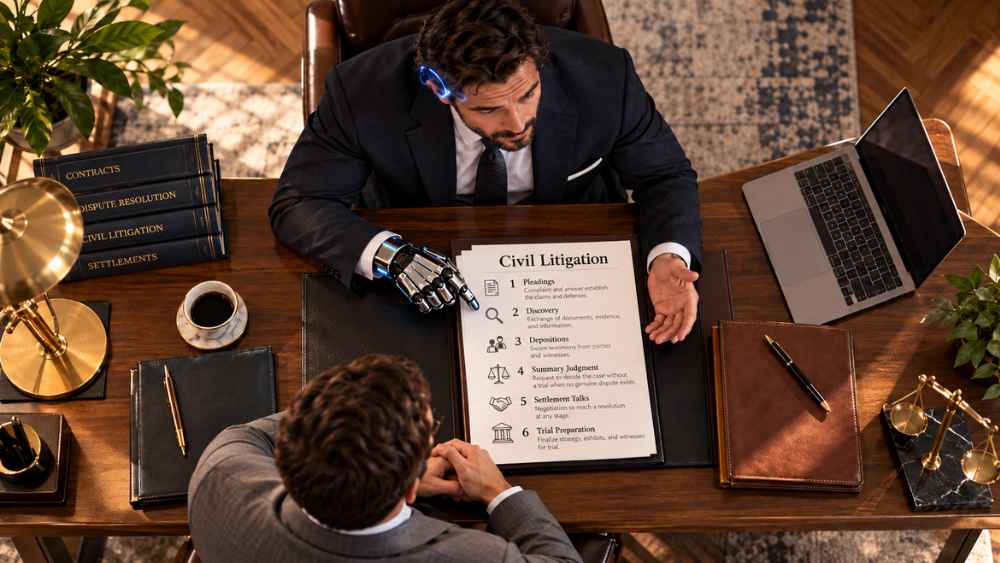
“The contract dispute proceeded through Civil Litigation involving pleadings, discovery, depositions, summary judgment, settlement talks, and trial preparation.”
What Is Civil Litigation?
Civil LitigationLegal DisputeA legal dispute is a disagreement or controversy involving claimed legal rights, duties, liabilities, property, or remedies. It can be resolved through negotiation, mediation, arbitration, administrative proceedings, litigation, or settlement depending on the...View definition is the court process used to resolve noncriminal legal disputes.
It can involve contracts, torts, employment, property, business, civil rights, and many other claims.
Therefore, civil litigation covers a broad range of lawsuits.
Standard Civil Litigation — Sample Contract Language
The case proceeds through pleadings, discoveryCivil CourtCivil court is a general term for a court handling noncriminal disputes involving people, businesses, organizations, or government entities. Civil cases can involve contracts, injuries, property, employment, civil rights, and other disputes and...View definition , summary-judgment motions, settlement discussions, and possibly trialLawsuitA lawsuit is a legal dispute brought before a court for a decision or remedy. Civil lawsuits can involve pleadings, service, discovery, motions, settlement, trial, judgment, and possible appeal.View definition .
Civil Litigation vs. Criminal Litigation
Civil litigation generally seeks private or governmental remedies rather than criminal punishment.
Criminal cases are prosecuted by government authorities for alleged offenses.
Therefore, burdens, procedures, and consequences differ.
Who Are the Parties?
The party bringing a civil claim is generally the plaintiff.
The responding party is generally the defendant.
Therefore, each side carries different pleadingPleadingA pleading is a formal court document stating a party’s claims, defenses, or responses in a civil case. Federal Rules 7 and 8 identify permitted pleadings and govern claims, admissions, denials, affirmative defenses,...View definition and proof responsibilities.
How Does Federal Civil Litigation Begin?
Federal Rule of Civil Procedure 3 states that a civil actionCivil LawsuitA civil lawsuit is a noncriminal court action in which a plaintiff seeks a legal remedy from a defendant. The process can include jurisdiction, pleadings, service, discovery, motions, settlement, trial, judgment, enforcement, and...View definition begins by filing a complaint.
The complaint then must satisfy pleading and service requirements.
Therefore, filing starts the formal federal case. See Federal Rule of Civil Procedure 3.
What Is a Complaint?
A complaint states jurisdiction, factual allegations, legal claims, and requested relief.
Federal Rule 8Cause of ActionA Cause of Action is a recognized set of legal elements supporting a right to judicial relief. Its elements can arise from statutes, constitutions, regulations, or case law, and the claimant generally must...View definition generally requires a short and plain statement of the claim.
Therefore, the complaint frames the litigation. See Federal Rule of Civil Procedure 8.
What Is Service of Process?
Service of processAffidavit of ServiceAn affidavit of service is a sworn statement documenting how and when legal papers were served and can provide proof of notice for jurisdiction, deadlines, and court procedure.View definition delivers the summons and complaintService of ProcessService of Process is the formal delivery of court papers through legally authorized procedures. Federal Rule 4 governs service of the summons and complaint, who may serve, methods for different defendants, waiver, proof,...View definition through legally authorized procedures.
Federal Rule 4SummonsA summons is a court-issued document notifying a defendant that a lawsuit has been filed and requiring a response. In federal civil cases, Rule 4 governs summons contents, issuance, service, waiver, proof of...View definition governs initial service in federal civil casesCivil DivisionA Civil Division is a court unit handling noncriminal disputes, with jurisdiction and procedures that vary by court system and locality.View definition .
Therefore, filing and service are separate steps. See Federal Rule of Civil Procedure 4.
What Is an Answer?
An answer admits, denies, or states insufficient knowledge about allegations and asserts defenses.
A defendant can also bring counterclaims.
Therefore, the answer identifies issues that remain disputed.
What Is a Rule 12 Motion?
Rule 12 permits specified threshold motions addressing jurisdiction, venue, process, service, pleading sufficiency, and party defects.
Some defenses can be waived if not raised promptly.
Therefore, early motionMotionA Motion is a formal request asking a court to issue an order or grant specific relief. Federal Rule 7(b) generally requires motions to state their grounds with particularity and identify the relief...View definition strategy matters. See Federal Rule of Civil Procedure 12.
What Is a Motion to Dismiss?
A motion to dismissMotion to DismissA motion to dismiss asks a court to end all or part of a case because of a legal or procedural defect. In federal civil cases, Rule 12 lists grounds including jurisdiction, venue,...View definition asks the court to dispose of a claim for a recognized legal or procedural defect.
Rule 12(b)(6) tests whether the complaint states a legally sufficient claim.
Therefore, dismissal motions can narrow or end litigation before discovery.
What Is a Counterclaim?
A counterclaimAnswer to ComplaintAn Answer to Complaint is the defendant’s formal pleading responding to a civil complaint. It typically admits or denies allegations, states insufficient knowledge where appropriate, asserts defenses, and can include counterclaims, jury demands,...View definition is a claim asserted by a defending party against an opposing party.
Rule 13CounterclaimA Counterclaim is a claim asserted against an opposing party within the same lawsuit. Federal Rule 13 distinguishes compulsory counterclaims arising from the same transaction or occurrence from permissive counterclaims, while jurisdiction, pleading,...View definition distinguishes compulsory and permissive counterclaims.
Therefore, litigation can involve claims in both directions.
What Is a Crossclaim?
A crossclaimCrossclaimA crossclaim is a claim by one party against a coparty arising from the same transaction or occurrence, related counterclaim, or property at issue in the action.View definition is a claim against a co-party arising from the transaction, occurrence, or property involved in the case.
It can address indemnityThird Party ComplaintA third-party complaint uses Rule 14 impleader to bring a nonparty into a lawsuit when that person may be liable to a defending party for all or part of the original claim.View definition , contribution, or related liability.
Therefore, multi-party cases can become procedurally complex.
What Is Case Management?
Case management organizes deadlines, discovery, motions, trial preparationPretrial ConferenceA pretrial conference is a court-supervised case-management meeting used to set deadlines, narrow issues, coordinate discovery, improve trial preparation, and facilitate settlement before trial.View definition , and settlement efforts.
Federal Rule 16 authorizes scheduling and pretrial conferences.
Therefore, court orders can control the litigation calendar. See Federal Rule of Civil Procedure 16.
What Is Discovery?
Discovery allows parties to obtain relevant, proportional information before trial.
Federal Rule 26 governs general discovery scope and planning.
Therefore, discovery tests claims and defenses before final adjudication. See Federal Rule of Civil Procedure 26.
What Are Initial Disclosures?
Rule 26 can require parties to disclose specified witnesses, documents, damagesLegal RemedyA legal remedy is the relief a court or other authorized tribunal can provide after a legal right has been violated. Remedies can include damages, injunctions, restitution, specific performance, rescission, declarations, and other...View definition information, and insurance agreements without awaiting formal requests.
Exceptions and court orders can modify the process.
Therefore, discovery duties can begin early.
What Are Interrogatories?
InterrogatoriesDiscovery DefinitionDiscovery is the pretrial process for exchanging information and evidence in a lawsuit. Common discovery tools include document requests, interrogatories, requests for admission, depositions, subpoenas, and expert disclosures.View definition are written questions served on another party under Rule 33Interrogatories DefinitionInterrogatories are written questions that one party serves on another party during civil discovery. In federal court, Rule 33 generally limits each party to 25 interrogatories, including discrete subparts, and requires timely written...View definition .
Responses are generally verified under oathSworn TestimonySworn testimony is evidence given by a witness under oath or affirmation in a formal legal proceeding.View definition .
Therefore, interrogatories can develop facts, contentions, and witness information.
What Are Requests for Production?
Requests for production seek documents, electronically stored informationRequest for ProductionA Request for Production is a civil discovery request for documents, electronically stored information, tangible things, or inspection access. In federal court, Rule 34 governs requests to parties and sets requirements for particularity,...View definition , tangible things, or property inspection under Rule 34.
They are central to modern commercial litigationCommercial LitigationCommercial litigation is court-based dispute resolution involving business contracts, transactions, ownership, financing, competition, and other commercial relationships.View definition .
Therefore, document preservation and collection can become major case costs.
What Are Requests for Admission?
Requests for admission ask another party to admit facts, application of law to fact, opinions, or document genuineness.
Admissions can narrow issues for trial.
Therefore, careless responses can have significant consequences.
What Is a Deposition?
A deposition is sworn testimony taken before trial, usually with a court reporterCourt ReporterA Court Reporter records court proceedings verbatim and prepares official transcripts. Federal law and judiciary policy govern recording methods, transcript production, preservation, access, fees, and the proceedings that must be recorded.View definition .
Lawyers use depositions to obtain testimony, test credibilityCross ExaminationCross Examination is questioning of a witness by an opposing party after direct examination. Federal Rule 611 generally permits leading questions and allows inquiry into the subject of direct testimony and credibility, while...View definition , and preserve evidence.
Therefore, depositions can influence motions, settlement, and trial.
What Is E-Discovery?
E-discoveryE-DiscoveryE-Discovery is the process of identifying, preserving, collecting, processing, reviewing, and producing electronically stored information for legal proceedings. Federal Rules 16, 26, 34, and 37 address important ESI issues such as scope, preservation,...View definition concerns electronically stored information such as email, messages, databases, cloud files, and device data.
Rule 26 proportionalityDiscovery RequestA Discovery Request is a formal litigation request for information, documents, admissions, testimony, or inspection. Federal discovery rules govern scope, proportionality, interrogatories, requests for production, requests for admission, subpoenas, objections, privilege, response deadlines,...View definition and Rule 34 production duties apply.
Therefore, information governance can materially affect litigation cost.
What Is a Legal Hold?
A legal holdSpoliation of EvidenceSpoliation of Evidence involves loss, destruction, alteration, or failure to preserve relevant evidence. Federal Rule 37(e) governs lost ESI and distinguishes curative measures for prejudice from severe sanctions requiring intent to deprive.View definition is a process used to preserve potentially relevant information when litigation is reasonably anticipated.
Failure to preserve can lead to sanctions in qualifying circumstances.
Therefore, preservation duties can arise before a complaint is filed.
What Is a Discovery Dispute?
A discovery disputeMotion to CompelA motion to compel asks a court to order required discovery or disclosure when another party or person has not responded adequately. In federal civil cases, Rule 37 generally requires good-faith conference efforts...View definition occurs when parties disagree about scope, objections, privilege, search methods, or production.
Courts often require good-faith conferences before motion practice.
Therefore, cooperation can reduce cost and delay.
What Is a Motion to Compel?
A motion to compel asks the court to order required discovery.
Rule 37 governs many federal discovery-enforcement remedies.
Therefore, unreasonable resistance can lead to fees or sanctions.
What Is Attorney-Client Privilege?
Attorney-client privilegeAttorney Client PrivilegeAttorney client privilege generally protects confidential communications between lawyers and clients made for the purpose of seeking or providing legal advice.View definition protects qualifying confidential communications seeking or providing legal advice.
It does not protect underlying facts merely because counsel learns them.
Therefore, privilege reviewPrivilege ReviewPrivilege Review identifies attorney-client privileged, work-product-protected, and other protected material before discovery production or disclosure.View definition is distinct from relevanceRelevanceRelevance asks whether evidence tends to make a consequential fact more or less probable. Federal Rules 401 and 402 establish the basic threshold, while Rule 403 permits exclusion when specified dangers substantially outweigh probative value.View definition review.
What Is the Work Product Doctrine?
The work product doctrineWork Product DoctrineThe Work Product Doctrine protects qualifying documents and tangible things prepared in anticipation of litigation or for trial. Federal Rule 26(b)(3) gives factual work product qualified protection and requires special protection for attorneys’...View definition protects qualifying materials prepared in anticipation of litigation or for trial.
Factual work product can sometimes be discovered after a special showing.
Therefore, litigation preparation receives separate protection.
What Is Summary Judgment?
Summary judgment resolves claims when no genuine dispute of material factSummary JudgmentSummary judgment is a court ruling entered without a full trial when no genuine dispute exists over any material fact and the moving party is entitled to judgment as a matter of law....View definition requires trial and the movant is entitled to judgment.
Federal Rule 56 governs the procedure.
Therefore, evidence developed in discovery often drives the motion. See Federal Rule of Civil Procedure 56.
What Is a Settlement?
Settlement is a negotiated agreement resolving some or all disputed claims.
Parties can settle before filing, during discovery, before trial, or on appealCourt of AppealsA court of appeals is a court that reviews decisions from lower courts. Federal courts of appeals usually examine the existing record for legal error rather than conducting a new trial or hearing...View definition .
Therefore, most civil cases do not require a full trial.
What Is Mediation?
MediationAlternative Dispute ResolutionAlternative Dispute Resolution, or ADR, includes negotiation, mediation, arbitration, settlement conferences, and other processes used outside ordinary trial adjudication. Each method differs in neutrality, confidentiality, party control, binding effect, cost, and review.View definition uses a neutral facilitator to help parties negotiate voluntary resolution.
The mediatorMediationMediation is a structured negotiation process where a neutral mediator helps parties try to resolve a dispute. The mediator generally does not impose a decision, so a settlement usually occurs only when the...View definition does not usually impose a decision.
Therefore, mediation can reduce litigation cost while preserving party control.
What Is Arbitration?
Arbitration is private adjudication by an arbitratorArbitrationArbitration is a private dispute process where a neutral arbitrator decides a legal dispute and usually issues an award. Binding arbitration often provides more flexible procedures but much narrower judicial review than ordinary...View definition rather than a court.
A valid arbitration agreement can move a civil dispute out of litigation.
Therefore, contracts should be reviewed for arbitration clauses early.
What Is a Civil Trial?
A civil trial determines disputed facts and legal consequences through evidence, witnesses, and legal argument.
The trial can occur before a judgeJudgeA Judge is a judicial officer who presides over legal proceedings, applies law, manages procedure, rules on motions and evidence, and issues orders or judgments. Trial, appellate, Article III, magistrate, bankruptcy, and state...View definition or juryJuryA Jury is a group of citizens selected to perform a legal factfinding or charging function. Petit juries decide facts and return verdicts in trials, while grand juries determine whether probable cause supports...View definition .
Therefore, pretrial discovery and motions prepare the issues for decision.
When Is There a Jury Trial?
The Seventh Amendment and federal statutesPrimary AuthorityPrimary Authority is law issued by an institution with official power to create or state legal rules. Constitutions, statutes, regulations, court decisions, and court rules can be primary authority, while binding effect depends...View definition preserve jury rights in qualifying federal civil cases.
Rule 38 governs jury demands.
Therefore, missing a jury-demand deadline can waive that procedural right.
What Is the Burden of Proof?
The plaintiff usually bears the burden on the elements of a civil claim.
Preponderance of the evidenceBurden of ProofThe burden of proof is the legal responsibility to prove a fact or claim to the required level of certainty. It includes questions about who must produce evidence and how strongly the evidence...View definition is the ordinary civil standard.
Therefore, liability generally requires proof that a proposition is more likely true than not.
What Happens After Trial?
The court enters judgment after the verdict or benchBenchThe bench is the judge's raised courtroom desk and is also a common legal term for a judge, group of judges, or the judiciary.View definition decision.
Post-trial motions can challenge the judgment or trial process.
Therefore, judgment does not always end trial-court proceedings immediately.
What Is an Appeal?
An appeal asks a higher court to review an appealable judgment or order.
The appellate court generally reviews the existing record rather than taking new evidence.
Therefore, preserving issues below is crucial.
How Is a Civil Judgment Enforced?
Judgment creditors can use authorized procedures to collect money judgments or enforce orders.
Federal Rule 69 often incorporates state enforcement procedures.
Therefore, winning a judgment and collecting it are separate stages.
Civil Litigation Example
Suppose a company sues a vendor for breach of contractBreach of ContractA breach of contract occurs when a party fails to perform an obligation required by an enforceable agreement. Examples include nonpayment, missed deadlines, defective performance, refusal to perform, or violation of another contract...View definition .
The case proceeds through pleadings, discovery, summary-judgment motions, settlement discussions, and possibly trial.
Therefore, civil litigation is a multi-stage dispute-resolution process.
Why Does Civil Litigation Matter?
Civil litigation provides formal procedures for resolving private and public-law disputes under enforceable court authority.
Its cost and complexity depend on claims, evidence, parties, and forum.
Therefore, early case strategy can materially affect outcome and expense.