
Sovereign Immunity
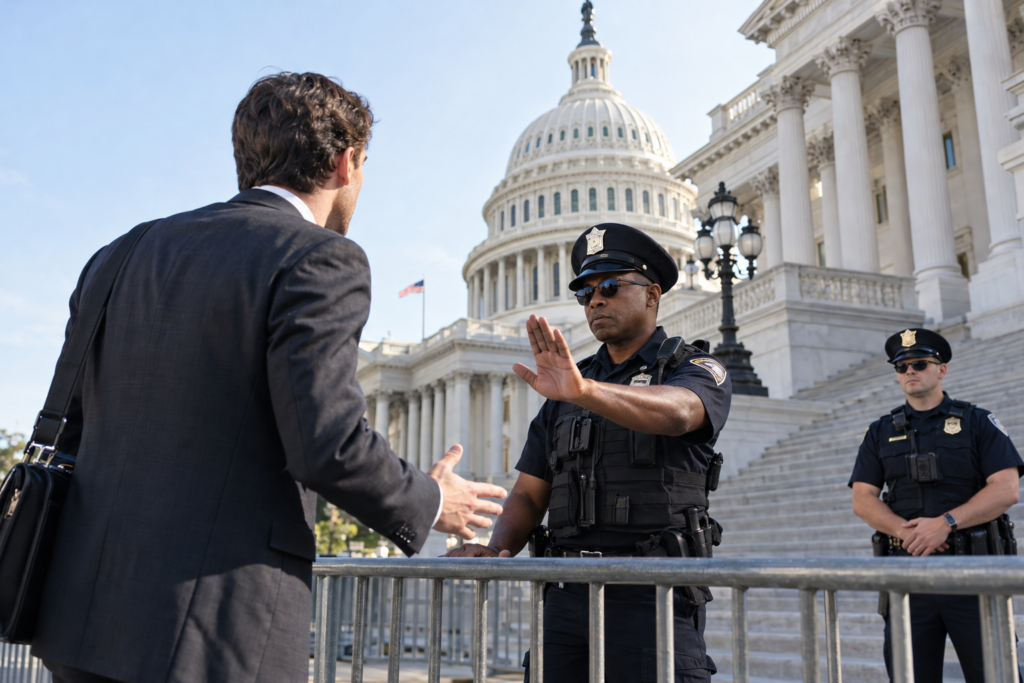
“The court addressed Sovereign Immunity before reaching the merits because the plaintiff sought damages from a state agency in federal court.”
What Is Sovereign Immunity?
Sovereign Immunity is the doctrine that a sovereign government generally cannot be sued without consent.
Federal, state, tribal, and foreign-sovereign immunity arise from different legal sources.
Therefore, the governing sovereign and type of claim must be identified first. See Cornell LII’s Sovereign Immunity overview.
Standard Sovereign Immunity — Sample Contract Language
Suppose a claimantPlaintiffA Plaintiff is the party who initiates a civil lawsuit and asks a court for legal relief. The plaintiff generally files the complaint, establishes standing and jurisdiction, serves the defendant, proves the elements...View definition seeks tort damagesLegal RemedyA legal remedy is the relief a court or other authorized tribunal can provide after a legal right has been violated. Remedies can include damages, injunctions, restitution, specific performance, rescission, declarations, and other...View definition from a federal agency after an employee causes an accident within employment scope.
Why Does Sovereign Immunity Exist?
The doctrine reflects the historic principle that government cannot be subjected to suit without authorization.
Modern law balances that principle against statutory waivers and constitutional remedies.
Therefore, immunity is broad but not absolute.
What Is Federal Sovereign Immunity?
Federal sovereign immunity protects the United States and its agencies from unconsented suits.
Congress can waive that immunity through statuteStatutory LawStatutory law is written law enacted by a legislative body through the formal lawmaking process. Federal and state statutes can create rights, duties, prohibitions, causes of action, procedures, penalties, and remedies, and courts...View definition .
Therefore, plaintiffs suing the United States need a valid waiver.
What Is State Sovereign Immunity?
State sovereign immunity protects states and qualifying state entities from many suits.
The Eleventh Amendment and broader constitutional structure shape federal-court immunity.
Therefore, state immunity extends beyond the Amendment’s literal text.
What Does the Eleventh Amendment Say?
The Eleventh Amendment limits federal judicial power over suits against states by citizens of another state or foreign state.
Supreme CourtSupreme CourtThe Supreme Court of the United States is the nation’s highest federal court. It reviews selected cases involving the Constitution and federal law, resolves important federal legal questions, and sits at the top...View definition doctrine recognizes broader state sovereign immunity.
Therefore, immunity analysis requires constitutional doctrine as well as text. See U.S. Constitution, Amendment XI.
Can a State Be Sued by Its Own Citizen in Federal Court?
Generally, state sovereign immunity can bar such suits despite the Eleventh Amendment’s narrower wording.
Waiver, valid congressional abrogation, and prospective-officer suits can create exceptions.
Therefore, citizenship alone does not resolve immunity.
What Is Waiver of Sovereign Immunity?
A sovereign can consent to suit through a clear statutory or other legally sufficient waiver.
Courts often construe waivers narrowly.
Therefore, plaintiffs must fit within the waiver’s exact terms.
Can Congress Abrogate State Sovereign Immunity?
Congress can abrogate state immunity when constitutional authority permits and Congress speaks unmistakably clearly.
Section 5 of the Fourteenth Amendment is a major source of abrogation power.
Therefore, a federal statute does not automatically override state immunity.
What Is Ex parte Young?
Ex parteEx ParteEx Parte refers to a one-sided request, proceeding, or communication. Courts permit ex parte relief only in authorized circumstances, while professional-conduct rules generally bar private communications with judges unless law or court order...View definition Young permits certain federal suits against state officials for prospective relief from ongoing federal-law violations.
The doctrine treats the officer suit differently from a damages action against the state.
Therefore, prospective injunctions can remain available despite state immunity. See Ex parte Young, 209 U.S. 123.
What Relief Does Ex parte Young Allow?
The doctrine principally supports prospective injunctive or declaratory relief ending ongoing violations of federal law.
It generally does not authorize retroactive damages paid from the state treasury.
Therefore, remedyCause of ActionA Cause of Action is a recognized set of legal elements supporting a right to judicial relief. Its elements can arise from statutes, constitutions, regulations, or case law, and the claimant generally must...View definition design matters.
Can State Officials Be Sued Personally?
Yes, depending on the claim and immunity doctrines.
Qualified immunity, absolute immunity, statutory defenses, and merits rules can still apply.
Therefore, sovereign immunity is not the only government-official defense.
What Is the Federal Tort Claims Act?
The Federal Tort Claims Act, or FTCA, waives federal immunity for specified tort claims.
It generally applies where a private person would be liable under local lawOrdinanceAn Ordinance is a law enacted by a municipality or other authorized local government. Local authority depends on state constitutions, statutes, charters, home-rule rules, Dillon’s Rule principles, and preemption, while ordinances commonly govern...View definition in like circumstances.
Therefore, the FTCA is a limited waiver rather than a general permission to sue. See 28 U.S.C. § 2674.
What Is the FTCA Administrative Claim Requirement?
A claimant generally must first present the tort claim to the appropriate federal agency.
Suit follows final denial or qualifying agency inaction after six months.
Therefore, exhaustion is a major procedural prerequisite. See 28 U.S.C. § 2675.
What Is the FTCA Discretionary-Function Exception?
The FTCA preserves immunity for specified discretionary governmental functions.
The exception can apply even when discretion is allegedly abused.
Therefore, policy-based government choices can remain immune. See 28 U.S.C. § 2680.
What Other FTCA Exceptions Exist?
Section 2680 contains multiple exceptions covering specified claims and activities.
Examples include certain postal, tax, foreign-country, combatant, and intentional-tort claims.
Therefore, FTCA coverage must be checked claim by claim.
Can the United States Be Sued for Contracts?
Yes, under statutesPrimary AuthorityPrimary Authority is law issued by an institution with official power to create or state legal rules. Constitutions, statutes, regulations, court decisions, and court rules can be primary authority, while binding effect depends...View definition that waive immunity for qualifying contract and monetary claims.
The Tucker ActCourt of Federal ClaimsThe U.S. Court of Federal Claims is an Article I court with nationwide jurisdiction over specified claims against the United States, especially monetary claims under the Tucker Act and related statutes. Its docket...View definition and Little Tucker Act are important examples.
Therefore, tort waivers and contract waivers should not be confused.
What Is the Tucker Act?
The Tucker Act grants the Court of Federal Claims jurisdictionLegal DisputeA legal dispute is a disagreement or controversy involving claimed legal rights, duties, liabilities, property, or remedies. It can be resolved through negotiation, mediation, arbitration, administrative proceedings, litigation, or settlement depending on the...View definition over specified monetary claims against the United States.
It works with money-mandating law rather than creating every substantive right.
Therefore, jurisdiction depends on both waiver and source of entitlement.
What Is the Little Tucker Act?
The Little Tucker Act gives federal district courts concurrent jurisdictionJurisdiction DefinitionJurisdiction is a court’s legal authority to hear a case, issue orders, and bind the parties. Courts may need subject matter jurisdiction over the type of dispute and personal jurisdiction over the defendant...View definition over certain non-tort monetary claims not exceeding $10,000.
Larger claims generally belong in the Court of Federal Claims.
Therefore, claim amount can affect forum.
Can Federal Agencies Be Sued for Injunctive Relief?
The Administrative Procedure ActAdministrative Law JudgeAn Administrative Law Judge is a federal adjudicator appointed under 5 U.S.C. § 3105 to preside over formal agency proceedings, receive evidence, rule on motions, and issue administrative decisions.View definition can waive immunity for specified nonmonetary claims challenging federal agency action.
Other jurisdictional and reviewability requirements still apply.
Therefore, federal sovereign immunity does not bar every equitable suit.
What Is State Tort Claims Legislation?
States often enact statutes waiving immunity for defined categories of tort claims.
Notice periods, damage caps, venue rules, and exceptions vary greatly.
Therefore, state-government claims require local statutory review.
Do Municipalities Have Sovereign Immunity?
Municipalities generally do not share state Eleventh Amendment immunity merely because they are governmental entities.
State governmental-immunity statutes can still protect them.
Therefore, sovereign immunity and municipal immunity should be distinguished.
What Is an Arm of the State?
An arm of the state is an entity treated as part of the state for sovereign-immunity purposes.
Courts examine factors such as state control, funding, legal status, and treasury impact.
Therefore, public entity labels do not settle the issue.
Are State Universities Immune?
Some public universities qualify as arms of the state and receive sovereign immunity.
The result depends on state structure and federal circuitCircuit CourtCircuit Court can mean different institutions depending on the jurisdiction. In federal practice, the phrase commonly refers to a U.S. Court of Appeals, while many states use circuit court for a general-jurisdiction trial...View definition circuit precedentBinding PrecedentBinding Precedent is a judicial holding that a lower court must follow when it controls the legal issue within the relevant hierarchy and jurisdiction. Its force depends on the deciding court, the actual...View definition .
Therefore, university status must be analyzed institution by institution.
Are State Agencies Immune?
Many state departments and agencies qualify for state sovereign immunity.
Independent entities can receive different treatment.
Therefore, statutory structure and control matter.
Can a State Remove a Case and Waive Immunity?
Litigation conduct can waive immunity in some circumstances.
Supreme Court
Therefore, immunity can depend on what the state does in the litigation.
Can a State Waive Immunity by Statute?
Yes, when state law provides sufficiently clear consent to suit.
The waiver can be limited to state courts or specific claims.
Therefore, forum limitations should be read carefully.
What Is Tribal Sovereign Immunity?
Federally recognized Indian tribes possess sovereign immunity from suit subject to congressional authorization or tribal waiver.
Tribal immunity is distinct from state Eleventh Amendment immunity.
Therefore, tribal cases require separate federal Indian-law analysis.
What Is Foreign Sovereign Immunity?
Foreign states receive immunity under the Foreign Sovereign Immunities Act subject to statutory exceptions.
Commercial activity and certain property or tort claims can fall within exceptions.
Therefore, foreign-state immunity uses a separate federal statute.
What Is Qualified Immunity?
Qualified immunity is a defense available to certain government officials sued personally for damages under federal law.
It is not the same as sovereign immunity.
Therefore, official-capacity and personal-capacity claims should be separated.
What Is Absolute Immunity?
Judges, legislators, prosecutors, and some other officials can receive absolute immunity for specified functions.
The protection is function-specific.
Therefore, absolute immunity differs from sovereign immunity and qualified immunity.
What Is Official-Capacity Litigation?
An official-capacity suit generally operates as a suit against the governmental entity for many purposes.
Immunity and remedy rules can therefore track the entity.
Therefore, pleadingPleadingA pleading is a formal court document stating a party’s claims, defenses, or responses in a civil case. Federal Rules 7 and 8 identify permitted pleadings and govern claims, admissions, denials, affirmative defenses,...View definition capacity matters.
Can Sovereign Immunity Be Raised Late?
State sovereign immunity has jurisdictional characteristics, but courts describe its procedural treatment with nuance.
Waiver and litigation conduct can affect timing.
Therefore, parties should raise immunity early.
Does Sovereign Immunity Bar Constitutional Claims?
It can bar some damages suits against governments while leaving other remedies available.
Prospective relief, statutory abrogation, waiver, and individual-capacity claims can change the result.
Therefore, the constitutional right and remedy must be analyzed separately.
Sovereign Immunity Example
Suppose a claimant seeks tort damages from a federal agency after an employee causes an accident within employment scope.
The claimant must evaluate FTCA coverage, exhaustion, and statutory exceptions.
Therefore, ordinary negligenceBreach of DutyA breach of duty occurs when a person or entity fails to meet a legal duty owed to another person. In negligence cases, breach is usually one element alongside duty, causation, and damages,...View definition law alone is not enough.
Why Does Sovereign Immunity Matter?
Sovereign immunity determines whether courts can hear many claims against governments and public entities.
Waiver, abrogation, officer suits, and statutory exceptions create important paths around immunity.
Therefore, immunity analysis should occur before merits litigation.