
Citator
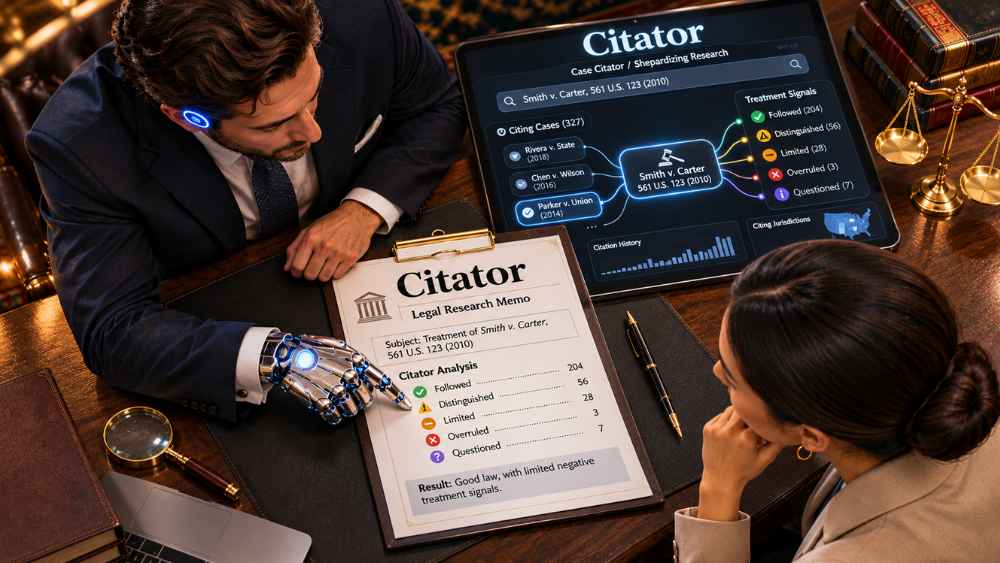
“Before filing the brief, the associate ran every principal authority through a citator and reviewed the cases responsible for any negative treatment signals.”
What Is Citator?
A citatorLegal Research SoftwareLegal research software helps users find, organize, analyze, and validate cases, statutes, regulations, court rules, secondary sources, and other legal materials. Modern platforms can combine search, citators, alerts, document databases, and AI-assisted research.View definition is a legal researchLegal ResearchLegal research is the process of finding, evaluating, updating, and applying legal authority to answer a legal question. Strong research identifies controlling primary law, uses secondary sources efficiently, checks jurisdiction and hierarchy, validates...View definition tool that shows how later authorities have cited, treated, or affected an earlier case, statuteStatutory LawStatutory law is written law enacted by a legislative body through the formal lawmaking process. Federal and state statutes can create rights, duties, prohibitions, causes of action, procedures, penalties, and remedies, and courts...View definition , regulationRegulationA Regulation is a rule issued by a governmental authority, usually an administrative agency, under delegated legal authority. Federal regulations can arise through APA rulemaking, appear first in the Federal Register, and become...View definition , or other source. Citators help researchers determine whether an authority remains reliable.
See Cornell LII’s legal research overview.
Standard Citator — Sample Contract Language
Before citing a ten-year-old appellate decision, a lawyer runs it through a citator. A later case limits one part of the reasoning, so the lawyer reads that decision and narrows the proposition used in the brief.
Why Is Citator Important?
Legal authorityLegal AuthorityLegal authority is a source supporting a proposition of law and can be primary or secondary, binding or persuasive depending on jurisdiction and hierarchy.View definition can be overruled, reversed, vacated, limited, criticized, superseded, amended, or otherwise affected after publication. Citator checking helps prevent reliance on outdated or weakened law.
How Does Citator Work?
A citator lists later citing authorities and often summarizes treatment with editorial signals. Researchers then read the important later sources to determine exactly which proposition was affected and whether the original authority remains usable.
What Rules Govern Citator?
Citator signals are research aids, not judicial rulings. A negative flag does not necessarily invalidate every proposition in the source, and a clean signal does not replace checking statutesPrimary AuthorityPrimary Authority is law issued by an institution with official power to create or state legal rules. Constitutions, statutes, regulations, court decisions, and court rules can be primary authority, while binding effect depends...View definition , regulations, procedural historyCase SummaryA case summary concisely explains a judicial decision's material facts, procedural history, issue, holding, reasoning, and result.View definition , or very recent developments.
How Is Citator Different From Related Concepts?
“Shepardizing” is commonly used to describe updating an authority, although Shepard’s is a specific citator service. Other research platforms provide comparable tools under different names.
What Should Practitioners Check?
Review the strongest negative treatmentShepardizingShepardizing is the process of using LexisNexis’s Shepard’s citation service to check subsequent history and citing references for legal authority. It helps researchers identify negative, positive, neutral, and procedural treatment and locate newer...View definition first, then confirm jurisdictionLegal DisputeA legal dispute is a disagreement or controversy involving claimed legal rights, duties, liabilities, property, or remedies. It can be resolved through negotiation, mediation, arbitration, administrative proceedings, litigation, or settlement depending on the...View definition , date, procedural history, and the proposition being cited. Record a research cutoff date for time-sensitive matters and verify current primary text separately.
Can AI Assist With Citator?
AI can help summarize authorities, organize research, and identify potentially relevant sources. It can also misstate jurisdiction, precedential weight, quotations, or citations, so legal propositions should be verified against current primary authority.
Citator Example
Before citing a ten-year-old appellate decision, a lawyer runs it through a citator. A later case limits one part of the reasoning, so the lawyer reads that decision and narrows the proposition used in the brief.
Why Does Citator Matter?
Citators answerCivil LitigationCivil Litigation is the court process for resolving noncriminal disputes through pleadings, motions, discovery, settlement, trial, judgment, and possible appeal. Federal civil litigation follows the Federal Rules of Civil Procedure, while state systems...View definition a critical research question: what happened to this authority after it was issued? Signals are useful, but careful researchers read the later authorities and verify current law.