
Cross Border Data Transfer
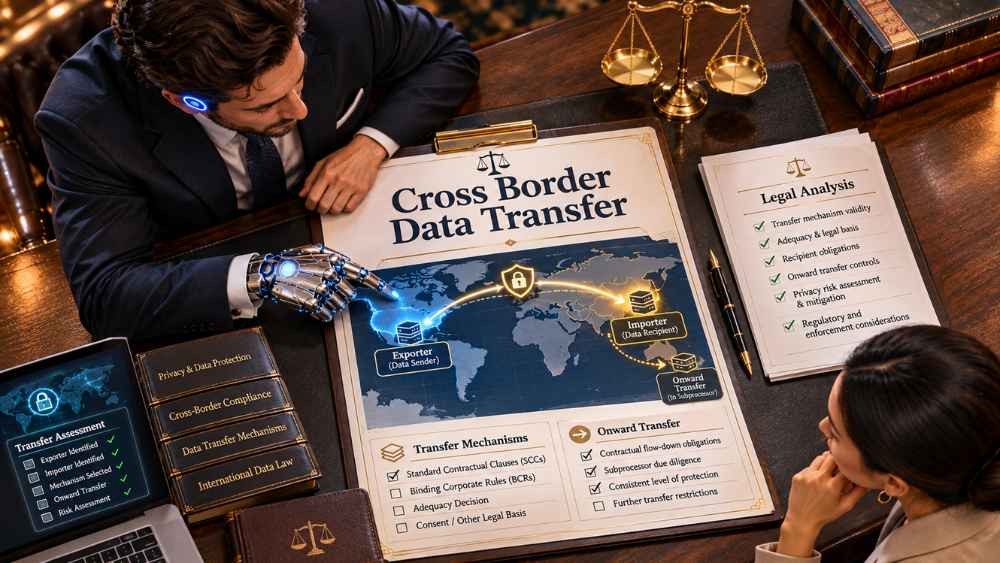
“The privacy team mapped each cross-border data transfer, identified the exporter and importer, documented the transfer mechanism, and reviewed onward transfers to subprocessors.”
What Is Cross Border Data Transfer?
A cross border data transfer occurs when data is sent to, made available to, or accessed by a recipient in another country or legal jurisdictionJurisdiction DefinitionJurisdiction is a court’s legal authority to hear a case, issue orders, and bind the parties. Courts may need subject matter jurisdiction over the type of dispute and personal jurisdiction over the defendant...View definition . Privacy and data-protection laws can impose additional requirements when personal dataPersonally Identifiable Information (PII)Personally Identifiable Information (PII) is information that can distinguish or trace an individual’s identity alone or with other linked or linkable information. Common examples include identifiers, contact details, biometrics, financial information, health information,...View definition crosses borders.
See the European Commission rules on international data transfers.
Standard Cross Border Data Transfer — Sample Contract Language
A European company uses a cloud provider whose support personnel can access customer data from a non-EEA country. The company maps the access, identifies the recipient and onward transfers, and determines what transfer mechanismStandard Contractual ClausesStandard Contractual Clauses are pre-approved contractual safeguards used for specified data-protection relationships and international transfers. Correct use requires the right module, accurate annexes, and transfer-risk analysis.View definition and safeguards are required.
Why Is Cross Border Data Transfer Important?
International data flows are routine in cloud services, outsourcing, support, analytics, and global business operations. Transfer rules can determine whether a vendor, hosting model, or remote-access arrangement is legally permissible.
How Does Cross Border Data Transfer Work?
Organizations map the exporter, importer, countries, data categories, purposes, systems, subprocessors, onward transfers, and security controls. They then determine whether an adequacyClass Action LawsuitA class action lawsuit is a case where one or more representatives pursue claims for a larger group with similar legal issues. In federal court, class treatment generally requires certification under Rule 23.View definition decision, contractual safeguard, binding corporate rule, other approved mechanism, or limited exception applies.
What Rules Govern Cross Border Data Transfer?
Under the EU GDPRData PrivacyData privacy concerns how personal information is collected, used, shared, retained, and controlled. It includes transparency, data minimization, individual rights, vendor management, security, retention, and compliance with laws such as GDPR, CCPA, and...View definition , personal data transferred outside the EEA generally requires a recognized legal basis for the international transfer, such as adequacy or appropriate safeguards. Other jurisdictions use different transfer tests, contractual tools, approvals, or exceptions.
How Is Cross Border Data Transfer Different From Related Concepts?
A cross-border transfer rule may permit international movement if safeguards are satisfied, while a data-localization rule can require certain data to stay in a particular jurisdictionLegal DisputeA legal dispute is a disagreement or controversy involving claimed legal rights, duties, liabilities, property, or remedies. It can be resolved through negotiation, mediation, arbitration, administrative proceedings, litigation, or settlement depending on the...View definition . One dataset can be subject to both kinds of requirement.
What Should Practitioners Check?
Map actual remote access, support locations, cloud regions, backups, and subprocessors rather than relying only on vendor headquarters. Document the transfer mechanism, transfer-risk analysis where required, and any supplementary technical or organizational measures.
Can AI Assist With Cross Border Data Transfer?
AI can help map data flows, compare contracts, summarize questionnaires, and identify inconsistencies across records. Legal triggers, jurisdiction-specific requirements, risk judgments, and final mitigationForce MajeureForce Majeure is a contract concept that can excuse or delay performance after extraordinary events covered by the agreement. Relief depends on clause wording, causation, notice, mitigation, exclusions, governing law, and the specific...View definition decisions require accountable human review.
Cross Border Data Transfer Example
A European company uses a cloud provider whose support personnel can access customer data from a non-EEA country. The company maps the access, identifies the recipient and onward transfers, and determines what transfer mechanism and safeguards are required.
Why Does Cross Border Data Transfer Matter?
Cross-border transfer compliance starts with accurate data-flow mapping. Contracts, hosting, remote access, subprocessors, and current legal mechanisms all need to align.