
Personally Identifiable Information (PII)
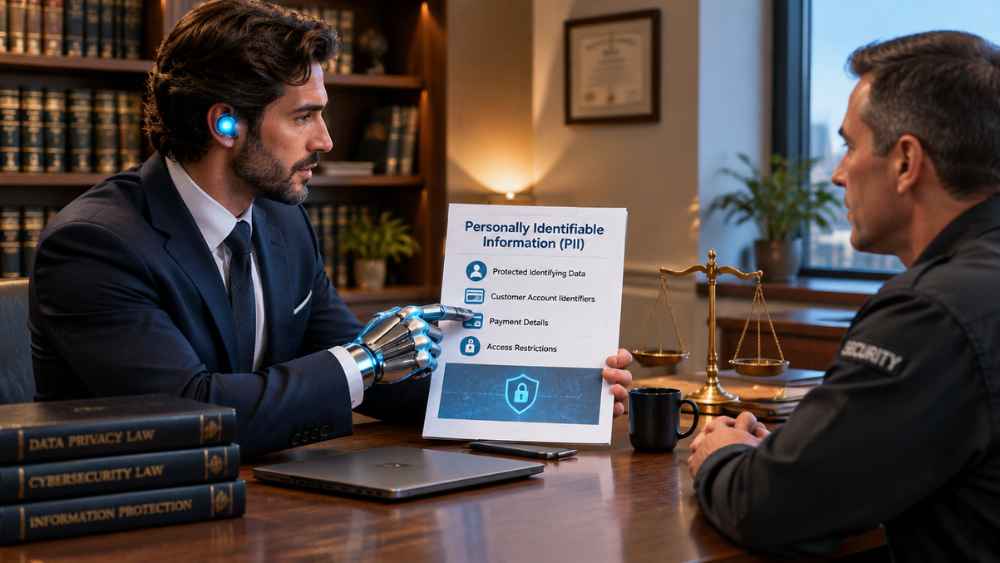
“The security team classified names, account identifiers, payment details, and linked support records as Personally Identifiable Information requiring appropriate access controls and retention limits.”
What Is Personally Identifiable Information (PII)?
Personally Identifiable Information, or PIIPersonal DataPersonal data is information relating to an identified or identifiable person, including direct identifiers and information that can identify or link to an individual in context.View definition , is information that can distinguish or trace an individual’s identity.
It can identify someone alone or when combined with other linked or linkable information.
Standard Personally Identifiable Information (PII) — Sample Contract Language
Common examples can include direct identifiers and linkable personal informationPrivacy PolicyA Privacy Policy is a public statement explaining how an organization collects, uses, discloses, retains, protects, and otherwise handles personal information. Applicable privacy laws can require specific disclosures about purposes, rights, recipients, retention,...View definition .
What Does PII Mean?
PII means information connected closely enough to a person that identification or tracing becomes possible.
For example, a Social Security number can directly identify an individual.
Therefore, identity risk depends on context and combinations of data.
What Are Examples of PII?
Common examples can include direct identifiers and linkable personal information.
- Name.
- Social Security number.
- Government identification number.
- Home address.
- Email address.
- Telephone number.
- Date of birth.
- Biometric record.
- Financial information.
- Medical information.
- Employment information.
- Education information.
However, legal definitions vary across laws and regulatory programs.
What Is Direct PII?
Direct PII identifies a person without needing additional information.
Examples can include a unique government identifier or a full name in the right context.
Therefore, direct identifiers often receive strong protection.
What Is Indirect PII?
Indirect PII identifies a person when combined with other data.
Examples can include birth date, location, workplace, or demographic details.
Therefore, individual data points can become identifying in combination.
What Does “Linked or Linkable” Mean?
Linked information already has an association with a specific individual.
Linkable information can reasonably be connected to a person using other available information.
Therefore, privacy risk depends on what other data can be combined.
What Is Sensitive PII?
Sensitive PII is personal information that can create greater harm if exposed or misused.
Examples can include Social Security numbers, financial credentials, health records, biometrics, or precise location.
Therefore, organizations often apply stronger safeguards to sensitive informationSensitive DataSensitive data is information requiring heightened protection because misuse or exposure can create significant privacy, discrimination, financial, or safety risks.View definition .
Is a Name PII?
Yes, a name can be PII when it identifies or helps identify an individual.
However, a common first name alone can present limited identification risk.
Therefore, context matters.
Is an Email Address PII?
Often, yes. An email address can directly identify or be linked to an individual.
Work email addresses can also connect a person to an employer.
Therefore, email data should be treated as personal information when applicable.
Is a Phone Number PII?
Often, yes. A telephone number can identify or connect to an individual.
It can also support authenticationAdmissible EvidenceAdmissible Evidence is evidence a court permits the judge or jury to consider. In federal court, admissibility commonly depends on relevance, Rule 403 balancing, authentication, foundation, hearsay rules, privilege, witness competence, and other...View definition or account recovery.
Therefore, unauthorized disclosure can create privacy or security risk.
Is an IP Address PII?
Potentially. The classification depends on the law, context, and ability to link the address to an individual.
Some privacy frameworks expressly treat online identifiers as personal data.
Therefore, organizations should avoid assuming IP addresses are always anonymous.
Are Cookies PII?
They can be. Persistent identifiers can become PII when they identify or trace a person or device.
For example, COPPACOPPACOPPA is the federal Children’s Online Privacy Protection Act and Rule governing covered online services that collect personal information from children under 13. The amended Rule now strengthens parental consent, third-party disclosure, data...View definition treats certain persistent identifiers as personal information.
Therefore, tracking data should receive privacy analysis.
Are Device Identifiers PII?
They can be. Mobile advertising IDs, device IDs, and similar identifiers can distinguish devices or users.
Privacy laws can treat them as personal information.
Therefore, technical identifiers should not be ignored.
Is Biometric Data PII?
Yes, biometric informationSensitive Personal InformationSensitive Personal Information is the CCPA category covering specified identifiers, account credentials, precise geolocation, message contents, genetic data, identifying biometrics, and other sensitive traits. Consumers can have additional rights to limit certain uses...View definition can identify or authenticate individuals.
Examples include fingerprints, face templates, iris scans, and voiceprints.
Therefore, biometric dataBiometric InformationBiometric Information includes data derived from physical, physiological, or behavioral characteristics used for recognition or identification. GDPR, California law, and Illinois BIPA use different definitions and impose different consent, sensitive-data, retention, disclosure, and...View definition often receives heightened legal protection.
Are Photographs PII?
They can be. A photograph can identify a person directly or through facial recognition.
Context can also reveal location, relationships, or other attributes.
Therefore, image data can create multiple privacy risks.
Is Location Data PII?
It can be. Precise or repeated location information can identify or track an individual.
Location histories can reveal sensitive habits and relationships.
Therefore, location data often deserves heightened protection.
Is Financial Information PII?
Yes, when linked or linkable to an individual.
Account numbers, transaction histories, credit information, and payment credentials can be highly sensitive.
Therefore, security controls should reflect the potential harm.
Is Health Information PII?
Health information connected to a person can qualify as PII and can receive specialized legal protection.
HIPAAData PrivacyData privacy concerns how personal information is collected, used, shared, retained, and controlled. It includes transparency, data minimization, individual rights, vendor management, security, retention, and compliance with laws such as GDPR, CCPA, and...View definition also regulates protected health informationHIPAAHIPAA is the Health Insurance Portability and Accountability Act of 1996. Its Privacy, Security, and Breach Notification Rules protect certain health information handled by covered entities and business associates and give individuals important...View definition in covered contexts.
Therefore, PII and PHI are related but not identical concepts.
PII vs. Personal Data
Personal data is the GDPR term for information relating to an identified or identifiable natural personData SubjectA Data Subject is an identified or identifiable natural person to whom personal data relates under the GDPR. Data subjects can be customers, employees, applicants, users, children, or other individuals, and they receive...View definition .
PII is a common U.S. privacy and security term.
Therefore, the concepts overlap but arise from different legal frameworks.
PII vs. Personal Information
Personal information is a broad term used in many state and federal laws.
Its statutory definition can be broader or narrower than a particular PII definition.
Therefore, the governing lawBoilerplate ClauseA boilerplate clause is standardized contract language addressing recurring legal mechanics such as notice, assignment, governing law, waiver, severability, and integration.View definition should control classification.
PII vs. PHI
Protected Health Information, or PHI, is a HIPAA-specific category.
PHI generally involves individually identifiable health information held or transmitted by covered entities or business associates.
Therefore, not all PII is PHI.
PII vs. Sensitive Personal Information
Sensitive personal information is a special category under some privacy laws.
It can include government identifiers, precise geolocation, financial credentials, or other high-risk information.
Therefore, sensitivity can change rights and processing obligations.
What Is NIST’s PII Definition?
NIST commonly defines PII as information that can distinguish or trace an identity alone or with linked or linkable information.
The definition derives from U.S. federal privacy guidance.
Therefore, it is widely used in security and government programs.
Does PII Have One Universal Legal Definition?
No. Different statutesPrimary AuthorityPrimary Authority is law issued by an institution with official power to create or state legal rules. Constitutions, statutes, regulations, court decisions, and court rules can be primary authority, while binding effect depends...View definition and regulations define personal information differently.
For example, breach-notification statutes can use their own specific combinations of data elements.
Therefore, classification should be tied to the law at issue.
What Is the Privacy Act?
The federal Privacy Act regulates certain records maintained by U.S. federal agencies.
Its protections and definitions differ from commercial privacy laws.
Therefore, federal-agency PII analysis can require specialized rules.
What Is OMB Circular A-130?
OMB Circular A-130 provides federal government policy for information resources, security, and privacy.
NIST references its PII definition in several publications.
Therefore, it is influential in federal information governance.
What Is PII Confidentiality?
ConfidentialityEmployment ContractAn employment contract is an agreement defining terms of an employer-employee relationship. It can cover duties, compensation, benefits, equity, confidentiality, intellectual property, restrictive covenants, termination, severance, and dispute procedures while remaining subject to...View definition protects PII from unauthorized access or disclosure.
Encryption, access controls, authentication, and policies can support confidentiality.
Therefore, privacy and cybersecurity controls often overlap.
What Is PII Integrity?
Integrity means maintaining accurate and unaltered personal information.
Improper changes can create financial, safety, or administrative harm.
Therefore, systems should protect against unauthorized modification.
What Is PII Availability?
Availability means authorized users can access information when needed.
Loss or destruction of records can also create privacy and operational harms.
Therefore, secure backups and resilience matter.
What Is PII Minimization?
PII minimization means collecting and retaining only information needed for a legitimate purpose.
Reducing unnecessary data lowers exposure during a breach.
Therefore, minimization is both a privacy and security control.
What Is Purpose Limitation?
Purpose limitation means using personal information consistently with specified and lawful purposes.
Unrelated secondary uses can create legal and trust risks.
Therefore, organizations should document why they collect each data category.
What Is Data Retention?
Data retentionRight to DeleteThe Right to Delete allows individuals to request deletion of qualifying personal information under laws such as the GDPR and CCPA. The right is subject to legal exceptions, identity verification, response deadlines, vendor...View definition concerns how long an organization keeps PII.
Legal, contractual, and business needs can set different retention periods.
Therefore, indefinite storage should have a defensible reason.
What Is a PII Inventory?
A PII inventory identifies personal information collected, stored, transmitted, or shared by an organization.
It can include systems, owners, purposes, recipients, and retention periods.
Therefore, inventories support privacy and incident-response work.
What Is Data Mapping?
Data mapping documents how PII moves between systems, teams, vendors, and jurisdictions.
It can reveal unnecessary transfers or unknown repositories.
Therefore, data mapping improves governance and breach response.
What Is PII Classification?
PII classification organizes data according to sensitivity and handling requirements.
For example, Social Security numbers can receive stronger controls than public contact information.
Therefore, classification helps allocate security resources.
What Is De-Identification?
De-identificationData AnonymizationData anonymization transforms data to remove or greatly reduce identifiability so individual records cannot reasonably be linked back to specific people.View definition removes or transforms identifiers to reduce the ability to connect information to a person.
The required standard depends on the law and use case.
Therefore, simply removing names does not always eliminate identification risk.
What Is Anonymization?
Anonymization aims to make information no longer identifiable to a person under the applicable standard.
True anonymization can be difficult when datasets contain rich attributes.
Therefore, re-identification riskDe-Identified DataDe-identified data is information modified to reduce the ability to link records to specific individuals, though re-identification risk can remain.View definition should be assessed realistically.
What Is Pseudonymization?
Pseudonymization replaces direct identifiers with codes or other values while keeping a re-linking method separately.
The GDPR treats pseudonymized information as personal data when re-identification remains possible.
Therefore, pseudonymization reduces risk but does not necessarily remove regulationRegulationA Regulation is a rule issued by a governmental authority, usually an administrative agency, under delegated legal authority. Federal regulations can arise through APA rulemaking, appear first in the Federal Register, and become...View definition .
What Is Re-Identification?
Re-identification connects de-identified or pseudonymized information back to a person.
Combining datasets can make re-identification easier.
Therefore, data-release decisions should consider outside information.
What Is a PII Breach?
A PII breach involves unauthorized access, acquisitionMergerA merger is a corporate transaction combining entities under statute so that one survives or a new entity results, with assets and liabilities transferring according to law.View definition , disclosure, loss, or other compromise of protected personal information.
Notification rules differ by jurisdictionLegal DisputeA legal dispute is a disagreement or controversy involving claimed legal rights, duties, liabilities, property, or remedies. It can be resolved through negotiation, mediation, arbitration, administrative proceedings, litigation, or settlement depending on the...View definition and data category.
Therefore, not every PII incident has the same legal consequences.
What Is Identity Theft Risk?
Identity theft can occur when someone uses personal information to impersonate another person for fraud or other harm.
Government identifiers and financial credentials can create high risk.
Therefore, breach response should consider likely misuse.
How Should Businesses Protect PII?
Businesses should use safeguards appropriate to sensitivity, volume, threats, and legal obligations.
Common controls include minimization, encryption, authentication, access restrictions, monitoring, backups, and vendor oversight.
See FTC guidance on protecting personal information.
What Is Access Control?
Access control limits PII to authorized users and systems.
Role-based permissions can reduce unnecessary exposure.
Therefore, access should match job responsibilities.
What Is Encryption?
Encryption transforms information into a protected form that requires a key or credential to read.
It can protect data at rest and in transit.
Therefore, encryption can reduce breach risk but should be paired with key security.
What Is Multi-Factor Authentication?
Multi-factor authentication requires more than one factor to verify access.
It can reduce account compromise from stolen passwords.
Therefore, high-risk PII systems often benefit from stronger authentication.
What Is Vendor Risk?
Vendors can access, host, or process PII on behalf of an organization.
A vendor breach can create obligations for both parties.
Therefore, contracts and due diligenceLetter of IntentA letter of intent, or LOI, is a document that outlines the main terms of a proposed transaction before the parties sign a final contract. An LOI may contain both binding and nonbinding...View definition should address security and incident responseData Breach NotificationData Breach Notification is legally required notice after qualifying security incidents. GDPR Articles 33 and 34 use regulator and high-risk individual notice rules, while U.S. states apply their own definitions, triggers, timing, content,...View definition .
What Is a Data Processing Agreement?
A DPAMaster Service Agreement (MSA)A Master Service Agreement, or MSA, sets recurring legal and commercial terms for an ongoing service relationship. The parties can then use SOWs, order forms, or schedules for project-specific scope, pricing, deliverables, and...View definition allocates personal-data processing duties between organizations.
It can address security, instructions, subprocessors, breach noticeNotice of BreachA Notice of Breach is a written communication stating that one party believes another party violated a contract or legal obligation. It commonly identifies the breach, relevant contract terms, supporting facts, required cure,...View definition , and deletion.
Therefore, vendor contracts can support privacy compliance.
Can PII Be Shared?
Yes, when sharing is lawful and consistent with applicable privacy obligations.
Organizations should understand purpose, recipient, authority, and safeguards.
Therefore, unrestricted sharing can create privacy and security risk.
Can PII Be Sold?
Some laws permit certain transfers while giving individuals notice or opt-out rights.
Other laws restrict specific categories or contexts more strictly.
Therefore, “sale” is a legal term that varies by statuteStatutory LawStatutory law is written law enacted by a legislative body through the formal lawmaking process. Federal and state statutes can create rights, duties, prohibitions, causes of action, procedures, penalties, and remedies, and courts...View definition .
Can PII Be Public?
Yes. Some personal information can appear in public records, websites, or directories.
Public availability does not always eliminate privacy obligations.
Therefore, legal treatment depends on the source and law.
Is Business Contact Information PII?
It can be, because it can identify an individual in a professional context.
Some laws provide exemptions or narrower treatment for business-contact data.
Therefore, classification should not rely solely on whether information is work related.
Is Employee Information PII?
Yes. Employee records can include names, payroll data, benefits, performance information, and identifiers.
Employment privacy rules can differ from consumer privacyConsumer PrivacyConsumer privacy governs how businesses handle personal information through collection, use, sharing, security, retention, transparency, and consumer rights.View definition rules.
Therefore, organizations should protect workforce PII separately.
What Is PII in Cybersecurity?
Cybersecurity programs treat PII as information requiring safeguards against unauthorized access, disclosure, alteration, or destruction.
Security frameworks can prioritize controls according to data sensitivity.
Therefore, PII classification supports risk management.
PII Example
Suppose a company stores customer names, email addresses, account IDs, payment data, and support histories.
Some fields identify people directly, while others become identifying when combined.
The company should classify and protect the dataset according to applicable law and risk.
Why Does PII Matter?
PII can expose individuals to identity theft, discriminationWorkplace HarassmentWorkplace harassment is unwelcome conduct that can violate employment law when it is based on a protected characteristic or protected activity. Federal law generally requires a qualifying job action or conduct severe or...View definition , financial loss, embarrassment, or other harm.
However, the legal definition changes across statutes and jurisdictions.
The key questions are practical. Can the data identify someone? How sensitive is it? Why is it collected? Which laws and safeguards apply?