
Master Service Agreement (MSA)
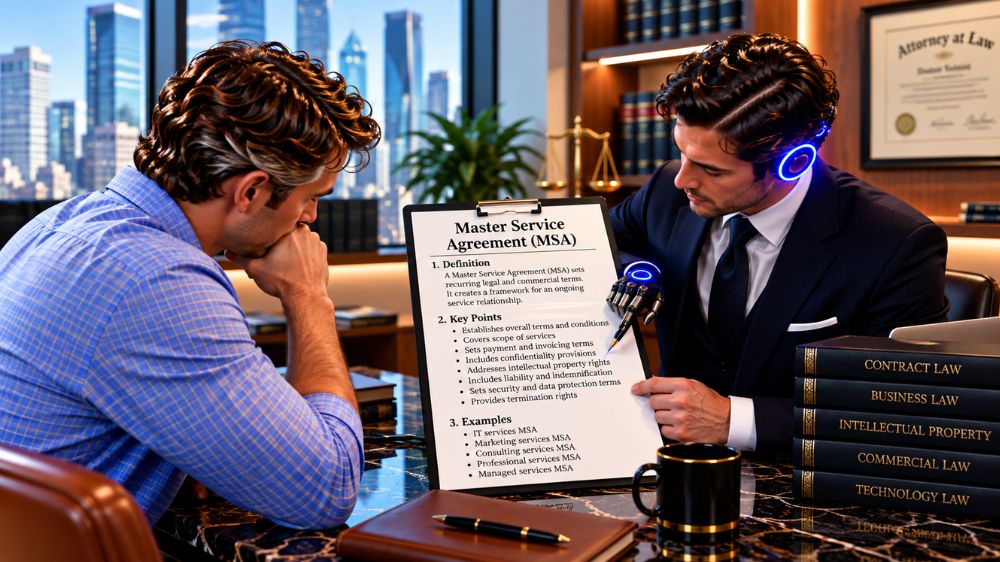
“The companies signed a Master Service Agreement covering payment, confidentiality, intellectual property, security, indemnification, liability, and termination before issuing project-specific SOWs.”
What Is a Master Service Agreement?
A Master Service AgreementService AgreementA service agreement is a contract in which one party agrees to perform services for another party in exchange for payment or other consideration. It commonly covers scope, fees, deliverables, service levels, intellectual...View definition , or MSA, sets recurring legal and commercial terms. It creates a framework for an ongoing service relationship.
The parties can then use statements of work, order forms, or project schedules for specific engagements.
Therefore, an MSA can reduce repeated negotiationAlternative Dispute ResolutionAlternative Dispute Resolution, or ADR, includes negotiation, mediation, arbitration, settlement conferences, and other processes used outside ordinary trial adjudication. Each method differs in neutrality, confidentiality, party control, binding effect, cost, and review.View definition of the same core terms.
Standard Master Service Agreement (MSA) — Sample Contract Language
Suppose a company hires an IT provider for several projects during the year.
What Does an MSA Do?
An MSA creates a framework for future work between the same parties.
For example, it can address payment, confidentialityEmployment ContractAn employment contract is an agreement defining terms of an employer-employee relationship. It can cover duties, compensation, benefits, equity, confidentiality, intellectual property, restrictive covenants, termination, severance, and dispute procedures while remaining subject to...View definition , intellectual propertyIntellectual PropertyIntellectual property, or IP, is a group of legal rights that protect certain inventions, creative works, brands, and confidential business information. Major U.S. categories include patents, copyrights, trademarks, and trade secrets.View definition , warranties, indemnificationRepresentations and WarrantiesRepresentations and Warranties are contractual statements about facts, authority, condition, compliance, or performance. They allocate information risk and often work with disclosure schedules, knowledge and materiality qualifiers, closing conditions, survival periods, indemnification, and...View definition , liability, and dispute resolutionLegal DisputeA legal dispute is a disagreement or controversy involving claimed legal rights, duties, liabilities, property, or remedies. It can be resolved through negotiation, mediation, arbitration, administrative proceedings, litigation, or settlement depending on the...View definition .
Project-specific documents can then describe scope, pricing, milestones, and deliverables.
What Is a Statement of Work?
A Statement of Work, or SOWStatement of Work (SOW)A Statement of Work (SOW) defines project-specific scope, deliverables, schedule, performance standards, responsibilities, and acceptance requirements.View definition , describes the work for a specific project under an MSA.
It can include services, deliverables, deadlines, fees, assumptions, and acceptance criteria.
Therefore, the MSA and SOW usually work together.
MSA vs. Statement of Work
The MSA contains reusable legal terms for the overall relationship.
The SOW contains project-specific business and performance terms.
For example, the MSA can define liability rules while the SOW defines the implementation schedule.
What Is an Order Form?
An order form is a shorter commercial document used to purchase identified products or services.
It can incorporate an MSA by reference.
Therefore, an order form can establish pricing and quantities without restating the full contract.
What Should an MSA Include?
The exact terms depend on the services and risk profile.
- Definitions and contract structure.
- Ordering and SOW procedures.
- Fees, invoicing, and payment.
- Expenses and taxes.
- Confidentiality.
- Intellectual property ownershipIP OwnershipIP ownership is legal ownership of intellectual property rights and depends on the type of IP, creation or use, employment, assignments, and chain of title.View definition .
- Licenses.
- Data privacyData PrivacyData privacy concerns how personal information is collected, used, shared, retained, and controlled. It includes transparency, data minimization, individual rights, vendor management, security, retention, and compliance with laws such as GDPR, CCPA, and...View definition and security.
- Representations and warranties.
- Indemnification.
- Limitations of liability.
- Insurance.
- Term and termination.
- Dispute resolution.
- Governing lawBoilerplate ClauseA boilerplate clause is standardized contract language addressing recurring legal mechanics such as notice, assignment, governing law, waiver, severability, and integration.View definition .
- General contract provisions.
Therefore, an MSA should be tailored to the actual relationship.
How Do Payment Terms Work in an MSA?
The MSA can establish general invoicing and payment rules.
For example, it can require payment within 30 days after a valid invoice.
The SOW can then state the project price or rate structure.
What Are Reimbursable Expenses?
Reimbursable expenses are approved costs that one party agrees to repay.
For example, travel can require advance written approval.
Therefore, expense rules should define approval and documentation requirements.
Who Pays Taxes Under an MSA?
An MSA can allocate responsibility for sales, use, withholding, or similar taxes.
For example, the customer can pay transaction taxes while the provider remains responsible for income taxes.
However, tax treatment depends on applicable law.
What Is a Change Order?
A change orderChange OrderA change order documents agreed changes to a project contract. Understand scope changes, pricing, deadlines, approvals, common disputes, and example wording.View definition modifies an approved SOW or project plan.
For example, the customer can request added functionality that increases fees and extends deadlines.
Therefore, a written change process can reduce scope disputes.
What Is Scope Creep?
Scope creep occurs when requested work expands beyond the agreed project scope.
It can create cost, staffing, and schedule problems.
Therefore, MSAs often require formal approval for material changes.
What Are Acceptance Criteria?
Acceptance criteria define how a customer determines whether a deliverable meets agreed requirements.
For example, software can require successful completion of specified tests.
Therefore, objective criteria can reduce disputes about completion.
What Is a Service Level Agreement?
A Service Level Agreement, or SLA, defines measurable service standards.
For example, it can address system uptime, response times, or support availability.
The MSA can explain remedies for missed service levels.
What Is a Confidentiality Clause?
A confidentiality clauseNon Disclosure Agreement (NDA)A non disclosure agreement, or NDA, is a contract that protects specified confidential information. It limits who may receive the information and often restricts how the recipient may use or share it.View definition restricts use and disclosure of protected information.
For example, the parties can exchange pricing, customer data, technical information, or business plans.
Therefore, confidentiality obligationsConfidentiality ClauseA Confidentiality Clause limits how specified nonpublic information may be used or disclosed. Strong clauses define protected information, exclusions, permitted recipients, legal-disclosure exceptions, duration, return or destruction duties, and available remedies.View definition should define permitted use and exceptions.
Who Owns Intellectual Property Under an MSA?
Ownership depends on the agreement and applicable intellectual property law.
The parties can distinguish preexisting intellectual property from work created during the engagement.
Therefore, the MSA should address assignments, licenses, and retained rights clearly.
What Is Background IP?
Background IP is intellectual property created or owned outside the specific project.
For example, a software provider can retain ownership of its preexisting platform and development tools.
The customer can receive a license to use that IP with the deliverables.
What Is Work Product?
Work product is material created while performing the contracted services.
The MSA can state whether the customer owns the work product or receives a license.
Therefore, ownership language should match the commercial deal.
What Are Representations and Warranties?
Representations and warranties are contractual statements about facts, authority, or promised performance standards.
For example, a provider can warrant that services will be performed professionally.
However, warrantyWarrantyA warranty is an express or implied assurance concerning goods, services, property, or performance and can create contractual remedies when breached.View definition disclaimers can limit other implied obligations.
What Is Indemnification in an MSA?
Indemnification can require one party to protect the other from specified third-party claims or losses.
For example, a provider can indemnify a customer for certain intellectual property infringement claims.
Therefore, indemnityThird Party ComplaintA third-party complaint uses Rule 14 impleader to bring a nonparty into a lawsuit when that person may be liable to a defending party for all or part of the original claim.View definition clauses should define covered claims and procedures.
What Is a Limitation of Liability?
A limitation of liabilityLimitation of LiabilityA limitation of liability is a contract clause that caps or restricts damages and remedies available for specified breaches or claims.View definition restricts certain damagesLegal RemedyA legal remedy is the relief a court or other authorized tribunal can provide after a legal right has been violated. Remedies can include damages, injunctions, restitution, specific performance, rescission, declarations, and other...View definition or sets a financial cap.
For example, liability can be capped at fees paid during a defined period.
However, the parties can exclude specified risks from the cap.
What Is a Consequential Damages Waiver?
A consequential damages waiver limits recovery of certain indirect losses.
For example, the agreement can exclude lost profitsPatent InfringementPatent Infringement occurs when a person performs an unauthorized act covered by the Patent Act, such as making, using, selling, offering to sell, or importing a patented invention. U.S. law also recognizes induced...View definition or lost business opportunities where enforceable.
However, the exact effect depends on governing law and contract language.
What Data Protection Terms Belong in an MSA?
Data terms can address privacy compliance, security safeguards, permitted use, incidents, retention, and deletion.
For example, a provider handling personal dataPersonally Identifiable Information (PII)Personally Identifiable Information (PII) is information that can distinguish or trace an individual’s identity alone or with other linked or linkable information. Common examples include identifiers, contact details, biometrics, financial information, health information,...View definition can also sign a Data Processing Agreement.
Therefore, data terms should match the information involved.
What Is a Data Processing Agreement?
A Data Processing Agreement, or DPA, allocates privacy responsibilities for covered personal-data processing.
The DPA can supplement the MSA.
Therefore, the two documents should use consistent definitions and security obligations.
Can a Provider Use Subcontractors?
The MSA can allow or restrict subcontractors.
For example, the customer can require notice before a subcontractor handles sensitive dataSensitive Personal InformationSensitive Personal Information is the CCPA category covering specified identifiers, account credentials, precise geolocation, message contents, genetic data, identifying biometrics, and other sensitive traits. Consumers can have additional rights to limit certain uses...View definition .
Therefore, subcontracting terms can address quality, confidentiality, and security.
What Insurance Can an MSA Require?
An MSA can require insurance that matches the services and risk profile.
Examples can include commercial general liability, professional liabilityLiability DefinitionLiability means legal responsibility for an act, omission, debt, loss, or other obligation. Liability can arise from negligence, contracts, statutes, strict-liability rules, or responsibility for another person’s conduct.View definition , cyber insurance, or workers’ compensation.
Therefore, insurance limits should be coordinated with indemnity and liability provisions.
How Long Does an MSA Last?
The term states how long the MSA remains in effect.
The contract can use a fixed period, automatic renewalTerms and ConditionsTerms and Conditions are contractual rules governing use of a website, app, service, or commercial offering. They can address accounts, payments, acceptable use, intellectual property, disclaimers, liability, suspension, termination, and dispute procedures.View definition , or an ongoing term.
Therefore, the term should work with active SOWs and termination rights.
What Is Termination for Cause?
Termination for causeNotice of BreachA Notice of Breach is a written communication stating that one party believes another party violated a contract or legal obligation. It commonly identifies the breach, relevant contract terms, supporting facts, required cure,...View definition allows a party to end the MSA after specified breaches or events.
For example, repeated nonpayment or serious security failures can trigger termination.
The contract can also provide a cure period.
What Is Termination for Convenience?
Termination for convenienceNotice of TerminationA notice of termination formally communicates that a legal or contractual relationship will end under specified grounds, timing, and notice requirements.View definition allows a party to end the agreement without proving breach.
For example, a customer can receive a right to terminate on 30 days’ notice.
Therefore, the MSA should explain fees and transition duties after termination.
What Happens to Active SOWs When an MSA Ends?
The MSA should explain whether active SOWs terminate automatically or continue until completion.
For example, the parties can state that existing SOWs survive until their own expiration dates.
Therefore, termination language should address both documents.
What Is an Order of Precedence Clause?
An order of precedence clause explains which document controls when contract terms conflict.
For example, the MSA can control unless an SOW expressly overrides a specified section.
Therefore, this clause can prevent uncertainty between overlapping documents.
MSA vs. Service Agreement
A service agreement can govern one project or a broader relationship.
An MSA usually creates reusable terms for multiple future projects or orders.
Therefore, an MSA is especially useful for recurring services.
MSA vs. Independent Contractor Agreement
An independent contractor agreementIndependent Contractor AgreementAn independent contractor agreement is a contract between a client and a self-employed service provider. It commonly covers services, fees, deadlines, confidentiality, intellectual property, liability, termination, and contractor status, although the contract label...View definition focuses on services performed by an independent contractorIndependent ContractorAn independent contractor is a self-employed person or business providing services without employee status under the applicable legal test. Classification depends on actual facts, and tax, wage, labor, and state laws can use...View definition .
An MSA can govern a wider range of business-to-business service relationships.
However, the documents can contain many similar provisions.
Master Service Agreement Example
Suppose a company hires an IT provider for several projects during the year.
The MSA sets payment, confidentiality, IP, security, liability, and termination rules.
Each SOW then defines the project scope, price, deliverables, and schedule.
Why Does an MSA Matter?
An MSA can make repeated transactions faster by moving recurring legal terms into one framework.
However, poorly coordinated SOWs can create conflicts or gaps.
The key questions are practical. Which terms belong in the MSA? Which belong in each SOW? What happens when documents conflict?