
Sensitive Personal Information
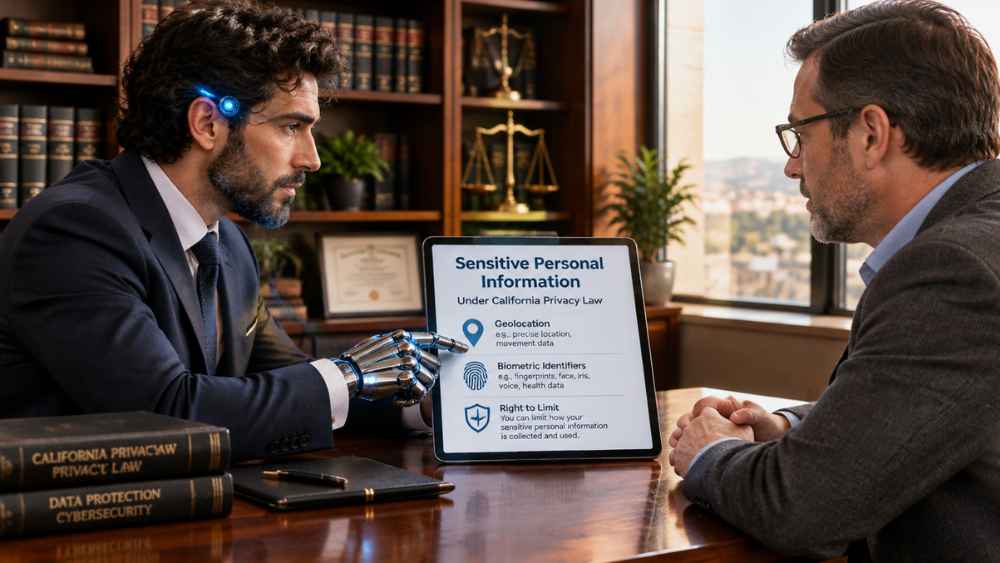
“The privacy team classified precise geolocation and biometric identifiers as Sensitive Personal Information and evaluated the CCPA right to limit.”
What Is Sensitive Personal Information?
Sensitive Personal InformationSensitive DataSensitive data is information requiring heightened protection because misuse or exposure can create significant privacy, discrimination, financial, or safety risks.View definition is a California privacy-law category covering specified personal informationPersonally Identifiable Information (PII)Personally Identifiable Information (PII) is information that can distinguish or trace an individual’s identity alone or with other linked or linkable information. Common examples include identifiers, contact details, biometrics, financial information, health information,...View definition that presents heightened privacy concerns.
The CCPAData PrivacyData privacy concerns how personal information is collected, used, shared, retained, and controlled. It includes transparency, data minimization, individual rights, vendor management, security, retention, and compliance with laws such as GDPR, CCPA, and...View definition defines the category by statuteStatutory LawStatutory law is written law enacted by a legislative body through the formal lawmaking process. Federal and state statutes can create rights, duties, prohibitions, causes of action, procedures, penalties, and remedies, and courts...View definition .
Therefore, it is narrower than all personal information. See California Privacy Protection Agency FAQ.
Standard Sensitive Personal Information — Sample Contract Language
Suppose an application collects precise geolocation and uses it for advertising unrelated to the requested service.
What Identifiers Are Sensitive?
The category includes Social Security, driver’s license, state identification, and passport numbers.
It also includes credentials allowing account access.
Therefore, identity and authenticationAdmissible EvidenceAdmissible Evidence is evidence a court permits the judge or jury to consider. In federal court, admissibility commonly depends on relevance, Rule 403 balancing, authentication, foundation, hearsay rules, privilege, witness competence, and other...View definition data receive heightened treatment.
Is Precise Geolocation Sensitive?
Yes. Precise geolocation is sensitive personal information under the CCPA.
The statutory definition supplies the applicable precisionTechnology Assisted ReviewTechnology Assisted Review (TAR) uses technology and human judgment to prioritize, classify, and review documents in legal discovery. TAR can include predictive coding, continuous active learning, statistical sampling, validation, and other analytics designed...View definition threshold.
Therefore, location services can trigger sensitive-data obligations.
Are Message Contents Sensitive?
Yes. Contents of mail, email, and text messages can qualify when the business is not the intended recipient.
Communications metadataRequest for ProductionA Request for Production is a civil discovery request for documents, electronically stored information, tangible things, or inspection access. In federal court, Rule 34 governs requests to parties and sets requirements for particularity,...View definition is analyzed separately.
Therefore, message content can receive heightened privacy protection.
Are Genetics and Biometrics Sensitive?
Genetic data is sensitive personal information.
Biometric informationBiometric InformationBiometric Information includes data derived from physical, physiological, or behavioral characteristics used for recognition or identification. GDPR, California law, and Illinois BIPA use different definitions and impose different consent, sensitive-data, retention, disclosure, and...View definition used to identify a consumer also qualifies.
Therefore, identity technology can fall within the sensitive category.
What Personal Characteristics Are Covered?
Sensitive personal information includes specified information about health, sex life, sexual orientation, racial or ethnic origin, religion, and related traits.
Current California law also includes citizenship or immigration status.
Therefore, protected personal characteristics can trigger enhanced controls.
What Is the Right to Limit?
Consumers can have the right to limit a business’s use and disclosure of sensitive personal information.
The right applies to covered uses beyond statutorily permitted purposes.
Therefore, businesses must determine whether they need a limit mechanism.
When Is a Right-to-Limit Method Not Required?
Current California regulationsPrimary AuthorityPrimary Authority is law issued by an institution with official power to create or state legal rules. Constitutions, statutes, regulations, court decisions, and court rules can be primary authority, while binding effect depends...View definition identify purposes for which sensitive data can be used without offering the right to limit.
Those uses must remain reasonably necessary and proportionate.
Therefore, purpose and proportionalityDiscovery RequestA Discovery Request is a formal litigation request for information, documents, admissions, testimony, or inspection. Federal discovery rules govern scope, proportionality, interrogatories, requests for production, requests for admission, subpoenas, objections, privilege, response deadlines,...View definition are central. See current CCPA regulations.
What Are Common Permitted Purposes?
Examples include providing reasonably expected goods or services, security, fraud prevention, physical safety, and specified business operations.
The regulations provide detailed conditions.
Therefore, an exception should be matched to the actual use.
Is Sensitive Personal Information the Same as GDPR Special Categories?
No. The CCPA and GDPR use different definitions and legal structures.
Some categories overlap, such as health, biometrics, and racial or ethnic origin.
Therefore, organizations should not substitute one list for the other.
Does Collection Automatically Violate the CCPA?
No. Covered businesses can process sensitive information for lawful and disclosed purposes.
Rights and restrictions depend on the use, disclosure, and applicable exception.
Therefore, sensitivity creates obligations rather than an absolute ban.
What Security Controls Are Appropriate?
Organizations should limit access, encrypt where appropriate, log use, reduce retention, and monitor sensitive-data flows.
Higher impact can justify stronger safeguards.
Therefore, data classification should drive security design.
Sensitive Personal Information Example
Suppose an application collects precise geolocation and uses it for advertising unrelated to the requested service.
The business evaluates the consumer’s right to limit that use.
Therefore, the purpose can affect privacy obligations.
Why Does Sensitive Personal Information Matter?
Sensitive data can create greater identity, discriminationWorkplace HarassmentWorkplace harassment is unwelcome conduct that can violate employment law when it is based on a protected characteristic or protected activity. Federal law generally requires a qualifying job action or conduct severe or...View definition , financial, health, and surveillance risks.
California gives consumers additional controls over some uses.
Therefore, organizations should inventory sensitive categories separately.