
Employment Law
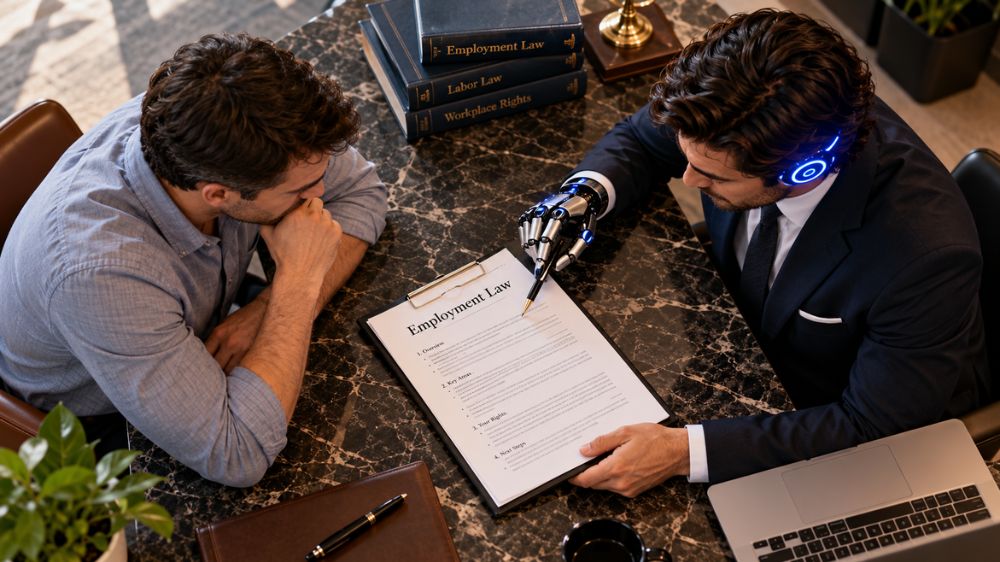
“The company reviewed employment law requirements involving overtime, discrimination, leave, workplace safety, and termination before updating its employee policies.”
What Is Employment Law?
Employment law is the body of law that governs relationships between employers and employees. It covers pay, discriminationWorkplace HarassmentWorkplace harassment is unwelcome conduct that can violate employment law when it is based on a protected characteristic or protected activity. Federal law generally requires a qualifying job action or conduct severe or...View definition , leave, safety, termination, benefits, and many other workplace issues.
Employment law comes from federal, state, and local sources. Therefore, the rules can differ depending on the worker, employer, industry, and location.
The U.S. Department of Labor explains that federal employment laws address wages, hours, safety, benefits, workers’ compensation, and other workplace standards. See the DOL Employment Law Guide.
Standard Employment Law — Sample Contract Language
Suppose an employee reports unpaid overtimeWage TheftWage theft is a common term for unlawfully withholding wages or compensation a worker has earned. Claims can involve unpaid minimum wage, overtime, off-the-clock work, tips, deductions, misclassification, commissions, final wages, recordkeeping, and...View definition and later requests protected medical leave. The employer then terminates the employee.
What Does Employment Law Cover?
Employment law regulates many stages of the employment relationship. It can apply before hiring, during employment, and after termination.
Common subjects include:
- Wages and overtime.
- Workplace discriminationEqual Employment Opportunity Commission (EEOC)The Equal Employment Opportunity Commission (EEOC) is the federal agency that enforces major U.S. employment discrimination laws, investigates charges, promotes voluntary resolution, and may litigate violations.View definition .
- Harassment.
- Retaliation.
- Family and medical leave.
- Disability accommodations.
- Workplace safety.
- Employee benefits.
- Hiring and background checks.
- Employment contracts.
- NoncompeteNon Compete ClauseA non compete clause restricts specified competitive activity after employment or another relationship ends, with enforceability governed largely by current state law.View definition agreements.
- Wrongful terminationTermination for CauseTermination for cause is an employment termination based on a contractually or legally defined reason that can affect severance, equity, and other post-employment rights.View definition .
- Union and organizing rights.
In addition, specialized laws can apply to particular industries or government contractors.
What Is the Difference Between Employment Law and Labor Law?
The terms sometimes overlap. However, employment law often focuses on individual workplace rights and obligations.
Labor law often focuses more heavily on unions, collective bargaining, and group employee activity. The National Labor Relations Act plays a central role in private-sector labor law.
Therefore, a workplace issue can involve one or both fields.
What Is the Fair Labor Standards Act?
The Fair Labor Standards ActFair Labor Standards Act (FLSA)The FLSA is the primary federal wage-and-hour law governing minimum wage, overtime, recordkeeping, child labor, and related protections for covered employees.View definition , or FLSAWage and Hour LawWage and hour law regulates minimum wage, overtime, compensable time, recordkeeping, youth employment, and related pay practices under the FLSA and state or local law.View definition , is a major federal wage-and-hour law. It addresses minimum wageMinimum WageMinimum wage is the legal floor for worker compensation. U.S. employers must consider the federal FLSA rate together with any higher state or local requirement, plus rules on tips, deductions, hours worked, and...View definition , overtime, recordkeepingRegulatory ComplianceRegulatory compliance means following the laws, regulations, rules, and official requirements that apply to an organization or activity. Effective compliance programs identify obligations, assign responsibility, implement controls, monitor performance, and correct problems.View definition , and child labor.
For example, covered nonexempt employees generally receive overtime protection for qualifying hours. However, exemptions and coverage rules can be complex.
The Department of Labor enforces the FLSA. See the DOL’s FLSA overview.
What Is Minimum Wage Law?
Minimum wage law sets a floor for covered wages. Federal law provides one baseline, while states and cities can set higher rates.
Therefore, employers must check all applicable wage laws. The highest applicable lawful minimum may control.
In addition, special rules can apply to tipped workers, youth workers, or particular industries.
What Is Overtime Law?
Federal overtime law generally requires premium pay for covered nonexempt employees who work more than 40 hours in a workweekNonexempt EmployeeA Nonexempt Employee remains entitled to applicable FLSA protections because no valid exemption removes them. Covered nonexempt employees generally receive minimum wage, overtime after 40 hours in a workweek, accurate timekeeping, and payment...View definition . However, exemptions can apply.
For example, job titles alone do not determine every exemption. Duties and compensation rules can matter.
State overtime rules can also provide additional protections.
What Is Employment Discrimination?
Employment discriminationWrongful TerminationWrongful termination is an unlawful firing that violates a statute, employment contract, or recognized public policy. A firing can feel unfair without being legally wrongful, so the claim must connect the termination to...View definition occurs when an employer makes prohibited employment decisions based on a legally protected characteristic. Federal statutesPrimary AuthorityPrimary Authority is law issued by an institution with official power to create or state legal rules. Constitutions, statutes, regulations, court decisions, and court rules can be primary authority, while binding effect depends...View definition protect several categories.
The EEOC enforces federal laws involving race, color, religion, sex, national origin, disability, age in covered cases, and genetic information.
For example, unlawful discrimination can affect hiring, pay, promotion, assignments, or termination. See the EEOC’s employment discrimination overview.
What Is Workplace Harassment?
Workplace harassmentHostile Work EnvironmentA Hostile Work Environment can arise when unwelcome conduct based on a protected characteristic becomes sufficiently severe or pervasive to alter employment conditions. Federal analysis considers the total circumstances, including frequency, severity, threats,...View definition can be a form of unlawful discrimination. It involves unwelcome conduct tied to a protected characteristic or protected activityWhistleblower ProtectionWhistleblower Protection consists of federal and state laws prohibiting retaliation for specified reporting or protected conduct. There is no single universal statute, and protected activity, filing deadlines, causation standards, procedures, and remedies vary...View definition .
For example, severe or pervasive race-based harassment can create a hostile work environment. Certain job actions tied to harassment can also violate the law.
However, ordinary workplace conflict is not automatically illegal harassment.
What Is Retaliation?
Retaliation means adverse conduct because someone engaged in legally protected activity. Many employment statutes contain anti-retaliation provisions.
For example, an employee may receive protection for reporting discrimination. Wage, safety, leave, and whistleblower laws can protect other activity.
Therefore, the underlying statuteStatutory LawStatutory law is written law enacted by a legislative body through the formal lawmaking process. Federal and state statutes can create rights, duties, prohibitions, causes of action, procedures, penalties, and remedies, and courts...View definition determines the exact retaliation standard.
What Is the Americans with Disabilities Act?
The Americans with Disabilities Act, or ADA, prohibits certain disability discriminationAmericans with Disabilities Act (ADA)The Americans with Disabilities Act (ADA) is a federal civil-rights law prohibiting disability discrimination in employment, state and local government services, public accommodations, transportation, and telecommunications. Different ADA titles impose different duties and...View definition by covered employers. It can also require reasonable accommodation.
For example, a qualified employee may request a workplace adjustment related to a disability. The employer may need to engage in an accommodation process.
However, the law contains coverage rules and defenses.
What Is Reasonable Accommodation?
A reasonable accommodation is a workplace change for a qualified person with a disability. It can support job performance or equal access.
For example, an accommodation may involve scheduling, equipment, or job-process changes. The appropriate solution depends on the individual situation.
However, employers generally do not need to provide an accommodation that creates undue hardship under the applicable law.
What Is the Family and Medical Leave Act?
The Family and Medical Leave ActFMLAFMLA is the federal Family and Medical Leave Act, which provides eligible employees of covered employers job-protected leave for qualifying family and medical reasons. Core rules address eligibility, 12-week leave entitlements, military caregiver...View definition , or FMLA, provides protected unpaid leave in qualifying situations. Eligibility and employer coverage rules apply.
For example, qualifying leave can involve a serious health condition or certain family needs. Military family provisions can also apply.
The Department of Labor enforces the FMLA. See the DOL’s FMLA overview.
What Is Workplace Safety Law?
Federal workplace safety law includes the Occupational Safety and Health Act. OSHA administers and enforces many federal workplace safety requirements.
Employers must meet applicable safety standards. In addition, workers have rights related to certain safety complaints and inspections.
State OSHA plans can also operate in approved jurisdictions.
What Is Workers’ Compensation?
Workers’ compensation provides benefits for many job-related injuries or illnesses. The system is primarily governed by state law.
Benefits can include medical care or wage replacement. However, eligibility and benefit amounts vary by jurisdictionLegal DisputeA legal dispute is a disagreement or controversy involving claimed legal rights, duties, liabilities, property, or remedies. It can be resolved through negotiation, mediation, arbitration, administrative proceedings, litigation, or settlement depending on the...View definition .
Therefore, workers’ compensation rules differ significantly from state to state.
What Is At-Will Employment?
At-will employmentAt Will EmploymentAt will employment generally means either the employer or employee can end the employment relationship at any time. However, discrimination, retaliation, contracts, public-policy rules, and other laws can limit that default rule.View definition generally means either side can end employment at any time, subject to legal limits. Most U.S. employment relationships follow some form of this rule.
However, at-will status does not permit unlawful discrimination or retaliation. Contracts and public-policy exceptions can also limit termination.
See Cornell LII’s employment-at-will overview.
What Is Wrongful Termination?
Wrongful termination is a firing that violates a legal protection. The claim can arise from a statute, contract, or recognized public policy.
For example, firing an employee because of protected discrimination complaints can create a retaliation issue.
However, a firing is not legally wrongful merely because it seems unfair.
What Are Employment Contracts?
An employment contract can define compensation, duties, term, termination rights, confidentialityEmployment ContractAn employment contract is an agreement defining terms of an employer-employee relationship. It can cover duties, compensation, benefits, equity, confidentiality, intellectual property, restrictive covenants, termination, severance, and dispute procedures while remaining subject to...View definition , or other conditions. Some employment relationships use formal written agreements.
For example, an executive agreement may require termination only for defined cause. Other workers may remain at will.
Therefore, the contract can change default employment rules.
What Are Noncompete Agreements?
A noncompete agreementNon Compete AgreementA non compete agreement is a contract that limits certain competitive activity after a business relationship ends. Enforceability varies widely by state and can depend on the restriction’s duration, scope, business purpose, and...View definition restricts certain competitive activity after employment ends. Enforceability varies greatly by state.
Some states broadly restrict employment noncompetes. Others permit limited agreements under specified conditions.
Therefore, a signed noncompete is not automatically enforceable everywhere.
What Are Nondisclosure Agreements?
A nondisclosure agreementNon Disclosure Agreement (NDA)A non disclosure agreement, or NDA, is a contract that protects specified confidential information. It limits who may receive the information and often restricts how the recipient may use or share it.View definition , or NDA, restricts use or disclosure of confidential information. Employers often use NDAs to protect trade secrets or business information.
However, an NDA cannot lawfully block every protected report or government communication. The wording and applicable law matter.
What Is Employee Classification?
Employee classification determines whether a worker is treated as an employee or independent contractorIndependent ContractorAn independent contractor is a self-employed person or business providing services without employee status under the applicable legal test. Classification depends on actual facts, and tax, wage, labor, and state laws can use...View definition under a particular law. Different statutes can use different tests.
Classification affects wages, taxes, benefits, and other obligations. Therefore, the label in a contract does not always control.
Misclassification can create significant legal consequences.
What Is Exempt vs. Nonexempt Employment?
Exempt and nonexempt commonly describe overtime status under wage law. Nonexempt workers generally receive federal overtime protection when covered.
Some employees qualify for exemptions based on salary and duties requirements. However, job title alone does not decide exempt status.
What Are Employee Benefits Laws?
Federal law regulates many employer-sponsored benefit plans. The Employee Retirement Income Security Act, or ERISA, governs many private-sector plans.
For example, ERISA can apply to retirement and health benefit plans. Other laws address continuation coverage and health-plan rights.
However, not every benefit program falls under the same rules.
What Is the National Labor Relations Act?
The National Labor Relations Act, or NLRA, protects many private-sector employees who act together regarding workplace conditions. It also governs union organizing and collective bargaining.
The National Labor Relations Board administers the NLRA. Therefore, some workplace disputes fall outside the Department of Labor or EEOC systems.
Can Employees Discuss Wages?
Many covered employees have rights to discuss wages and working conditions under federal labor law. However, coverage and exceptions matter.
For example, workers may act together to improve pay. Certain supervisors and other categories can fall outside NLRA coverage.
Therefore, the worker’s legal status should be checked.
What Is a Collective Bargaining Agreement?
A collective bargaining agreement, or CBA, is a contract between an employer and a union. It can govern wages, hours, discipline, benefits, and grievance procedures.
Therefore, unionized employees may have contractual protections beyond general employment statutes.
What Are Wage Deductions and Payroll Rules?
Employers must follow applicable wage-payment and payroll laws. State law often regulates paydays, deductions, final pay, and wage statements.
Therefore, federal wage law is only part of the analysis. State rules can provide additional rights.
What Laws Apply to Hiring?
Employment law can apply before an employee starts work. Hiring rules can involve discrimination, immigration verificationVerified ComplaintA verified complaint is a complaint accompanied by a sworn verification or declaration under penalty of perjury confirming specified factual allegations.View definition , background checks, and disability-related questions.
For example, federal discrimination laws apply to many hiring decisions. Other statutes regulate particular background reports.
Therefore, employers should review the full hiring process.
What Laws Apply When Employment Ends?
Termination can trigger several legal issues. These can include discrimination, retaliation, final pay, severance, benefits, and contract rights.
For example, a severance agreementEmployee Separation AgreementAn employee separation agreement documents the end of employment and often exchanges severance or other consideration for a lawful release of existing claims and related obligations.View definition may include a release of claimsRelease of ClaimsA Release of Claims is a contractual surrender of specified legal claims or rights, commonly used in settlements, severance agreements, and business transactions.View definition . The employee may also have benefit continuation rights.
Therefore, ending employment can involve more than the termination decision itself.
Federal vs. State Employment Law
Federal law creates nationwide workplace standards in many areas. However, states and cities can provide stronger protections.
For example, a state can set a higher minimum wage. It can also protect additional discrimination categories or provide paid leave.
Therefore, employers and employees must check all applicable levels of law.
Employment Law Example
Suppose an employee reports unpaid overtime and later requests protected medical leave. The employer then terminates the employee.
Several employment laws may become relevant. Wage retaliation, leave protection, and termination rules can overlap.
Therefore, the facts must be analyzed under each applicable statute.
Why Does Employment Law Matter?
Employment law sets basic rules for pay, fairness, safety, leave, benefits, and termination. Therefore, it affects nearly every workplace relationship.
However, no single statute governs every issue. Federal, state, and local rules often overlap.
The first step is to identify the workplace issue, the employer and worker status, and the jurisdiction.