
Notice of Breach
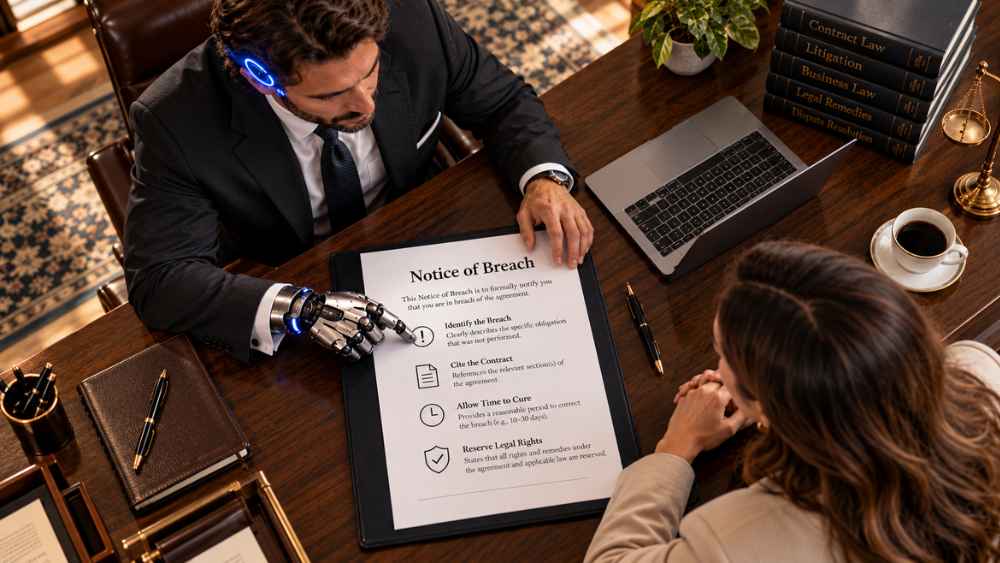
“The customer sent a Notice of Breach identifying the missed milestone, citing the contract, giving ten business days to cure, and reserving termination rights.”
What Is a Notice of Breach?
A Notice of BreachMaterial BreachA Material Breach is a serious contract failure that substantially defeats the other party’s expected benefit. It can excuse further performance, support termination, and trigger damages or other remedies, although materiality depends on...View definition is a written communication stating that another party violated a contract or legal obligation.
It commonly identifies the breach, supporting facts, required cure, deadline, and possible consequences.
Therefore, the notice can become an important step before termination or litigationLegal DisputeA legal dispute is a disagreement or controversy involving claimed legal rights, duties, liabilities, property, or remedies. It can be resolved through negotiation, mediation, arbitration, administrative proceedings, litigation, or settlement depending on the...View definition .
Standard Notice of Breach — Sample Contract Language
Suppose a software vendor misses a required implementation milestone.
What Is the Purpose of a Notice of Breach?
A notice of breach tells the receiving party what the sender claims went wrong.
It can also provide an opportunity to correct the problem.
Therefore, notice can prevent avoidable disputes and preserve contractual rights.
Notice of Breach vs. Demand Letter
A notice of breach focuses on identifying a contractual or legal violation.
A demand letterCease and Desist LetterA cease and desist letter is a written demand asking a person or business to stop specified allegedly unlawful or harmful conduct. It is generally not a court order, but it can provide...View definition can request payment, performance, settlement, or other relief.
Therefore, one letter can function as both documents when drafted appropriately.
Notice of Breach vs. Notice of Default
A notice of defaultNotice of DefaultA notice of default formally identifies a contractual failure and explains the cure required before specified remedies may be exercised.View definition states that a contractual default has occurred under defined agreement terms.
A notice of breach can use broader language about nonperformance or violation.
Therefore, contract definitions should control the terminology.
Notice of Breach vs. Data Breach Notice
A contract notice concerns failure to perform a legal obligation.
A data breach noticeBreach NotificationBreach notification is the process of notifying legally required parties after a qualifying security incident involving protected information.View definition concerns unauthorized access, disclosure, loss, or compromise of protected information.
Therefore, the phrases should not be confused.
When Is a Notice of Breach Required?
A contract can require written notice before remedies become available.
StatutesPrimary AuthorityPrimary Authority is law issued by an institution with official power to create or state legal rules. Constitutions, statutes, regulations, court decisions, and court rules can be primary authority, while binding effect depends...View definition can also impose notice duties in specific transactions.
Therefore, the agreement and governing lawBoilerplate ClauseA boilerplate clause is standardized contract language addressing recurring legal mechanics such as notice, assignment, governing law, waiver, severability, and integration.View definition should be reviewed first.
What Is a Notice-and-Cure Clause?
A notice-and-cure clause requires notice of a breach and gives the breaching party time to correct it.
The cure periodTermination ClauseA Termination Clause defines when and how parties can end a contract, including cause, convenience, notice, cure periods, fees, and effective dates. Strong clauses also address accrued payments, surviving obligations, confidentiality, data return,...View definition can apply before termination, damagesLegal RemedyA legal remedy is the relief a court or other authorized tribunal can provide after a legal right has been violated. Remedies can include damages, injunctions, restitution, specific performance, rescission, declarations, and other...View definition , suspension, or another remedyCause of ActionA Cause of Action is a recognized set of legal elements supporting a right to judicial relief. Its elements can arise from statutes, constitutions, regulations, or case law, and the claimant generally must...View definition .
Therefore, skipping notice can jeopardize enforcement rights.
What Is a Cure Period?
A cure period is the time allowed to correct a breach after notice.
For example, a services agreement can provide ten business days to cure nonpayment.
Therefore, the notice should calculate the deadline correctly.
What Does Cure Mean?
Cure means correcting a contractual defect or violation.
A cure can include payment, replacement, repair, completion, or stopping prohibited conduct.
See Cornell LII’s cure overview.
What Is a Material Breach?
A material breachBreach of ContractA breach of contract occurs when a party fails to perform an obligation required by an enforceable agreement. Examples include nonpayment, missed deadlines, defective performance, refusal to perform, or violation of another contract...View definition is a serious failure that can excuse further performance or support stronger remedies under governing law.
Not every minor contract violation is material.
Therefore, the notice should avoid overstating the legal effect of a technical breach.
What Is a Nonmaterial Breach?
A nonmaterial breach violates the agreement without defeating its essential purpose.
The nonbreaching party can still have remedies.
However, immediate termination can be unavailable when the contract requires cure first.
What Should a Notice of Breach Include?
A useful notice normally includes several specific items.
- Contract name and date.
- Parties involved.
- Relevant contract sections.
- Description of the breach.
- Important dates and facts.
- Required cure.
- Cure deadlineCure PeriodA cure period gives a party an opportunity to correct a specified breach before certain remedies apply. Learn how notice, deadlines, and exceptions work.View definition .
- Potential consequences.
- Reservation of rightsWaiver DefinitionA waiver is the intentional relinquishment of a known legal right, claim, privilege, or protection. A waiver can be express or implied, although enforceability depends on the right involved, the evidence of intent,...View definition .
- Required delivery method.
Therefore, vague notices can create avoidable disputes.
Should the Notice Quote the Contract?
Often, yes. Quoting or citing the breached provision can make the notice clearer.
However, the sender should confirm that the cited section actually applies.
Therefore, accurate contract references strengthen the notice.
Should the Notice Identify Supporting Facts?
Yes. The notice should describe enough facts for the recipient to understand the claimed breach.
For example, it can identify missed milestones, unpaid invoices, or unauthorized disclosures.
Therefore, factual specificity can support later enforcement.
Should the Notice State the Required Cure?
Usually. The recipient should know what action can correct the breach when cure is available.
For example, the notice can demand payment of a stated past-due amount.
Therefore, measurable cure instructions reduce ambiguityContract InterpretationContract interpretation is the legal process of determining what contractual language means and how the agreement applies to the parties' dispute.View definition .
What Is a Reservation of Rights?
A reservation of rights states that the sender does not waive other claims or remedies.
It can preserve rights while allowing cure or negotiationAlternative Dispute ResolutionAlternative Dispute Resolution, or ADR, includes negotiation, mediation, arbitration, settlement conferences, and other processes used outside ordinary trial adjudication. Each method differs in neutrality, confidentiality, party control, binding effect, cost, and review.View definition .
Therefore, the notice should avoid unintended waiver.
What Is Waiver?
Waiver is the intentional relinquishment of a known right under applicable law.
Repeatedly accepting noncompliance can create waiver arguments in some circumstances.
Therefore, consistent contract administrationContract ManagementContract management organizes agreements across intake, drafting, negotiation, approval, execution, storage, obligations, renewals, and termination.View definition matters.
What Is a No-Waiver Clause?
A no-waiver clause states that delay or failure to enforce a right does not automatically waive it.
However, conduct and governing law can still matter.
Therefore, parties should not rely on boilerplate alone.
What Is a Notice Provision?
A notice provision states how formal contract notices must be delivered.
It can identify addresses, recipients, email rules, courier methods, and effective dates.
Therefore, substance and delivery both matter.
Can Email Be Valid Notice?
Yes, when the contract or law permits it.
Some agreements require courier, certified mail, or notice to specific addresses.
Therefore, ordinary business email should not be assumed sufficient.
What Is Effective Notice?
Effective notice satisfies applicable contractual and legal requirements.
The contract can define when notice becomes effective after sending or receipt.
Therefore, the cure period can depend on the notice-effective date.
What Is Proof of Delivery?
Proof of delivery documents that the notice reached the required recipient or address.
Examples include courier confirmation, certified mail records, or contractual email receipts.
Therefore, delivery evidence can become important later.
Can Defective Notice Defeat Termination?
Potentially. Courts can enforce contractual notice conditions when the language makes compliance important.
The result depends on governing law, prejudiceLachesLaches is an equitable defense based on unreasonable delay that materially prejudices another party. It differs from a statute of limitations and is subject to important limits when federal statutes establish specific filing...View definition , substantial compliance, and contract wording.
Therefore, termination notices deserve careful review.
What Is Substantial Compliance With Notice?
Substantial compliance can excuse technical defects when the essential notice purpose was satisfied under applicable law.
Some jurisdictions apply stricter contract rules.
Therefore, the doctrine should not replace careful compliance.
What Is a Condition Precedent?
A condition precedentCondition PrecedentA Condition Precedent is an event that must occur before a contractual duty, right, claim, or interest arises. Conditions can govern closing, payment, approval, financing, delivery, or other obligations and differ from ordinary...View definition is an event that must occur before a contractual right or duty becomes enforceable.
Notice can operate as a condition precedent to termination or suit.
Therefore, failing to satisfy it can affect the claim.
Can a Notice of Breach Trigger Termination?
Yes. A contract can permit termination if the breach remains uncured after the stated period.
Some serious breaches can permit immediate termination.
Therefore, the agreement should be checked for different breach categories.
What Is Termination for Cause?
Termination for causeNotice of TerminationA notice of termination formally communicates that a legal or contractual relationship will end under specified grounds, timing, and notice requirements.View definition ends a contract because of specified breach, default, or misconduct.
Notice and cure requirements often apply.
Therefore, the terminating party should document each contractual step.
Can a Contract Allow Immediate Termination?
Yes. Agreements often permit immediate termination for insolvency, illegality, security failures, or serious confidentialityEmployment ContractAn employment contract is an agreement defining terms of an employer-employee relationship. It can cover duties, compensation, benefits, equity, confidentiality, intellectual property, restrictive covenants, termination, severance, and dispute procedures while remaining subject to...View definition violations.
The enforceability of those clauses depends on governing law.
Therefore, not every breach receives the same cure period.
Can a Notice Demand Payment?
Yes. A breach notice can identify unpaid amounts and demand payment as the cure.
It can also state interest or fees where authorized.
Therefore, calculations should be accurate and documented.
Can a Notice Demand Specific Performance?
The sender can request completion of contractual duties.
However, a court grants specific performance only when equitable requirements are met.
Therefore, a private demand does not itself create an equitable remedy.
Can a Notice Preserve a Damages Claim?
Yes. Notice can document when the breaching party learned about the claim and had an opportunity to cureCure NoticeA cure notice gives a party a defined opportunity to correct a breach or noncompliance before additional contractual or legal remedies are exercised.View definition .
Some statutes or contracts make notice essential to recovery.
Therefore, timely notice can preserve remedies.
What Is UCC Notice of Breach?
Article 2 of the Uniform Commercial Code includes a special notice rule for accepted goods.
Under UCC § 2-607, a buyer generally must notify the seller within a reasonable time after discovering breach.
See UCC § 2-607.
What Happens If a Buyer Fails to Give UCC Notice?
UCC § 2-607 states that a buyer can be barred from a remedy if required notice is not timely.
State enactments and case lawCase LawCase law is law developed through judicial decisions. Court opinions interpret statutes, constitutions, regulations, contracts, and prior decisions, and some rulings become binding precedent for lower courts.View definition can affect the standard.
Therefore, buyers should not delay warrantyWarrantyA warranty is an express or implied assurance concerning goods, services, property, or performance and can create contractual remedies when breached.View definition or nonconformity notice.
What Is a Reasonable Time for UCC Notice?
The UCC uses a reasonable-time standard rather than one universal number.
The answerCivil LitigationCivil Litigation is the court process for resolving noncriminal disputes through pleadings, motions, discovery, settlement, trial, judgment, and possible appeal. Federal civil litigation follows the Federal Rules of Civil Procedure, while state systems...View definition depends on circumstances and state law.
Therefore, prompt notice is usually safer.
Does the Notice Need to State Every Legal Theory?
Not always. The required detail depends on the contract, statuteStatutory LawStatutory law is written law enacted by a legislative body through the formal lawmaking process. Federal and state statutes can create rights, duties, prohibitions, causes of action, procedures, penalties, and remedies, and courts...View definition , and governing law.
However, sufficient information should alert the recipient to the claimed problem.
Therefore, overtechnical pleadingPleadingA pleading is a formal court document stating a party’s claims, defenses, or responses in a civil case. Federal Rules 7 and 8 identify permitted pleadings and govern claims, admissions, denials, affirmative defenses,...View definition language is usually unnecessary.
Can Notice Be Given Before the Breach Is Complete?
Potentially. An anticipatory repudiationAdequate Assurance of Performance ClauseAn adequate assurance of performance clause explains how a party can request proof that its counterparty can meet a contract obligation when credible concerns arise.View definition or clear threatened nonperformance can justify early legal action in some contracts.
The exact rights depend on contract lawContract LawContract law is the body of law that governs enforceable agreements. It explains how contracts form, what duties they create, how courts interpret them, what counts as a breach, and what remedies may...View definition .
Therefore, threatened breach and completed breach should be distinguished.
What Is Anticipatory Repudiation?
Anticipatory repudiation occurs when a party clearly indicates before performance is due that it will not perform.
The other party can receive remedies under applicable law.
Therefore, notice can document the repudiationAnticipatory BreachAnticipatory breach occurs when a party clearly states or demonstrates before performance is due that it will not perform, allowing the other party to treat the repudiation as a breach.View definition and response.
Does Notice Affect Mitigation of Damages?
It can. Once a party knows about a breach, it generally should take reasonable steps to limit avoidable losses.
See Cornell LII’s mitigation overview.
Therefore, notice can mark an important point in damages analysis.
Can a Notice of Breach Lead to Settlement?
Yes. A clear notice can start negotiation before positions harden.
The parties can agree on cure, credits, revised deadlines, or settlement terms.
Therefore, a notice can preserve relationships as well as rights.
Should a Notice Include a Settlement Offer?
It can, but the sender should distinguish settlement language from mandatory contractual notice.
Evidence rules can also affect compromise communications.
Therefore, combining purposes requires careful drafting.
Can a Notice Be Used in Litigation?
Yes. The notice can show breach allegations, knowledge, timing, or satisfactionAccord and SatisfactionAccord and satisfaction discharges an existing obligation through a substitute agreement and completed substitute performance.View definition of a notice condition.
Statements can also be examined for admissions or inconsistencies.
Therefore, factual accuracy matters.
Can a Notice of Breach Be Retracted?
A sender can withdraw or modify a notice in some circumstances.
However, legal consequences already triggered can remain.
Therefore, retraction should be documented clearly.
Can the Recipient Dispute the Notice?
Yes. The recipient can deny breach, explain performance, cure, reserve rights, or propose a resolution.
A written response can clarify contested facts.
Therefore, silence is not the only response option.
What Should a Response to Notice of Breach Include?
The response can address each allegation, supporting facts, cure status, defenses, and reservation of rights.
It can also request additional information.
Therefore, the recipient should avoid unnecessary admissions.
Notice of Breach Example
Suppose a software vendor misses a required implementation milestone.
The customer sends notice citing the milestone clause and gives ten business days to cure.
The letter reserves termination and damages rights if the breach remains uncured.
Why Does a Notice of Breach Matter?
A Notice of Breach can preserve remedies and create a structured opportunity to correct contractual nonperformance.
However, notice requirements vary significantly by contract and law.
The key questions are practical. What was breached? What does the contract require? Is cure available? How and when must notice be delivered?