
Default Judgment
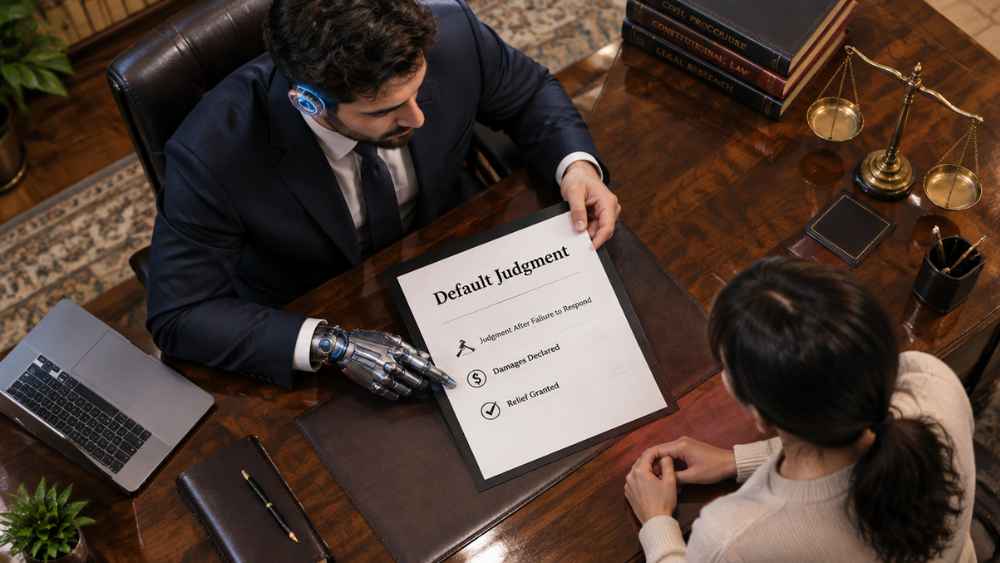
“After valid service and entry of default, the plaintiff sought a Default Judgment supported by declarations proving liability, damages, fees, and requested relief.”
What Is a Default Judgment?
A Default JudgmentAnswer to ComplaintAn Answer to Complaint is the defendant’s formal pleading responding to a civil complaint. It typically admits or denies allegations, states insufficient knowledge where appropriate, asserts defenses, and can include counterclaims, jury demands,...View definition is a judgmentCivil LawsuitA civil lawsuit is a noncriminal court action in which a plaintiff seeks a legal remedy from a defendant. The process can include jurisdiction, pleadings, service, discovery, motions, settlement, trial, judgment, enforcement, and...View definition entered after a party fails to plead or otherwise defend as required.
Federal Rule 55 governs entry of defaultMotion for Default JudgmentA Motion for Default Judgment asks a court to enter judgment because an opposing party failed to plead or otherwise defend. Federal Rule 55 separates entry of default from judgment and requires proof...View definition and default judgment.
Therefore, default is a procedural consequence rather than an automatic plaintiffCivil CourtCivil court is a general term for a court handling noncriminal disputes involving people, businesses, organizations, or government entities. Civil cases can involve contracts, injuries, property, employment, civil rights, and other disputes and...View definition victory. See Federal Rule of Civil Procedure 55.
Standard Default Judgment — Sample Contract Language
Suppose a properly served defendant never answers a federal complaintComplaintA Complaint is the pleading that ordinarily begins a civil lawsuit and states the plaintiff’s claims for relief. Federal complaints generally identify jurisdiction, factual allegations, legal claims, and requested relief while complying with...View definition .
What Is Entry of Default?
Entry of default is the clerk’s formal recognition that a party failed to plead or otherwise defend.
Rule 55(a) requires that failure to be shown by affidavitWitness DeclarationA witness declaration is a signed factual statement, often made under penalty of perjury under 28 U.S.C. § 1746 for use in legal proceedings.View definition or otherwise.
Therefore, entry of default and default judgment are separate steps.
Entry of Default vs. Default Judgment
Entry of default records the failure to defend.
Default judgment converts that procedural failure into judicial relief.
Therefore, plaintiffs often must obtain default before seeking judgment.
When Can the Clerk Enter Default?
The clerk enters default when a party against whom affirmative relief is sought fails to plead or otherwise defend.
The requesting party must demonstrate that failure.
Therefore, plaintiffs should verify response deadlines and proof of service.
Does Proper Service Matter?
Yes. A court generally needs valid service and personal jurisdictionMotion to DismissA motion to dismiss asks a court to end all or part of a case because of a legal or procedural defect. In federal civil cases, Rule 12 lists grounds including jurisdiction, venue,...View definition before entering judgment against a defendant.
Defective service can make a default judgment vulnerable.
Therefore, plaintiffs should establish service carefully.
What Is a Clerk-Entered Default Judgment?
Rule 55(b)(1) allows the clerk to enter judgment in narrow sum-certain circumstances.
The clerk can act only when the defendant defaulted for nonappearance and is not a minor or incompetent person.
Therefore, many default judgments require court action.
What Is a Sum Certain?
A sum certain is an amount fixed or capable of calculation from definite figures.
Examples can include a liquidated debt with clear arithmetic.
Therefore, disputed or discretionary damagesLegal RemedyA legal remedy is the relief a court or other authorized tribunal can provide after a legal right has been violated. Remedies can include damages, injunctions, restitution, specific performance, rescission, declarations, and other...View definition usually require judicial reviewAdministrative CourtAdministrative Court is a broad term for administrative tribunals that adjudicate disputes within agency systems. Federal administrative adjudication can involve ALJs, agency review, exhaustion requirements, and later judicial review under the Administrative Procedure...View definition .
When Must the Court Enter Default Judgment?
Rule 55(b)(2) requires an application to the court in cases outside the clerk’s limited authority.
The court can examine liability, damages, evidence, and requested relief.
Therefore, default judgment is not merely clerical in most cases.
Can the Court Hold a Default Hearing?
Yes. The court can conduct hearings or make referrals when needed to determine damages or establish allegations.
It can also investigate other matters needed for judgment.
Therefore, plaintiffs should prepare evidence proving the requested relief.
Does Default Admit Every Allegation?
Default can cause the court to treat well-pleaded liability allegations as admitted.
Legal conclusions and unsupported damages do not automatically become established.
Therefore, pleadingPleadingA pleading is a formal court document stating a party’s claims, defenses, or responses in a civil case. Federal Rules 7 and 8 identify permitted pleadings and govern claims, admissions, denials, affirmative defenses,...View definition quality still matters.
Must Damages Be Proven?
Often, yes. Unliquidated damages generally require evidence supporting amount and causationBreach of DutyA breach of duty occurs when a person or entity fails to meet a legal duty owed to another person. In negligence cases, breach is usually one element alongside duty, causation, and damages,...View definition .
Plaintiffs can use declarations, records, testimony, or hearings.
Therefore, default does not create unlimited damages.
Can a Default Judgment Exceed the Complaint?
Federal Rule 54(c) limits default relief to the kind and amount demanded in the pleadings.
This protects defendants who chose not to appear based on the stated demand.
Therefore, plaintiffs should plead requested relief carefully. See Federal Rule of Civil Procedure 54(c).
What If the Defendant Appeared?
A defendant who appeared personally or through a representative receives special Rule 55(b)(2) notice protection.
Written notice of the default-judgment application must generally arrive at least seven days before the hearing.
Therefore, informal participation can affect default procedure.
What Counts as an Appearance?
Formal filings clearly count as appearances.
Courts can also consider conduct showing an intent to defend.
Therefore, plaintiffs should review case-specific precedentMajority OpinionA majority opinion states the reasoning and result supported by more than half of the judges participating in an appellate decision and can provide binding precedent.View definition before assuming no appearance occurred.
Can a Minor Be Defaulted?
Rule 55 restricts default judgment against minors and incompetent persons.
A qualifying representative generally must have appeared.
Therefore, protected parties receive additional safeguards.
Can Default Judgment Be Entered Against the United States?
Rule 55(d) requires a claimantPlaintiffA Plaintiff is the party who initiates a civil lawsuit and asks a court for legal relief. The plaintiff generally files the complaint, establishes standing and jurisdiction, serves the defendant, proves the elements...View definition to establish a claim or right to relief by evidence satisfactory to the court.
Ordinary default assumptions are more limited.
Therefore, government defendants receive special protection.
What Is the Servicemembers Civil Relief Act Rule?
Federal law requires military-status protections before certain default judgments against individuals.
The plaintiff generally must file an affidavit concerning military service.
Therefore, SCRA compliance is essential. See 50 U.S.C. § 3931.
What If the Defendant Is in Military Service?
The SCRA can require appointment of counsel and permit stays in qualifying cases.
Additional protections can apply to reopening default judgments.
Therefore, plaintiffs should check military status before judgment.
What Evidence Supports a Default Application?
Typical evidence can include summonsSummonsA summons is a court-issued document notifying a defendant that a lawsuit has been filed and requiring a response. In federal civil cases, Rule 4 governs summons contents, issuance, service, waiver, proof of...View definition , proof of service, clerk default, declarations, contracts, invoices, and damages calculations.
Courts can require additional material.
Therefore, a complete record improves the application.
What Is a Motion for Default Judgment?
A Motion for Default Judgment asks the court to enter judgment under Rule 55(b)(2).
It usually explains service, default, liability, damages, and requested relief.
Therefore, the motionMotionA Motion is a formal request asking a court to issue an order or grant specific relief. Federal Rule 7(b) generally requires motions to state their grounds with particularity and identify the relief...View definition should track both pleading allegations and evidence.
Can Attorney Fees Be Awarded?
Yes, when a statuteStatutory LawStatutory law is written law enacted by a legislative body through the formal lawmaking process. Federal and state statutes can create rights, duties, prohibitions, causes of action, procedures, penalties, and remedies, and courts...View definition , contract, or other legal basis authorizes fees.
The applicantLetter of CreditA Letter of Credit is a documentary undertaking by an issuer to pay a beneficiary when a complying presentation is made.View definition generally must prove the amount and entitlement.
Therefore, default does not eliminate fee documentation.
Can Costs Be Awarded?
Yes. Governing lawBoilerplate ClauseA boilerplate clause is standardized contract language addressing recurring legal mechanics such as notice, assignment, governing law, waiver, severability, and integration.View definition and procedural rules can allow recoverable costs.
The court can require documentation.
Therefore, costs should be separately itemized.
Can Prejudgment Interest Be Awarded?
Potentially. Entitlement depends on substantive law, contract terms, and claim type.
The rate and accrualCause of ActionA Cause of Action is a recognized set of legal elements supporting a right to judicial relief. Its elements can arise from statutes, constitutions, regulations, or case law, and the claimant generally must...View definition date can require calculation.
Therefore, interest requests should identify their legal basis.
Can Injunctive Relief Be Entered by Default?
Potentially. The court still evaluates legal entitlement and the requested injunction’s scope.
Equitable requirements can remain relevant.
Therefore, default does not make every injunctionCease and Desist LetterA cease and desist letter is a written demand asking a person or business to stop specified allegedly unlawful or harmful conduct. It is generally not a court order, but it can provide...View definition automatic.
Can Declaratory Relief Be Entered by Default?
Potentially. The court must have jurisdictionLegal DisputeA legal dispute is a disagreement or controversy involving claimed legal rights, duties, liabilities, property, or remedies. It can be resolved through negotiation, mediation, arbitration, administrative proceedings, litigation, or settlement depending on the...View definition and an actual controversyDeclaratory ReliefDeclaratory relief is a binding judicial declaration of the parties' legal rights or obligations without necessarily ordering damages or specific conduct.View definition supporting declaratory relief.
The requested declarationSummary JudgmentSummary judgment is a court ruling entered without a full trial when no genuine dispute exists over any material fact and the moving party is entitled to judgment as a matter of law....View definition must follow the pleadings and law.
Therefore, default cannot create jurisdiction that is missing.
Can Jurisdiction Be Challenged After Default?
Yes. Default cannot create subject-matter jurisdiction.
A void judgment can also be attacked for lack of personal jurisdiction.
Therefore, courts often examine jurisdiction before entering default judgment.
Can a Clerk’s Entry of Default Be Set Aside?
Yes. Rule 55(c) allows the court to set aside an entry of default for good causeGood CauseGood Cause is a legally sufficient reason for a court to grant relief, modify a schedule, excuse conduct, or issue another order. The required showing depends on the governing rule and often considers...View definition .
Courts often consider culpability, prejudiceLachesLaches is an equitable defense based on unreasonable delay that materially prejudices another party. It differs from a statute of limitations and is subject to important limits when federal statutes establish specific filing...View definition , and potentially meritorious defenses.
Therefore, relief from mere entry of default uses a relatively flexible standard.
Can a Default Judgment Be Set Aside?
Yes. A final default judgment can be set aside under Rule 60(b)Motion to VacateA motion to vacate asks a court to set aside or grant relief from a judgment or order, often under Rule 60 based on mistake, fraud, voidness, newly discovered evidence, or extraordinary circumstances.View definition .
Possible grounds include mistake, newly discovered evidenceMotion for ReconsiderationA Motion for Reconsideration asks a court to revisit an earlier ruling. In federal civil practice, interlocutory review usually arises under Rule 54(b), while final judgments implicate Rules 59(e) and 60(b), plus applicable...View definition , fraud, voidness, satisfactionAccord and SatisfactionAccord and satisfaction discharges an existing obligation through a substitute agreement and completed substitute performance.View definition , or extraordinary circumstances.
Therefore, final judgments receive stronger protection. See Federal Rule of Civil Procedure 60.
What Is Excusable Neglect?
Excusable neglectMotion for ContinuanceA Motion for Continuance asks a court to postpone a hearing, trial, conference, or deadline. Courts typically examine good cause, diligence, prejudice, prior delays, scheduling effects, and local procedural requirements.View definition can support relief under Rule 60(b)(1) in qualifying circumstances.
Courts consider context rather than every missed deadline being excused.
Therefore, prompt action after discovering default matters.
What Is a Void Default Judgment?
A judgment can be void when the court lacked jurisdiction or entered judgment in violation of fundamental due processEx ParteEx Parte refers to a one-sided request, proceeding, or communication. Courts permit ex parte relief only in authorized circumstances, while professional-conduct rules generally bar private communications with judges unless law or court order...View definition .
Rule 60(b)(4) addresses void judgments.
Therefore, service and jurisdiction defects can remain serious after entry.
What Is a Meritorious Defense?
Courts considering relief from default often ask whether the defendant presents a potentially viable defense.
The defendant does not always need to prove the entire case at that stage.
Therefore, factual specificity strengthens a motion to set aside.
Does Federal Policy Favor Decisions on the Merits?
Federal courts often state a preference for resolving disputes on their merits.
However, deadlines and procedural rules still matter.
Therefore, default can be set aside in proper cases but is not meaningless.
Can Default Judgment Be Appealed?
Yes. A final default judgment can be appealed subject to appellate rules and preservation limits.
Issues can include jurisdiction, damages, and denial of Rule 60 relief.
Therefore, procedural postureCase BriefA case brief is a structured summary of a judicial opinion covering material facts, procedure, issue, rule, holding, reasoning, and disposition.View definition affects appellate reviewCourt of AppealsA court of appeals is a court that reviews decisions from lower courts. Federal courts of appeals usually examine the existing record for legal error rather than conducting a new trial or hearing...View definition .
How Is a Default Judgment Enforced?
Parties enforce a default judgment through applicable federal and state judgment procedures.
Collection can involve liens, garnishmentWrit of ExecutionA Writ of Execution is court process used to enforce a money judgment against nonexempt property. Federal Rule 69 makes execution the ordinary federal enforcement method while generally incorporating state execution procedure, and...View definition , execution, or other authorized remedies.
Therefore, obtaining judgment and collecting judgment are separate stages.
Do State Default Rules Differ?
Yes. State courts use their own civil procedure statutesPrimary AuthorityPrimary Authority is law issued by an institution with official power to create or state legal rules. Constitutions, statutes, regulations, court decisions, and court rules can be primary authority, while binding effect depends...View definition and rules.
Deadlines, notice, clerk authority, and set-aside standards can differ.
Therefore, Rule 55 should not be assumed in state courtState CourtA state court is a court established under a state constitution and state law. State courts hear the vast majority of U.S. civil and criminal cases, and their structures, names, procedural rules, and...View definition .
Default Judgment Example
Suppose a properly served defendant never answers a federal complaint.
The clerk enters default, and the plaintiff proves liability and unliquidated damages to the court.
Therefore, the court can enter a default judgment under Rule 55(b)(2).
Why Does Default Judgment Matter?
Default judgment prevents litigation from stalling when a party fails to defend.
However, service, jurisdiction, notice, damages proof, SCRA protection, and Rule 60 safeguards remain important.
Therefore, default procedure still requires careful legal proof.