
Plaintiff
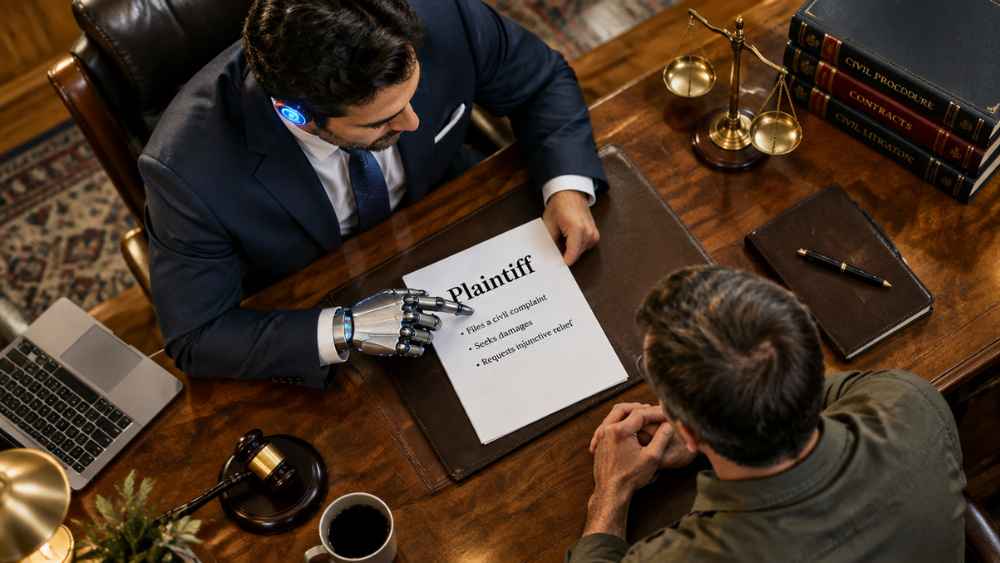
“The Plaintiff filed a complaint alleging breach of contract, served the defendant, and sought damages and injunctive relief.”
What Is a Plaintiff?
A PlaintiffCivil CourtCivil court is a general term for a court handling noncriminal disputes involving people, businesses, organizations, or government entities. Civil cases can involve contracts, injuries, property, employment, civil rights, and other disputes and...View definition is the party who initiates a civil lawsuit by filing a complaintCivil LawsuitA civil lawsuit is a noncriminal court action in which a plaintiff seeks a legal remedy from a defendant. The process can include jurisdiction, pleadings, service, discovery, motions, settlement, trial, judgment, enforcement, and...View definition or equivalent pleadingPleadingA pleading is a formal court document stating a party’s claims, defenses, or responses in a civil case. Federal Rules 7 and 8 identify permitted pleadings and govern claims, admissions, denials, affirmative defenses,...View definition .
The plaintiff asks the court for a legal remedyLegal RemedyA legal remedy is the relief a court or other authorized tribunal can provide after a legal right has been violated. Remedies can include damages, injunctions, restitution, specific performance, rescission, declarations, and other...View definition against another party.
Therefore, the plaintiff usually bears the burden of proving the asserted claims. See Cornell LII’s Plaintiff overview.
Standard Plaintiff — Sample Contract Language
Suppose a customer files a complaint alleging breach of contractBreach of ContractA breach of contract occurs when a party fails to perform an obligation required by an enforceable agreement. Examples include nonpayment, missed deadlines, defective performance, refusal to perform, or violation of another contract...View definition and seeks $50,000 in damages.
What Does a Plaintiff Do?
The plaintiff alleges facts, identifies legal claims, and requests relief.
The plaintiff then participates in service, discovery, motions, settlementLegal DisputeA legal dispute is a disagreement or controversy involving claimed legal rights, duties, liabilities, property, or remedies. It can be resolved through negotiation, mediation, arbitration, administrative proceedings, litigation, or settlement depending on the...View definition , and trialLawsuitA lawsuit is a legal dispute brought before a court for a decision or remedy. Civil lawsuits can involve pleadings, service, discovery, motions, settlement, trial, judgment, and possible appeal.View definition as required.
Therefore, filing begins rather than completes the case.
Plaintiff vs. Defendant
The plaintiff brings the civil claim.
The defendant responds to and defends against that claim.
Therefore, the labels describe opposing procedural roles.
Plaintiff vs. Petitioner
A petitioner asks a court or tribunal for relief in proceedings that use petition practice.
Appeals and special proceedings often use petitioner rather than plaintiff.
Therefore, party labels depend on procedural context.
Plaintiff vs. Claimant
A claimant asserts a right to payment, benefits, property, or other relief.
The term can appear in administrative, bankruptcy, insurance, and other proceedings.
Therefore, not every claimant is called a plaintiff.
Plaintiff vs. Appellant
An appellantNotice of AppealA Notice of Appeal is the filing that begins an appeal as of right from a federal district court. Federal Rules 3 and 4 govern its contents, filing location, and timing, with different...View definition is the party seeking appellate reviewCourt of AppealsA court of appeals is a court that reviews decisions from lower courts. Federal courts of appeals usually examine the existing record for legal error rather than conducting a new trial or hearing...View definition of a lower decision.
The original plaintiff can become either appellant or appelleeAppellate CourtAn Appellate Court reviews lower-court or tribunal decisions for legal and procedural error. It generally relies on the existing record, applies defined standards of review, and can affirm, reverse, vacate, modify, or remand.View definition on appeal.
Therefore, appellate labels depend on who files the appeal.
How Does a Plaintiff Start a Federal Civil Action?
Federal Rule of Civil Procedure 3 states that a civil action begins by filing a complaint.
Other requirements govern pleading and service.
Therefore, filing the complaint formally commences the federal case. See Federal Rule of Civil Procedure 3.
What Is a Complaint?
A complaint is the plaintiff’s initial pleading stating claims and requesting relief.
Federal Rule 8Cause of ActionA Cause of Action is a recognized set of legal elements supporting a right to judicial relief. Its elements can arise from statutes, constitutions, regulations, or case law, and the claimant generally must...View definition generally requires a short and plain statement of jurisdiction, claim, and requested relief.
Therefore, the complaint frames the lawsuit.
What Is Standing?
StandingJudicial ReviewJudicial review is the power of courts to examine government action and determine whether it complies with the Constitution, statutes, and other controlling law. It can apply to legislation, executive action, and administrative...View definition concerns whether the plaintiff has the required legal interest to invoke the court’s authority.
Federal Article III standingStandingStanding is the legal capacity of a party to bring a particular dispute before a court. Federal Article III standing generally requires injury in fact, causation, and redressability, while state-court standing can follow...View definition requires injury, traceability, and redressability.
Therefore, a plaintiff can lose before the merits if standing is absent.
What Is Subject-Matter Jurisdiction?
Subject-matter jurisdiction is the court’s authority to hear the type of dispute presented.
Federal jurisdiction can arise through federal question, diversity, or another statutory basis.
Therefore, the plaintiff must select a court with lawful jurisdiction.
What Is Personal Jurisdiction?
Personal jurisdictionMotion to DismissA motion to dismiss asks a court to end all or part of a case because of a legal or procedural defect. In federal civil cases, Rule 12 lists grounds including jurisdiction, venue,...View definition concerns the court’s power over a defendant.
The plaintiff must ordinarily sue in a forum satisfying constitutional and statutory requirements.
Therefore, the plaintiff’s preferred forum is not always available.
What Is Venue?
Venue determines the proper geographic federal district or state location for litigation.
Residence, events, property, and special statutesPrimary AuthorityPrimary Authority is law issued by an institution with official power to create or state legal rules. Constitutions, statutes, regulations, court decisions, and court rules can be primary authority, while binding effect depends...View definition can affect venue.
Therefore, jurisdiction and venue are distinct questions.
What Is Service of Process?
Service of processAffidavit of ServiceAn affidavit of service is a sworn statement documenting how and when legal papers were served and can provide proof of notice for jurisdiction, deadlines, and court procedure.View definition formally provides the defendant with the summons and complaintService of ProcessService of Process is the formal delivery of court papers through legally authorized procedures. Federal Rule 4 governs service of the summons and complaint, who may serve, methods for different defendants, waiver, proof,...View definition under governing rules.
The plaintiff generally has responsibility for timely service.
Therefore, filing alone does not always establish authority over the defendant.
What Is the Plaintiff’s Burden of Proof?
The plaintiff generally bears the burden to prove each required element of a civil claim.
The ordinary civil standard is preponderance of the evidenceBurden of ProofThe burden of proof is the legal responsibility to prove a fact or claim to the required level of certainty. It includes questions about who must produce evidence and how strongly the evidence...View definition unless law provides otherwise.
Therefore, allegations must ultimately be supported by evidence.
What Is a Prima Facie Case?
A prima facie caseBurden of ProductionThe burden of production requires a party to produce enough evidence on an issue for the issue to proceed to the factfinder rather than be resolved as a matter of law.View definition is evidence sufficient to establish the required elements unless rebutted.
The precise elements depend on the cause of action.
Therefore, the plaintiff must know the governing substantive law.
What Remedies Can a Plaintiff Seek?
A plaintiff can seek damages, injunctions, declarations, restitution, specific performance, or other authorized relief.
Available remedies depend on the claim.
Therefore, the requested remedy should match the legal theory.
What Are Damages?
Damages are monetary compensation awarded for legally recognized harm.
Categories can include compensatory, statutory, nominal, or punitive damagesBad FaithBad Faith generally involves dishonesty, improper purpose, unfair dealing, or conscious disregard of a legal duty. Contract, insurance, litigation, bankruptcy, and corporate law use different bad-faith standards and remedies.View definition where authorized.
Therefore, a plaintiff must prove both entitlement and amount when required.
What Is Injunctive Relief?
An injunctionCease and Desist LetterA cease and desist letter is a written demand asking a person or business to stop specified allegedly unlawful or harmful conduct. It is generally not a court order, but it can provide...View definition is a court orderCourt OrderA court order is a legally operative directive or decision issued by a court. Orders can control procedure, resolve motions, require action, prohibit conduct, or provide final or interim relief.View definition requiring or prohibiting specified conduct.
Plaintiffs seeking injunctions must satisfy additional equitable requirements.
Therefore, proving liability alone may not guarantee an injunction.
What Is Declaratory Relief?
Declaratory relief asks the court to state the parties’ legal rights or obligations.
Federal courts require an actual controversyDeclaratory ReliefDeclaratory relief is a binding judicial declaration of the parties' legal rights or obligations without necessarily ordering damages or specific conduct.View definition .
Therefore, a plaintiff cannot seek a merely advisory opinion.
Can There Be Multiple Plaintiffs?
Yes. Multiple plaintiffs can join one action when procedural joinderJoinderJoinder is the procedural process for combining claims or parties in one lawsuit when federal or state rules permit or require related disputes to be litigated together.View definition requirements are met.
They can share some claims while maintaining separate damages.
Therefore, each plaintiff’s standing and claims should still be evaluated.
What Is a Class Representative?
A class representativeClass Action LawsuitA class action lawsuit is a case where one or more representatives pursue claims for a larger group with similar legal issues. In federal court, class treatment generally requires certification under Rule 23.View definition is a named plaintiff seeking to represent a larger class under Rule 23 or state law.
The representative must satisfy adequacy and other certification requirements.
Therefore, class litigation imposes duties beyond an individual claim.
Can a Plaintiff Amend the Complaint?
Yes. Rule 15Motion for LeaveA motion for leave asks a court for permission to take a procedural step that is not available as of right, such as filing an amended pleading.View definition permits amendment in specified circumstances and favors leave when justice requires.
Deadlines and prejudiceLachesLaches is an equitable defense based on unreasonable delay that materially prejudices another party. It differs from a statute of limitations and is subject to important limits when federal statutes establish specific filing...View definition can limit amendment later.
Therefore, claims can evolve as facts become clearer.
Can a Plaintiff Dismiss the Case Voluntarily?
Yes. Rule 41(a) permits voluntary dismissal in defined circumstances.
The effect can be with or without prejudice depending on procedure and agreement.
Therefore, plaintiffs can sometimes end litigation without trial. See Federal Rule of Civil Procedure 41.
Can a Plaintiff Settle?
Yes. Plaintiffs and defendants can negotiate a settlement before or during litigation.
Some settlements require court approval.
Therefore, filing suit does not require proceeding to judgment.
What Is Discovery?
Discovery allows parties to obtain relevant, proportional information through authorized procedures.
Plaintiffs can serve interrogatoriesDiscovery DefinitionDiscovery is the pretrial process for exchanging information and evidence in a lawsuit. Common discovery tools include document requests, interrogatories, requests for admission, depositions, subpoenas, and expert disclosures.View definition , requests for production, admissions, and depositions.
Therefore, discovery helps test both claims and defenses.
Can a Defendant Bring Claims Against the Plaintiff?
Yes. A defendant can assert counterclaims where procedural and substantive requirements are met.
Some counterclaims are compulsory.
Therefore, the plaintiff can also become a counterclaimAnswer to ComplaintAn Answer to Complaint is the defendant’s formal pleading responding to a civil complaint. It typically admits or denies allegations, states insufficient knowledge where appropriate, asserts defenses, and can include counterclaims, jury demands,...View definition defendant.
What Happens if the Plaintiff Does Not Prosecute?
A court can dismiss an action when the plaintiff fails to prosecute or comply with rules and orders.
Rule 41(b) addresses this federal authority.
Therefore, plaintiffs must actively manage their cases.
Can a Plaintiff Recover Costs or Attorney Fees?
Costs and attorney feesMotion to CompelA motion to compel asks a court to order required discovery or disclosure when another party or person has not responded adequately. In federal civil cases, Rule 37 generally requires good-faith conference efforts...View definition depend on statutes, rules, contracts, and case outcome.
The American RuleAttorney's FeesAttorney's fees are legal-service charges that generally remain each party's responsibility under the American Rule unless a statute, contract, rule, or exception authorizes fee shifting.View definition generally requires each party to bear attorney fees absent an exception.
Therefore, fee recovery should not be assumed.
What Is a Pro Se Plaintiff?
A pro seSmall Claims CourtSmall claims court is a state court process for resolving lower-value civil disputes through simplified procedures. Claim limits, attorney rules, appeal rights, and available remedies vary by state and sometimes by the type...View definition plaintiff represents themselves without a lawyerPro SePro se means representing oneself in court without a lawyer. Self-represented litigants remain responsible for court rules, deadlines, service, evidence, and other procedural obligations.View definition .
Courts can construe some pro se filings liberally but still enforce procedural rules.
Therefore, self-representation does not eliminate legal requirements.
What Is a Government Plaintiff?
Government agencies and officials can bring civil enforcement actions as plaintiffs.
The government can seek penalties, injunctions, restitution, or other authorized remedies.
Therefore, plaintiff status is not limited to private persons.
Plaintiff Example
Suppose a customer files a complaint alleging breach of contract and seeks $50,000 in damages.
The customer becomes the plaintiff, and the sued company becomes the defendant.
Therefore, the customer bears the burden of proving the contract claimContract DisputeA contract dispute is a disagreement about contract formation, meaning, performance, breach, termination, or remedies.View definition .
Why Does Plaintiff Status Matter?
Plaintiff status determines important pleading, proof, service, standing, and procedural responsibilities.
The plaintiff chooses to invoke the court’s remedial power.
Therefore, every civil case begins with careful analysis of the plaintiff’s claim and forum.