
Motion to Strike
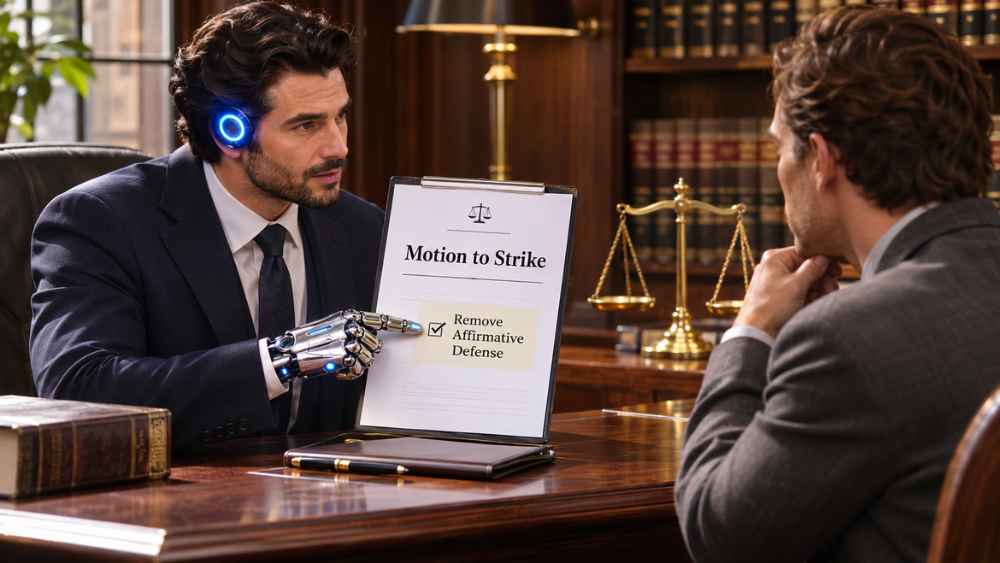
“The plaintiff filed a Motion to Strike an affirmative defense that was legally unavailable under controlling law.”
What Is a Motion to Strike?
A Motion to StrikeMotion to DismissA motion to dismiss asks a court to end all or part of a case because of a legal or procedural defect. In federal civil cases, Rule 12 lists grounds including jurisdiction, venue,...View definition asks a court to remove specified material from a pleadingPleadingA pleading is a formal court document stating a party’s claims, defenses, or responses in a civil case. Federal Rules 7 and 8 identify permitted pleadings and govern claims, admissions, denials, affirmative defenses,...View definition or, in some contexts, another filing.
Federal Rule 12(f) governs motions to strike pleadings in federal civil casesCivil DivisionA Civil Division is a court unit handling noncriminal disputes, with jurisdiction and procedures that vary by court system and locality.View definition .
Therefore, the rule has a narrow procedural focus. See Federal Rule of Civil Procedure 12(f).
Standard Motion to Strike — Sample Contract Language
Suppose an answerCivil LitigationCivil Litigation is the court process for resolving noncriminal disputes through pleadings, motions, discovery, settlement, trial, judgment, and possible appeal. Federal civil litigation follows the Federal Rules of Civil Procedure, while state systems...View definition asserts a defense that is legally unavailable under controlling lawChoice of Law ClauseA Choice of Law Clause selects the jurisdiction's substantive law intended to govern a contract or dispute. Courts often honor reasonable governing-law provisions, but conflict-of-laws rules, mandatory statutes, public policy, clause scope, and...View definition .
What Can Rule 12(f) Strike?
The court can strike an insufficient defense or redundant, immaterial, impertinent, or scandalous matter from a pleading.
Federal precedentMajority OpinionA majority opinion states the reasoning and result supported by more than half of the judges participating in an appellate decision and can provide binding precedent.View definition interprets those categories.
Therefore, disagreement with allegations is not enough.
What Is an Insufficient Defense?
An insufficient defense fails as a matter of law or is inadequately pleaded under the applicable standard.
Courts can be cautious when facts remain undeveloped.
Therefore, legal sufficiency matters.
What Is Immaterial or Impertinent Matter?
Immaterial matter lacks an important relationship to claims or defenses.
Impertinent matter does not properly concern the issues in the case.
Therefore, relevanceRelevanceRelevance asks whether evidence tends to make a consequential fact more or less probable. Federal Rules 401 and 402 establish the basic threshold, while Rule 403 permits exclusion when specified dangers substantially outweigh probative value.View definition to the pleading is central.
What Is Scandalous Matter?
Scandalous matter can include unnecessarily degrading allegations unrelated to legitimate issues.
Courts consider context and relevance.
Therefore, embarrassing facts are not automatically strikeable.
What Is the Rule 12(f) Deadline?
A party generally moves before responding to the pleading.
If no response is allowed, a party generally must move within 21 days after service.
Therefore, counsel should check timing immediately.
Can the Court Strike Material on Its Own?
Yes. Rule 12(f) allows the court to act on its own.
The court can do so without a party’s motionMotionA Motion is a formal request asking a court to issue an order or grant specific relief. Federal Rule 7(b) generally requires motions to state their grounds with particularity and identify the relief...View definition .
Therefore, the court can remove improper pleading material sua sponte.
Are Motions to Strike Favored?
Federal courts often treat motions to strike cautiously because they can create delay and address matters better resolved later.
PrejudiceLachesLaches is an equitable defense based on unreasonable delay that materially prejudices another party. It differs from a statute of limitations and is subject to important limits when federal statutes establish specific filing...View definition can influence the analysis.
Therefore, targeted motions are generally stronger than broad attacks.
Motion to Strike vs. Motion to Dismiss
A motion to dismiss attacks a claim or action under recognized dismissal grounds.
A Rule 12(f) motion targets specified pleading material or defenses.
Therefore, the remedies serve different functions.
Motion to Strike Example
Suppose an answer asserts a defense that is legally unavailable under controlling law.
The plaintiffCivil CourtCivil court is a general term for a court handling noncriminal disputes involving people, businesses, organizations, or government entities. Civil cases can involve contracts, injuries, property, employment, civil rights, and other disputes and...View definition timely moves under Rule 12(f).
Therefore, the court can decide whether to strike the defense.
Why Does a Motion to Strike Matter?
A motion to strike can narrow pleadings and remove legally insufficient or improper material.
Overuse can waste time.
Therefore, the requested relief should be precise.