
Trademark Class
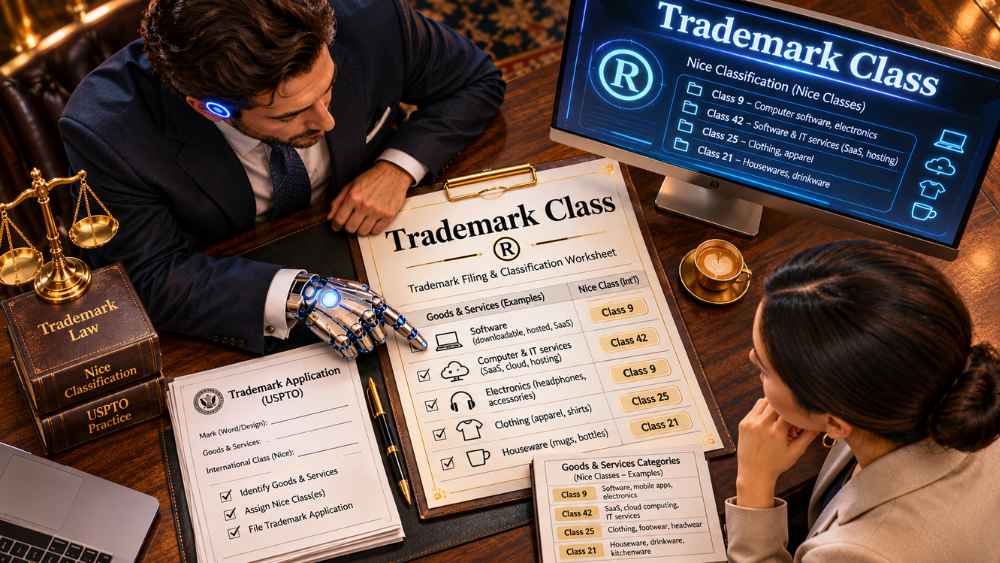
“The trademark filing separated the company’s downloadable software and hosted services into the appropriate Nice classes with USPTO-accepted identifications.”
What Is Trademark Class?
A trademark class is a category used to organize the goods and services identified in a trademark applicationTrademark ApplicationA trademark application asks the USPTO to register a mark for specified goods or services and must satisfy requirements concerning ownership, filing basis, identification, and use.View definition or registration. The United States uses the international Nice Classification system for this purpose.
See the USPTO Nice Classification guidance.
Standard Trademark Class — Sample Contract Language
A company uses one mark for downloadable software and for hosted software services. The application may need separate classes and carefully drafted identifications for the downloadable product and the online service.
Why Is Trademark Class Important?
Correct classification affects filing feesClerk of CourtA Clerk of Court manages a court’s major nonjudicial functions, including dockets, records, filings, notices, fees, jury administration, and operational systems. The clerk supports judicial work but does not decide the merits of...View definition , examination, searching, portfolio organization, and the clarity of the goods and services covered by an application. The class number alone does not define the full legal scope of a mark.
How Does Trademark Class Work?
Applicants identify the actual goods or services connected with the mark and place them in the appropriate Nice classes. One application can cover multiple classes when the filing requirements and fees for each class are satisfied.
What Rules Govern Trademark Class?
The Nice Classification has 45 international classes: Classes 1 through 34 cover goods and Classes 35 through 45 cover services. For 2026, the USPTO uses Nice Classification, Thirteenth Edition, version 2026.
How Is Trademark Class Different From Related Concepts?
A trademark class is an administrative classification, not a substitute for the wording of the goods-and-services identification. Goods in different classes can still be legally related for likelihood-of-confusion analysis.
What Should Practitioners Check?
Use the current USPTO ID Manual and Nice explanatory notes, especially for software, online services, retail services, and emerging technology. Avoid selecting a class based only on the applicant’s industry label.
Can AI Assist With Trademark Class?
AI can help organize disclosures, generate search terms, compare documents, and summarize public references. PatentabilityPrior ArtPrior art is legally available information used to evaluate whether patent claims are novel and nonobvious, including qualifying patents, publications, public uses, sales, and other disclosures.View definition , registrability, ownership, scope, filing strategy, and legal conclusions require expert review against authoritative sources.
Trademark Class Example
A company uses one mark for downloadable software and for hosted software services. The application may need separate classes and carefully drafted identifications for the downloadable product and the online service.
Why Does Trademark Class Matter?
Trademark classification works best when it follows the real goods and services. Precise identification usually matters more to examination and scope than the class number by itself.