
Copyright Definition
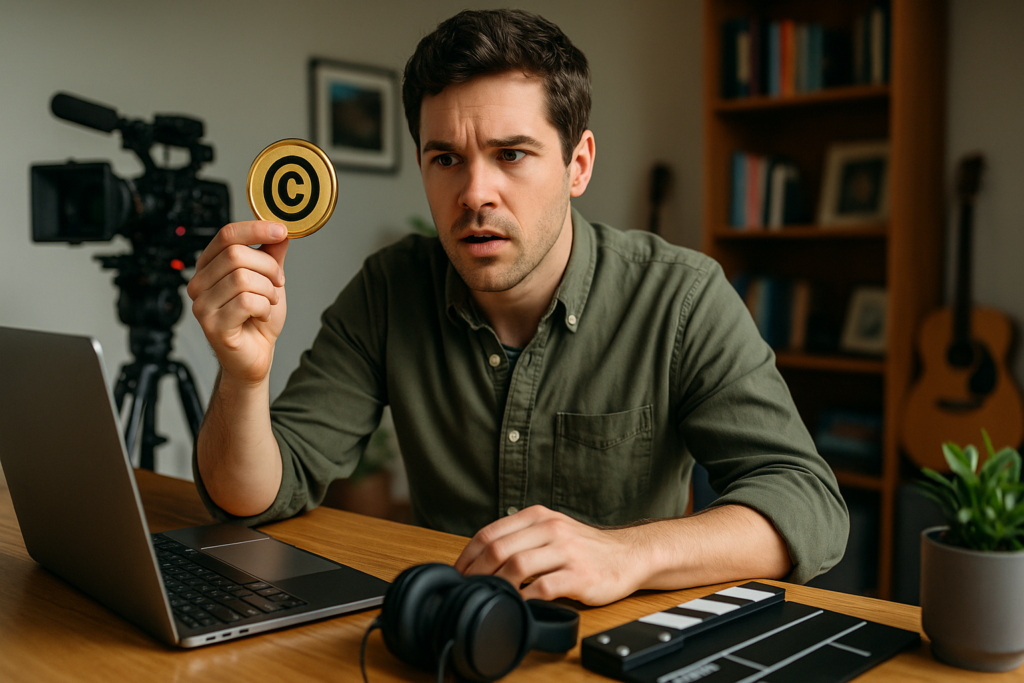
“The photographer registered the copyright in the original image before pursuing an infringement claim against a business that used it without permission.”
What Is Copyright?
Copyright is legal protection for original works of authorship fixed in a tangible medium. It can cover books, music, films, software, photographs, and many other creative works.
Copyright protects expression rather than ideas, facts, systems, or methods. Therefore, two people can discuss the same idea without owning the idea itself.
The U.S. Copyright Office explains that copyright exists automatically when an original work is created and fixed. See the Copyright Office overview.
Standard Copyright Definition — Sample Contract Language
Suppose a photographer posts an original image online. Another business downloads the image and uses it in advertising without permission.
What Does Copyright Protect?
Copyright protects original expression in qualifying works. The exact protection depends on the type of work.
Common examples include:
- Books and articles.
- Music and sound recordings.
- Movies and videos.
- Photographs and illustrationsRestatement of LawA Restatement of Law is an American Law Institute publication that organizes and explains legal doctrine, especially common law. Restatements are persuasive rather than automatically binding, although courts can adopt particular Restatement rules...View definition .
- Software code.
- Architectural works.
- Website content.
- Some compilations and databases.
However, protection applies only to original expression within those works.
What Does Copyright Not Protect?
Copyright does not protect every creative or useful concept. Ideas, facts, procedures, systems, and methods are generally outside copyright protection.
For example, a recipe’s basic method may not be protected as expression. However, original explanatory text or photographs can qualify.
Therefore, the distinction between idea and expression can be important.
When Does Copyright Begin?
Copyright generally begins when an original work is fixed in a tangible medium. Registration is not required for copyright to exist.
For example, a photographer can obtain copyright when a photograph is captured and stored. A writer can obtain rights when text is saved.
However, registration can provide important enforcement benefits.
What Does Fixed in a Tangible Medium Mean?
A work is fixed when it is recorded in a sufficiently stable form. The work must last long enough to be perceived or reproduced.
For example, saving a song recording to a file can satisfy fixation. Writing a poem on paper can also qualify.
Therefore, copyright generally does not require public releaseWaiver DefinitionA waiver is the intentional relinquishment of a known legal right, claim, privilege, or protection. A waiver can be express or implied, although enforceability depends on the right involved, the evidence of intent,...View definition .
What Rights Does a Copyright Owner Have?
Federal copyright law gives owners several exclusive rights. These rights can include reproduction, distribution, adaptation, public performance, and public display.
However, not every right applies in the same way to every work. Statutory limitations and exceptions also apply.
See 17 U.S.C. § 106.
What Is Copyright Infringement?
Copyright infringementCopyright InfringementCopyright infringement occurs when someone violates an exclusive copyright right without authorization or another valid legal basis. Claims can involve copying, derivative works, distribution, performance, display, or secondary liability, subject to defenses and...View definition occurs when someone violates an exclusive copyright right without permission or a valid legal defense.
For example, copying and selling a protected book without authorization can create infringement liability. Uploading protected video can also create risk.
However, fair use and other statutory limitations can permit some uses.
Do You Have to Register a Copyright?
No. Copyright generally exists automatically once the legal requirements are met.
However, registration provides important advantages. For U.S. works, registration is generally required before filing an infringement lawsuitLawsuitA lawsuit is a legal dispute brought before a court for a decision or remedy. Civil lawsuits can involve pleadings, service, discovery, motions, settlement, trial, judgment, and possible appeal.View definition in federal courtFederal CourtA federal court is a court within the U.S. federal judicial system. Federal courts have limited jurisdiction, so they hear only cases authorized by the Constitution or federal law, including many federal-question and...View definition .
In addition, timely registration can affect available damagesLegal RemedyA legal remedy is the relief a court or other authorized tribunal can provide after a legal right has been violated. Remedies can include damages, injunctions, restitution, specific performance, rescission, declarations, and other...View definition and attorney feesMotion to CompelA motion to compel asks a court to order required discovery or disclosure when another party or person has not responded adequately. In federal civil cases, Rule 37 generally requires good-faith conference efforts...View definition .
How Do You Register a Copyright?
An applicantLetter of CreditA Letter of Credit is a documentary undertaking by an issuer to pay a beneficiary when a complying presentation is made.View definition files a registration application with the U.S. Copyright Office. The applicant also submits the required fee and deposit material.
Next, the Office examines the application. If the claim meets legal requirements, the Office can register the work.
See the Copyright Office registration page.
Who Owns Copyright?
The author is usually the first copyright ownerCopyright NoticeA copyright notice identifies a copyright claim using the appropriate symbol or wording, publication year, and owner name, although notice is generally optional for modern U.S. works.View definition . However, ownership can change through employment rules, contracts, or transfers.
For example, a company can own a work made for hireWork Made for HireA Work Made for Hire is a copyrighted work created by an employee within the scope of employment or a qualifying specially commissioned work meeting strict statutory and written-agreement requirements. The classification determines...View definition . An author can also assign copyright to another party.
Therefore, authorship and ownership are related but not always identical.
What Is a Work Made for Hire?
A work made for hire can make an employer or commissioning party the legal author. Federal law defines when this rule applies.
Employee-created work can qualify when made within the scope of employmentVicarious LiabilityVicarious liability makes one party legally responsible for another person’s wrongful conduct because of their relationship. The doctrine commonly applies through respondeat superior when an employee commits a tort within the scope of...View definition . Certain commissioned works can also qualify with a written agreement.
However, not every contractor-created work is automatically made for hire.
Can Copyright Be Transferred?
Yes. Copyright owners can transfer all or part of their rights.
For example, an author can assign publishing rights to a publisher. A filmmaker can license distribution rights to a streaming service.
However, an exclusive transfer generally must satisfy federal writing requirements.
What Is a Copyright License?
A copyright licenseIntellectual Property LicenseAn intellectual property license grants permission to use specified IP rights while ownership generally remains with the licensor.View definition gives another party permission to use protected rights under stated terms. Licenses can be exclusive or nonexclusive.
For example, a photographer may license an image for one advertising campaign. The license can limit duration, territory, and media.
Therefore, permission can be narrower than full ownership.
What Is Fair Use?
Fair use is a statutory limitation on copyright rights. It can permit certain uses without permission.
Courts consider four statutory factors. These include purpose, nature, amount used, and market effectFair UseFair use is a copyright doctrine that can permit limited use of protected material without permission. Courts weigh four statutory factors involving purpose, the original work, the amount used, and the effect on...View definition .
Therefore, fair use depends on context rather than a fixed word or percentage rule.
What Is the Public Domain?
The public domainPublic DomainThe Public Domain includes works and material not protected by copyright because protection expired or never applied. Public-domain status can depend on publication date, authorship, country, government origin, and whether a later edition...View definition includes works that are not protected by copyright. Anyone can generally use public-domain material without copyright permission.
A work can enter the public domain when copyright expires. Some government works can also be outside federal copyright protection.
However, other rights can still affect use in some situations.
How Long Does Copyright Last?
Copyright duration depends on when and how the work was created. For many modern individual works, protection lasts for the author’s life plus 70 years.
Different rules apply to works made for hire and some older works. Therefore, copyright duration can require a date-specific analysis.
See the Copyright Office duration FAQ.
What Is a Copyright Notice?
A copyright notice identifies a copyright claim. A common notice includes the © symbol, year, and owner name.
Notice is generally not required for modern U.S. works. However, it can still provide useful public information.
What Does the © Symbol Mean?
The © symbol signals a copyright claim in a work. It does not itself create copyright.
For example, a website footer may include © followed by a year and company nameTrade NameA trade name identifies a business or vocation. It can also function as a trademark when used to identify the source of particular goods or services.View definition .
Therefore, the symbol is informative rather than the source of protection.
Copyright vs. Trademark
Copyright protects original creative expression. Trademark protects source-identifying branding.
For example, a logo can sometimes receive both forms of protection. However, each legal system protects a different interest.
Therefore, copyright registration does not replace trademark registrationTrademark DefinitionA trademark is a word, phrase, symbol, design, or other source identifier that distinguishes one seller’s goods or services from others. U.S. rights can arise through use, while federal registration can provide additional...View definition .
Copyright vs. Patent
A patent protects qualifying inventions or designs. Copyright protects original expression.
For example, software code can receive copyright protection. A new technical process may involve patent lawPatent DefinitionA patent is a federal right that can exclude others from making, using, selling, offering, or importing a protected invention. U.S. patents can cover qualifying utility inventions, ornamental designs, and certain plants.View definition .
Therefore, one product can involve multiple intellectual property rightsIntellectual PropertyIntellectual property, or IP, is a group of legal rights that protect certain inventions, creative works, brands, and confidential business information. Major U.S. categories include patents, copyrights, trademarks, and trade secrets.View definition .
Copyright and Software
Software can qualify for copyright protection as a literary work. Copyright can protect original source code and object code expression.
However, copyright does not protect the underlying idea or functional method by itself.
Therefore, software disputes often require careful separation of expression from function.
Copyright and Artificial Intelligence
U.S. copyright protection requires human authorship under current Copyright Office policy. Therefore, purely machine-generated material may not qualify for copyright.
However, human-created selection, arrangement, or modifications can sometimes qualify. The analysis depends on the human contributionThird Party ComplaintA third-party complaint uses Rule 14 impleader to bring a nonparty into a lawsuit when that person may be liable to a defending party for all or part of the original claim.View definition .
See the Copyright Office AI initiative.
What Remedies Can Copyright Owners Seek?
Copyright remedies can include injunctions, actual damagesLiquidated DamagesLiquidated damages are a contractually agreed amount or formula payable after a specified breach. Courts generally enforce them when they reasonably compensate for difficult-to-measure losses rather than operating as an unlawful penalty.View definition , infringer profits, and statutory damages in qualifying cases.
Attorney fees can also be available under statutory conditions. Therefore, registration timing can matter significantly.
See 17 U.S.C. Chapter 5.
Copyright Example
Suppose a photographer posts an original image online. Another business downloads the image and uses it in advertising without permission.
The photographer may have an infringement claim. However, defenses and licensing facts could affect the result.
If the work was timely registered, additional statutory remedies may also be available.
Why Does Copyright Matter?
Copyright gives creators legal control over many uses of original expression. Therefore, it supports licensing, publishing, entertainment, software, and other creative industries.
However, copyright also includes limitations such as fair use and public-domain rules.
The key questions are practical. What expression is protected? Who owns it? What use occurred? Does an exception apply?