
Moral Rights
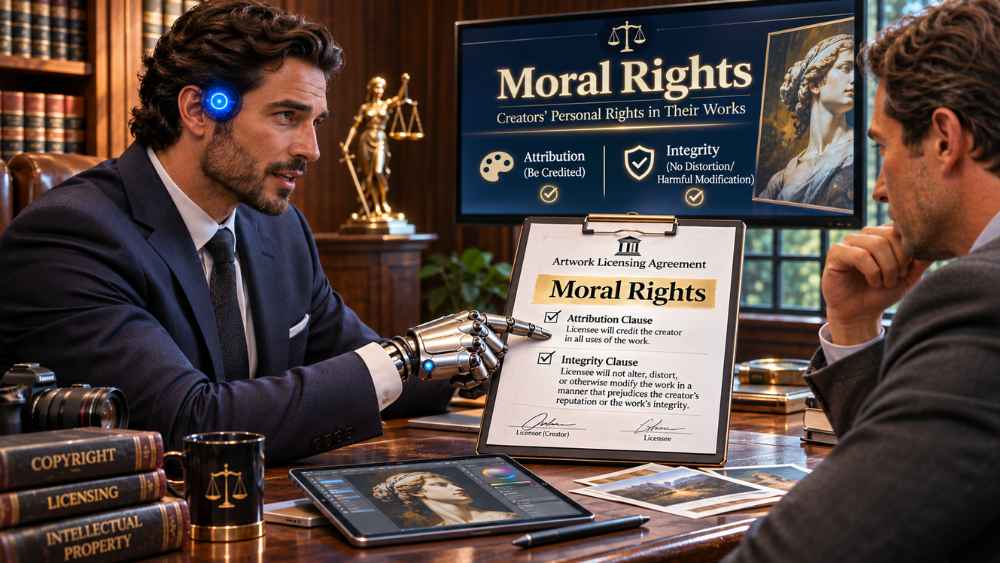
“The licensing agreement addressed copyright ownership separately from the artist’s attribution, integrity, modification, and moral-rights provisions.”
What Is Moral Rights?
Moral rights are personal rights associated with authorship that are distinct from economic rights to reproduce, distribute, display, perform, or license a work. The best-known moral rights are attribution and integrity.
See the U.S. Copyright Office study on attribution and integrity rights.
Standard Moral Rights — Sample Contract Language
A gallery plans to alter and relocate a large visual artwork. Before proceeding, it evaluates the artist’s contract and whether VARA or another applicable moral-rights regime restricts alteration, destruction, or attribution.
Why Is Moral Rights Important?
Moral rights can affect credits, modifications, destruction, restoration, licensing, and international exploitation of creative works. Their scope varies sharply by jurisdictionLegal DisputeA legal dispute is a disagreement or controversy involving claimed legal rights, duties, liabilities, property, or remedies. It can be resolved through negotiation, mediation, arbitration, administrative proceedings, litigation, or settlement depending on the...View definition and by the type of work involved.
How Does Moral Rights Work?
The right of attribution protects interests in being identified, or not falsely identified, as the author. The right of integrity protects against certain prejudicial distortions, mutilations, or modifications of a work.
What Rules Govern Moral Rights?
In the United States, federal moral-rights protection is limited compared with many other countries. The Visual Artists Rights Act (VARA) grants specified attribution and integrity rights to authors of qualifying works of visual art, while other federal and state doctrines can protect related interests.
How Is Moral Rights Different From Related Concepts?
Moral rights are distinct from economic copyright ownershipWork Made for HireA Work Made for Hire is a copyrighted work created by an employee within the scope of employment or a qualifying specially commissioned work meeting strict statutory and written-agreement requirements. The classification determines...View definition . A creator may transfer economic rights while separate personal rights remain or require a specific waiver, depending on the governing lawBoilerplate ClauseA boilerplate clause is standardized contract language addressing recurring legal mechanics such as notice, assignment, governing law, waiver, severability, and integration.View definition .
What Should Practitioners Check?
For international projects, contracts should address credit, modification, approval, waiver, restoration, and destruction rather than assuming a copyright assignment resolves every issue. The applicable country law and work category matter greatly.
Can AI Assist With Moral Rights?
AI can help organize disclosures, generate search terms, compare documents, and summarize public references. PatentabilityPrior ArtPrior art is legally available information used to evaluate whether patent claims are novel and nonobvious, including qualifying patents, publications, public uses, sales, and other disclosures.View definition , registrability, ownership, scope, filing strategy, and legal conclusions require expert review against authoritative sources.
Moral Rights Example
A gallery plans to alter and relocate a large visual artwork. Before proceeding, it evaluates the artist’s contract and whether VARA or another applicable moral-rights regime restricts alteration, destruction, or attribution.
Why Does Moral Rights Matter?
Moral rights protect personal interests in authorship and integrity, not merely economic exploitation. Contract drafting and jurisdiction-specific analysis are essential when works are modified or distributed internationally.