
Mistrial
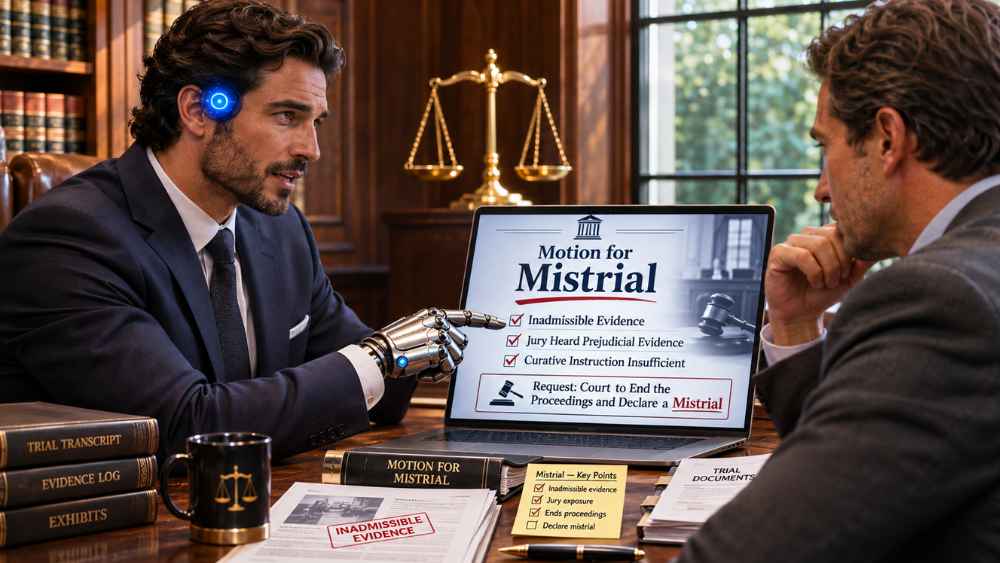
“Defense counsel moved for a mistrial after the jury heard evidence the court had previously ruled inadmissible, arguing that a curative instruction could not eliminate the prejudice.”
What Is Mistrial?
A mistrial occurs when a trialLawsuitA lawsuit is a legal dispute brought before a court for a decision or remedy. Civil lawsuits can involve pleadings, service, discovery, motions, settlement, trial, judgment, and possible appeal.View definition is ended before a valid verdict or final determination because the proceeding cannot fairly or properly continue. A mistrial ordinarily does not resolve the merits of the underlying claims or charges.
See Cornell LII’s definition of mistrial.
Standard Mistrial — Sample Contract Language
During a criminal trial, the juryJuryA Jury is a group of citizens selected to perform a legal factfinding or charging function. Petit juries decide facts and return verdicts in trials, while grand juries determine whether probable cause supports...View definition reports after extended deliberations that it cannot reach the required unanimous verdict. The judgeJudgeA Judge is a judicial officer who presides over legal proceedings, applies law, manages procedure, rules on motions and evidence, and issues orders or judgments. Trial, appellate, Article III, magistrate, bankruptcy, and state...View definition declares a mistrial, and the parties then address whether and when a retrial may occur.
Why Is Mistrial Important?
Mistrial rulings can end weeks or months of trial work and determine whether the case must be retried. They also raise preservation, double-jeopardy, scheduling, evidentiary, and strategic issues.
How Does Mistrial Work?
A party can move for a mistrial, and a judge may also consider one when serious prejudiceLachesLaches is an equitable defense based on unreasonable delay that materially prejudices another party. It differs from a statute of limitations and is subject to important limits when federal statutes establish specific filing...View definition or jury deadlock cannot be cured. Courts often evaluate whether a lesser remedyCause of ActionA Cause of Action is a recognized set of legal elements supporting a right to judicial relief. Its elements can arise from statutes, constitutions, regulations, or case law, and the claimant generally must...View definition , such as a curative instruction or replacement of a juror, can address the problem.
What Rules Govern Mistrial?
Grounds can include a hung jury, serious juror misconduct, highly prejudicial evidence, improper statements, or other procedural events that threaten a fair trial. Retrial rules differ between civil and criminal cases, and double-jeopardy principles can matter in criminal proceedings.
How Is Mistrial Different From Related Concepts?
A mistrial differs from a new trial. A mistrial ends the current trial before a valid final resolution, while a new-trial order generally follows a verdict or judgmentCivil LawsuitA civil lawsuit is a noncriminal court action in which a plaintiff seeks a legal remedy from a defendant. The process can include jurisdiction, pleadings, service, discovery, motions, settlement, trial, judgment, enforcement, and...View definition that is later set aside or reopened under applicable rules.
What Should Practitioners Check?
Raise known grounds promptly, make a clear record of the prejudice, request or oppose curative measures, and preserve objections. After a mistrial, identify which prior rulings, deadlines, and evidentiary issues remain operative for any retrial.
Can AI Assist With Mistrial?
AI can help organize the record, track issues, summarize testimony, and draft working outlines. Procedural deadlines, admissibilityRelevanceRelevance asks whether evidence tends to make a consequential fact more or less probable. Federal Rules 401 and 402 establish the basic threshold, while Rule 403 permits exclusion when specified dangers substantially outweigh probative value.View definition , preservation, strategy, and controlling lawChoice of Law ClauseA Choice of Law Clause selects the jurisdiction's substantive law intended to govern a contract or dispute. Courts often honor reasonable governing-law provisions, but conflict-of-laws rules, mandatory statutes, public policy, clause scope, and...View definition require attorney review and court-specific verificationVerified ComplaintA verified complaint is a complaint accompanied by a sworn verification or declaration under penalty of perjury confirming specified factual allegations.View definition .
Mistrial Example
During a criminal trial, the jury reports after extended deliberations that it cannot reach the required unanimous verdict. The judge declares a mistrial, and the parties then address whether and when a retrial may occur.
Why Does Mistrial Matter?
A mistrial is a major procedural remedy used when the current trial cannot fairly reach a valid conclusion. The consequences depend on why it was declared and what law governs a possible retrial.