
Bench Trial
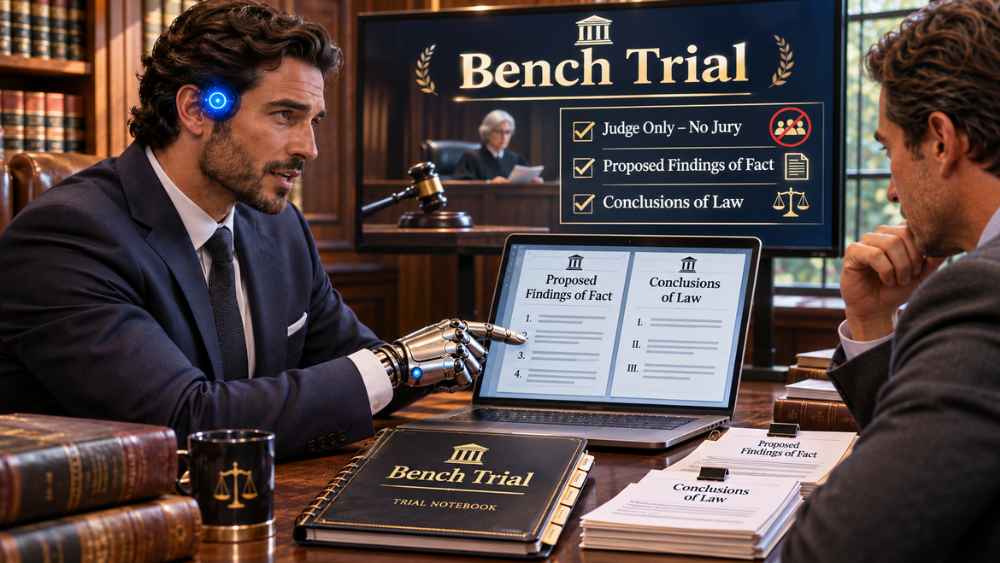
“Because the case proceeded as a bench trial, counsel organized the evidence around proposed findings of fact and conclusions of law for the judge.”
What Is Bench Trial?
A bench trialTrial CourtA Trial Court is a court where parties present evidence, establish facts, and obtain an initial judgment or verdict. Federal district courts are the primary federal trial courts, while state systems use varied...View definition is a trialLawsuitA lawsuit is a legal dispute brought before a court for a decision or remedy. Civil lawsuits can involve pleadings, service, discovery, motions, settlement, trial, judgment, and possible appeal.View definition conducted without a juryJuryA Jury is a group of citizens selected to perform a legal factfinding or charging function. Petit juries decide facts and return verdicts in trials, while grand juries determine whether probable cause supports...View definition in which the judgeJudgeA Judge is a judicial officer who presides over legal proceedings, applies law, manages procedure, rules on motions and evidence, and issues orders or judgments. Trial, appellate, Article III, magistrate, bankruptcy, and state...View definition decides disputed facts and applies the law. It is also called a court trial or nonjury trial.
See Cornell LII’s definition of bench trial.
Standard Bench Trial — Sample Contract Language
The parties waive a civil jury and try the dispute to the judge. After hearing testimony and reviewing exhibits, the judge issues findings of fact, conclusions of law, and a judgmentCivil LawsuitA civil lawsuit is a noncriminal court action in which a plaintiff seeks a legal remedy from a defendant. The process can include jurisdiction, pleadings, service, discovery, motions, settlement, trial, judgment, enforcement, and...View definition .
Why Is Bench Trial Important?
A bench trial changes who serves as factfinderJury TrialA jury trial uses jurors to decide disputed facts and return a verdict while the judge resolves legal questions and instructs the jury on the law. Jury rights and procedures vary by case...View definition and can change how lawyers present evidence, structure arguments, propose findings, and preserve issues for appealCourt of AppealsA court of appeals is a court that reviews decisions from lower courts. Federal courts of appeals usually examine the existing record for legal error rather than conducting a new trial or hearing...View definition .
How Does Bench Trial Work?
The judge hears testimony, reviews exhibits, resolves credibilityCross ExaminationCross Examination is questioning of a witness by an opposing party after direct examination. Federal Rule 611 generally permits leading questions and allows inquiry into the subject of direct testimony and credibility, while...View definition disputes, makes factual findings, and applies the governing lawBoilerplate ClauseA boilerplate clause is standardized contract language addressing recurring legal mechanics such as notice, assignment, governing law, waiver, severability, and integration.View definition . In many civil benchBenchThe bench is the judge's raised courtroom desk and is also a common legal term for a judge, group of judges, or the judiciary.View definition trials, the court issues findings of fact and conclusions of law explaining the basis for judgment.
What Rules Govern Bench Trial?
The availability of a bench trial depends on the claims, constitutional and statutory jury rights, procedural rules, and whether any jury right is properly demanded or validly waived. Different rules apply in criminal and civil proceedings.
How Is Bench Trial Different From Related Concepts?
In a jury trial, jurors generally resolve disputed facts while the judge decides legal questions and instructs the jury. In a bench trial, the judge performs both the factfinding and legal decision-making functions.
What Should Practitioners Check?
Organize proof around the elements the judge must find, prepare proposed findings and conclusions where appropriate, preserve evidentiary objections, and build a clear record for appellate review.
Can AI Assist With Bench Trial?
AI can help organize the record, track issues, summarize testimony, and draft working outlines. Procedural deadlines, admissibilityRelevanceRelevance asks whether evidence tends to make a consequential fact more or less probable. Federal Rules 401 and 402 establish the basic threshold, while Rule 403 permits exclusion when specified dangers substantially outweigh probative value.View definition , preservation, strategy, and controlling lawChoice of Law ClauseA Choice of Law Clause selects the jurisdiction's substantive law intended to govern a contract or dispute. Courts often honor reasonable governing-law provisions, but conflict-of-laws rules, mandatory statutes, public policy, clause scope, and...View definition require attorney review and court-specific verificationVerified ComplaintA verified complaint is a complaint accompanied by a sworn verification or declaration under penalty of perjury confirming specified factual allegations.View definition .
Bench Trial Example
The parties waive a civil jury and try the dispute to the judge. After hearing testimony and reviewing exhibits, the judge issues findings of fact, conclusions of law, and a judgment.
Why Does Bench Trial Matter?
A bench trial still requires disciplined proof. Effective preparation connects admissible evidenceAdmissible EvidenceAdmissible Evidence is evidence a court permits the judge or jury to consider. In federal court, admissibility commonly depends on relevance, Rule 403 balancing, authentication, foundation, hearsay rules, privilege, witness competence, and other...View definition directly to each legal element and gives the court a clear path to the requested findings.