
Indemnification Clause
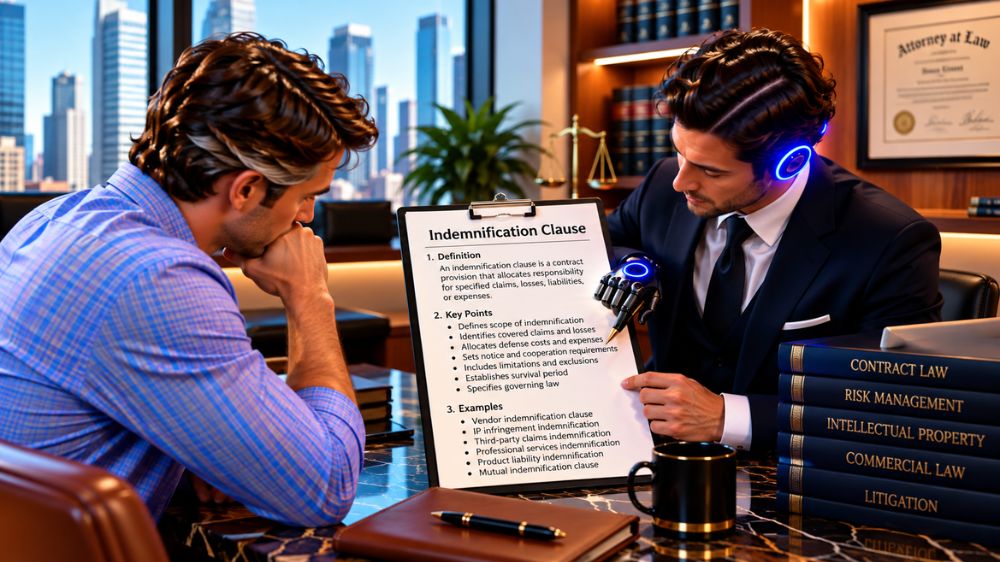
“The vendor agreed to an indemnification clause covering specified third-party intellectual property claims, including defense costs and settlement obligations.”
What Is an Indemnification Clause?
An indemnificationMaster Service Agreement (MSA)A Master Service Agreement, or MSA, sets recurring legal and commercial terms for an ongoing service relationship. The parties can then use SOWs, order forms, or schedules for project-specific scope, pricing, deliverables, and...View definition clause is a contract provision that allocates responsibility for specified claims, losses, liabilities, or expenses.
One party can agree to protect another party when a covered event occurs.
Therefore, indemnification is a major tool for allocating contractual risk.
Standard Indemnification Clause — Sample Contract Language
The vendor agrees to defend and indemnify the customer against certain third-party IP infringementIntellectual PropertyIntellectual property, or IP, is a group of legal rights that protect certain inventions, creative works, brands, and confidential business information. Major U.S. categories include patents, copyrights, trademarks, and trade secrets.View definition claims.
What Does Indemnification Mean?
Indemnification generally means compensating or protecting another party against specified losses or claims.
The exact obligation depends on the contract language and governing lawBoilerplate ClauseA boilerplate clause is standardized contract language addressing recurring legal mechanics such as notice, assignment, governing law, waiver, severability, and integration.View definition .
Therefore, the clause should identify both the trigger and the covered losses.
Who Is the Indemnifying Party?
The indemnifying party, or indemnitorIndemnity DefinitionIndemnity is a legal obligation to compensate or protect another party against specified losses, claims, liabilities, or expenses. It commonly arises through contracts and insurance and can include reimbursement, defense duties, settlement procedures,...View definition , is the party that promises to provide indemnification.
For example, a vendor can indemnify a customer for certain third-party intellectual property claims.
Therefore, the clause should identify the responsible party clearly.
Who Is the Indemnified Party?
The indemnified party, or indemnitee, receives the contractual protection.
The clause can also protect affiliates, directorsBoard of DirectorsA board of directors is the governing body of a corporation responsible for major oversight and decisions, including management supervision, strategic matters, significant transactions, and fiduciary governance.View definition , officersCorporation DefinitionA corporation is a legal entity created under state law that is separate from its owners, usually called shareholders. It can own property, enter contracts, incur debts, sue or be sued, and operate...View definition , employees, or agents.
However, expanding the protected group can increase the indemnitor’s exposure.
What Does “Indemnify, Defend, and Hold Harmless” Mean?
Contracts often use the phrase indemnify, defend, and hold harmless.
Indemnify generally concerns reimbursement or protection against covered loss.
Defend can create a duty to handle or fund the defense of covered claims.
Hold harmless can reinforce protection against specified liability, though interpretation varies by jurisdictionLegal DisputeA legal dispute is a disagreement or controversy involving claimed legal rights, duties, liabilities, property, or remedies. It can be resolved through negotiation, mediation, arbitration, administrative proceedings, litigation, or settlement depending on the...View definition .
What Is a Duty to Defend?
A duty to defend can require one party to take responsibility for defending a covered third-party claim.
For example, the clause can require the indemnitor to retain counsel and pay defense costs.
Therefore, defense obligations can arise before a court determines final liability.
What Is a Third-Party Claim?
A third-party claim is a claim brought by someone outside the contracting parties.
For example, a customer’s client can allege that a vendor’s software infringes a patent.
IndemnityThird Party ComplaintA third-party complaint uses Rule 14 impleader to bring a nonparty into a lawsuit when that person may be liable to a defending party for all or part of the original claim.View definition clauses often focus heavily on third-party claims.
Can Indemnification Cover Direct Claims?
Yes, if the contract language clearly covers claims between the contracting parties.
However, many clauses focus only on third-party claims.
Therefore, the parties should state whether the clause includes direct claims.
What Losses Can an Indemnity Cover?
The clause can define covered losses broadly or narrowly.
Examples can include damagesLegal RemedyA legal remedy is the relief a court or other authorized tribunal can provide after a legal right has been violated. Remedies can include damages, injunctions, restitution, specific performance, rescission, declarations, and other...View definition , judgments, settlements, penalties, costs, and reasonable attorney feesMotion to CompelA motion to compel asks a court to order required discovery or disclosure when another party or person has not responded adequately. In federal civil cases, Rule 37 generally requires good-faith conference efforts...View definition .
However, law or public policy can restrict recovery for some losses.
What Events Can Trigger Indemnification?
Parties can tie indemnification to specific risks.
- Third-party intellectual property claims.
- Breach of confidentialityEmployment ContractAn employment contract is an agreement defining terms of an employer-employee relationship. It can cover duties, compensation, benefits, equity, confidentiality, intellectual property, restrictive covenants, termination, severance, and dispute procedures while remaining subject to...View definition .
- Data-security incidents.
- Bodily injury or property damage.
- Violation of law.
- Tax obligations.
- Employment claims.
- Product liabilityLiability DefinitionLiability means legal responsibility for an act, omission, debt, loss, or other obligation. Liability can arise from negligence, contracts, statutes, strict-liability rules, or responsibility for another person’s conduct.View definition .
- NegligenceBreach of DutyA breach of duty occurs when a person or entity fails to meet a legal duty owed to another person. In negligence cases, breach is usually one element alongside duty, causation, and damages,...View definition or misconduct.
- Breach of representations or warranties.
Therefore, the trigger language should match the intended risk allocation.
What Is IP Indemnification?
IP indemnificationIP IndemnificationIP Indemnification allocates responsibility for specified third-party intellectual-property infringement claims, defense costs, settlements, and related remedies.View definition protects against specified intellectual property claims.
For example, a software provider can indemnify a customer against certain third-party copyright or patent claimsPatent ApplicationA Patent Application is a filing asking the USPTO to examine an invention for patent protection. Provisional and nonprovisional applications differ in purpose, requirements, examination, timing, publication, and their relationship to later patent...View definition .
The clause can also provide remedies such as replacement, modification, or license procurement.
What Is Data Breach Indemnification?
A data-security indemnity can allocate responsibility for claims and losses arising from specified security failures.
For example, the clause can cover third-party claims caused by a vendor’s breach of security obligations.
Therefore, the indemnity should coordinate with cybersecurity and insurance terms.
What Is Product Liability Indemnification?
Product contracts can allocate responsibility for injuries or property damage associated with a product.
For example, a manufacturer can indemnify a distributor for certain product-defect claims.
However, state law can limit indemnification for certain conduct.
What Is Negligence Indemnification?
An indemnity can address losses caused by negligence.
However, some jurisdictions require especially clear language before one party can shift liability for its own negligence.
Therefore, negligence indemnity requires careful drafting.
Can a Party Be Indemnified for Its Own Negligence?
Sometimes, but the answerCivil LitigationCivil Litigation is the court process for resolving noncriminal disputes through pleadings, motions, discovery, settlement, trial, judgment, and possible appeal. Federal civil litigation follows the Federal Rules of Civil Procedure, while state systems...View definition depends on governing law and the contract language.
Some states restrict or prohibit such provisions in particular industries.
Therefore, parties should review broad indemnification under applicable anti-indemnity statutesPrimary AuthorityPrimary Authority is law issued by an institution with official power to create or state legal rules. Constitutions, statutes, regulations, court decisions, and court rules can be primary authority, while binding effect depends...View definition and public policy.
What Are Anti-Indemnity Statutes?
Anti-indemnity statutes limit certain contractual indemnification obligations.
They are especially important in construction and other regulated contexts.
Therefore, a clause that appears valid in one state can be unenforceable in another.
What Is a Mutual Indemnification Clause?
A mutual indemnification clause creates indemnity obligations for both parties.
For example, each party can indemnify the other for claims caused by its own misconduct.
However, mutual language does not necessarily create equal economic exposure.
What Is a One-Way Indemnification Clause?
A one-way indemnification clause requires only one party to provide indemnity.
For example, a contractor can indemnify a property owner for specified third-party claims.
Therefore, one-way indemnities can shift substantial risk.
What Is an Indemnification Cap?
An indemnification cap limits the maximum amount payable for covered obligations.
For example, the parties can cap some indemnity exposure at contract fees.
However, parties often exclude certain indemnities from general liability caps.
How Does Indemnification Relate to Limitation of Liability?
Indemnification and limitation-of-liability clauses should be read together.
The contract should state whether indemnity obligations are subject to a liability capLimitation of Liability ClauseA limitation of liability clause sets contractual boundaries on recoverable losses or exposure. Learn how liability caps, exclusions, carve-outs, super caps, and indemnity terms work, with negotiation examples and enforceability considerations.View definition .
Therefore, a broad indemnity can override the practical effect of a negotiated cap if the documents are not coordinated.
What Are Indemnity Carve-Outs?
Carve-outs identify losses or claims that receive different treatment from the general liability rules.
For example, IP indemnity or confidentiality breaches can sit outside a standard damages capLimitation of LiabilityA limitation of liability is a contract clause that caps or restricts damages and remedies available for specified breaches or claims.View definition .
Therefore, carve-outs can create significant uncapped exposure.
What Is an Indemnification Basket?
An indemnification basket sets a threshold before certain indemnity claims become payable.
Baskets appear frequently in acquisitionMergerA merger is a corporate transaction combining entities under statute so that one survives or a new entity results, with assets and liabilities transferring according to law.View definition agreements.
Therefore, the basket can exclude small claims until losses reach the agreed threshold.
What Is a Deductible Basket?
A deductible basket requires losses to exceed a threshold before recovery begins above that amount.
For example, the indemnified party absorbs the first $50,000 of qualifying losses.
Therefore, the structure works similarly to a deductible.
What Is a Tipping Basket?
A tipping basket can allow recovery from the first dollar once losses exceed the stated threshold.
Therefore, it can provide broader recovery than a deductible basket.
What Is a Survival Period?
A survival periodSurvival ClauseA survival clause identifies which contract terms continue after expiration or termination. Learn common surviving duties, duration limits, and drafting considerations.View definition states how long certain indemnification obligations continue after closing or contract termination.
For example, representations can survive for 18 months.
However, some claims can use longer or shorter periods.
What Is an Indemnification Procedure?
An indemnification procedure explains how the parties must handle covered claims.
It can address notice, defense control, cooperation, counsel selection, settlement approval, and reimbursement.
Therefore, procedure can be as important as the indemnity trigger.
What Is Notice of an Indemnity Claim?
The clause can require the indemnified party to notify the indemnitor after receiving a covered claim.
The contract can define timing and required information.
However, late notice does not always eliminate indemnity unless the contract or law makes that result appropriate.
Who Controls the Defense?
The indemnity clause can state who controls the defense of a third-party claim.
For example, the indemnitor can select counsel subject to reasonable approval.
Therefore, defense-control language can affect cost and strategy.
Who Can Settle an Indemnified Claim?
The clause can require consent before either party settles a covered claim.
For example, a settlement involving an admissionDirect EvidenceDirect Evidence proves a fact without requiring an additional inference about that fact. Examples can include eyewitness testimony, admissions, recordings, photographs, contracts, and other evidence that directly addresses the disputed issue.View definition of wrongdoing can require the indemnified party’s approval.
Therefore, settlement-control language protects nonfinancial interests as well.
Does Indemnification Cover Attorney Fees?
It can. Many indemnity clauses expressly include reasonable attorney fees and defense costs.
However, fee recovery depends on the contract language and governing law.
Therefore, the contract should address attorney fees explicitly.
Can Indemnification Cover Fines or Penalties?
Sometimes, but law and public policy can restrict indemnification of certain fines or penalties.
Therefore, parties should not assume a contract can shift every government penalty.
Indemnification vs. Insurance
Indemnification is a contractual risk-allocation obligation.
Insurance is a separate arrangement under which an insurer assumes covered risks subject to policy terms.
Therefore, parties should coordinate indemnity and insurance, but neither replaces the other.
Indemnification vs. Hold Harmless
Contracts often use both terms together.
However, courts can interpret indemnify and hold harmlessHold Harmless AgreementA hold harmless agreement allocates specified legal risks between parties. Explore examples, indemnity differences, and common contract limits.View definition differently depending on jurisdiction and wording.
Therefore, parties should focus on the actual obligations rather than relying on labels.
Indemnification vs. Limitation of Liability
Indemnification allocates specified claims or losses to a party.
A limitation of liability restricts the amount or types of recoverable damages.
Therefore, one clause can create liability while the other limits it.
Indemnification Clause Example
Suppose a software vendor licenses a product to a customer.
The vendor agrees to defend and indemnify the customer against certain third-party IP infringement claims.
The clause also defines notice, defense control, settlement approval, and available remedies.
Why Does an Indemnification Clause Matter?
An indemnification clause can shift major legal and financial risks between contracting parties.
However, broad wording can create obligations far beyond ordinary breach damages.
The key questions are practical. What triggers indemnity? Which losses does the clause cover? Who controls the defense? Is the obligation capped?