
Juvenile Court
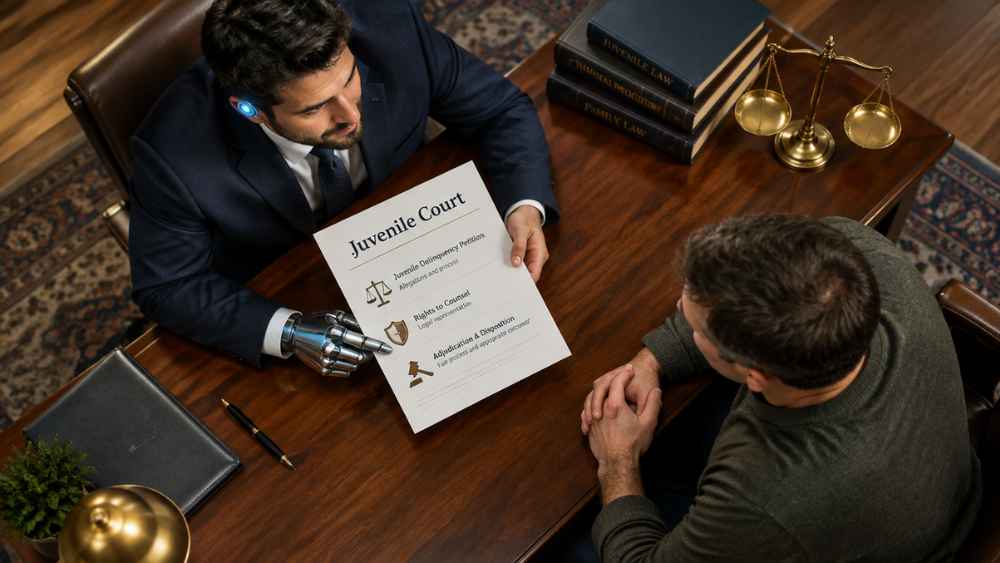
“The state filed the delinquency petition in Juvenile Court, where the judge addressed detention, counsel, adjudication, and an appropriate disposition.”
What Is a Juvenile Court?
A Juvenile CourtFamily CourtFamily Court is a court or specialized division that handles specified family-law matters such as custody, support, divorce, parentage, domestic violence, adoption, or juvenile issues. Its structure, jurisdiction, procedures, privacy rules, and appeal...View definition is a state courtState CourtA state court is a court established under a state constitution and state law. State courts hear the vast majority of U.S. civil and criminal cases, and their structures, names, procedural rules, and...View definition that handles specified cases involving children and teenagers.
Its jurisdictionLegal DisputeA legal dispute is a disagreement or controversy involving claimed legal rights, duties, liabilities, property, or remedies. It can be resolved through negotiation, mediation, arbitration, administrative proceedings, litigation, or settlement depending on the...View definition can include delinquency, dependency, abuse, neglect, and other youth matters.
Therefore, state law controls the court’s exact authority. See Cornell LII’s Juvenile Court overview.
Standard Juvenile Court — Sample Contract Language
Suppose a 15-year-old is accused of conduct that would be burglary if committed by an adult.
Is Juvenile Court a State Court?
Yes. Juvenile courts operate under state constitutions, statutesPrimary AuthorityPrimary Authority is law issued by an institution with official power to create or state legal rules. Constitutions, statutes, regulations, court decisions, and court rules can be primary authority, while binding effect depends...View definition , and court rules.
The federal judiciaryFederal District CourtA Federal District Court is a United States trial court that hears federal civil and criminal cases within jurisdiction granted by Congress and the Constitution.View definition does not run a nationwide juvenile-court system comparable to state juvenile courts.
Therefore, terminology and procedure vary by state.
What Is Juvenile Delinquency?
Juvenile delinquency involves conduct by a minor that would generally be criminal if committed by an adult.
The case usually proceeds through a specialized juvenile process.
Therefore, delinquency is different from an ordinary adult criminal prosecution.
What Is Juvenile Dependency?
Juvenile dependency concerns a child’s safety and welfare when abuse, neglect, or inadequate care is alleged.
The court can supervise placement and services.
Therefore, dependency focuses on protection rather than punishment. See California Courts’ juvenile dependency guide.
Juvenile Delinquency vs. Dependency
Delinquency focuses on alleged misconduct by the young person.
Dependency focuses on whether the child needs protection from unsafe care or conditions.
Therefore, the same juvenile court can handle legally different types of cases.
What Is a Status Offense?
A status offense is conduct prohibited because of the person’s age.
Examples can include truancy, curfew violations, or running away under state law.
Therefore, status offenses differ from conduct that would be criminal for adults.
Who Is Considered a Juvenile?
The age defining juvenile-court jurisdiction depends on state law and case type.
Transfer rules can also move some youth into adult criminal court.
Therefore, age thresholds should be checked in the governing state.
What Is a Juvenile Petition?
A juvenile petition is the pleadingPleadingA pleading is a formal court document stating a party’s claims, defenses, or responses in a civil case. Federal Rules 7 and 8 identify permitted pleadings and govern claims, admissions, denials, affirmative defenses,...View definition that begins many delinquency or dependency proceedings.
It states the allegations and legal basis for court involvement.
Therefore, the petition functions somewhat like a complaintCivil LawsuitA civil lawsuit is a noncriminal court action in which a plaintiff seeks a legal remedy from a defendant. The process can include jurisdiction, pleadings, service, discovery, motions, settlement, trial, judgment, enforcement, and...View definition in other proceedings.
What Is a Detention Hearing?
A detention hearing addresses whether a youth should remain in custody or another placement while the case proceeds.
Timing and standards vary by state.
Therefore, detention decisions often occur very early.
What Is an Adjudication Hearing?
An adjudication hearing determines whether the allegations are proven under the applicable legal standard.
In delinquency cases, it functions similarly to a criminal trialLawsuitA lawsuit is a legal dispute brought before a court for a decision or remedy. Civil lawsuits can involve pleadings, service, discovery, motions, settlement, trial, judgment, and possible appeal.View definition .
Therefore, the court decides liability before disposition.
What Is Disposition?
Disposition is the juvenile-court stage that determines consequences or services after adjudication.
Possible outcomes include probation, treatment, community programs, placement, or other statutory orders.
Therefore, disposition is comparable to sentencing but follows juvenile-law goals.
What Rights Do Juveniles Have?
Juveniles in delinquency proceedings receive important due-process protections.
These can include notice, counsel, confrontation, and the privilege against self-incrimination.
Therefore, juvenile court is not an informal process without constitutional limits. See In re Gault, 387 U.S. 1.
Do Juveniles Have a Right to Counsel?
Yes. In re Gault recognized a right to counsel in qualifying delinquency proceedings involving possible confinement.
State law can provide additional protections.
Therefore, appointed counsel can be required when a family cannot afford representation.
Do Juveniles Have a Right to Remain Silent?
Yes. The privilege against self-incrimination applies in juvenile delinquency proceedings.
Statements can also raise Miranda and voluntariness issues.
Therefore, youth interrogations require careful constitutional analysis.
Do Juveniles Have a Right to Confront Witnesses?
Delinquency proceedings generally include confrontation and cross-examination protections recognized in In re Gault.
Specific evidentiary rules vary by proceeding.
Therefore, the government cannot rely on completely untested accusations.
Do Juveniles Have a Constitutional Right to a Jury?
The U.S. Supreme CourtSupreme CourtThe Supreme Court of the United States is the nation’s highest federal court. It reviews selected cases involving the Constitution and federal law, resolves important federal legal questions, and sits at the top...View definition has not recognized a federal constitutional juryJuryA Jury is a group of citizens selected to perform a legal factfinding or charging function. Petit juries decide facts and return verdicts in trials, while grand juries determine whether probable cause supports...View definition right in ordinary juvenile delinquency adjudications.
Some states provide jury rights by statuteStatutory LawStatutory law is written law enacted by a legislative body through the formal lawmaking process. Federal and state statutes can create rights, duties, prohibitions, causes of action, procedures, penalties, and remedies, and courts...View definition or state constitution.
Therefore, state law can be more protective. See McKeiver v. Pennsylvania, 403 U.S. 528.
Who Usually Decides Juvenile Cases?
A judgeJudgeA Judge is a judicial officer who presides over legal proceedings, applies law, manages procedure, rules on motions and evidence, and issues orders or judgments. Trial, appellate, Article III, magistrate, bankruptcy, and state...View definition usually decides juvenile adjudications and dispositions.
Some jurisdictions permit jury trials in limited circumstances.
Therefore, benchBenchThe bench is the judge's raised courtroom desk and is also a common legal term for a judge, group of judges, or the judiciary.View definition proceedings remain common.
Are Juvenile Court Hearings Public?
Many juvenile proceedings restrict public access to protect children’s privacy.
Access rules differ by state and case type.
Therefore, dependency and delinquency records often receive special confidentialityEmployment ContractAn employment contract is an agreement defining terms of an employer-employee relationship. It can cover duties, compensation, benefits, equity, confidentiality, intellectual property, restrictive covenants, termination, severance, and dispute procedures while remaining subject to...View definition treatment.
Are Juvenile Court Records Sealed?
Juvenile records can be confidential, sealed, or eligible for later sealing or expungement under state law.
Rules vary substantially.
Therefore, confidentiality should not be assumed to mean automatic destruction.
What Is Juvenile Probation?
Juvenile probation supervises a youth in the community under court-ordered conditions.
Conditions can include school attendance, counseling, restitutionLegal RemedyA legal remedy is the relief a court or other authorized tribunal can provide after a legal right has been violated. Remedies can include damages, injunctions, restitution, specific performance, rescission, declarations, and other...View definition , testing, or other requirements.
Therefore, probation can combine accountability with rehabilitation.
What Is Diversion?
Diversion resolves some youth cases outside formal adjudicationAdministrative Law JudgeAn Administrative Law Judge is a federal adjudicator appointed under 5 U.S.C. § 3105 to preside over formal agency proceedings, receive evidence, rule on motions, and issue administrative decisions.View definition .
Programs can require counseling, education, restitution, or community service.
Therefore, successful completion can reduce deeper court involvement.
What Is Transfer to Adult Court?
Transfer allows or requires some serious juvenile cases to proceed in adult criminal court.
States use judicial waiver, prosecutorial discretion, statutory exclusion, or blended systems.
Therefore, transfer rules vary significantly.
What Is a Waiver Hearing?
A waiver hearing asks whether a juvenile case should move to adult criminal court.
The court can consider age, offense seriousness, record, maturity, safety, and rehabilitation prospects.
Therefore, waiver can have major sentencing and record consequences.
What Is Reverse Waiver?
ReverseCourt of AppealsA court of appeals is a court that reviews decisions from lower courts. Federal courts of appeals usually examine the existing record for legal error rather than conducting a new trial or hearing...View definition waiver allows some cases initially filed in adult court to return to juvenile court.
Only certain states and offenses permit it.
Therefore, initial filing does not always determine the final forum.
What Is Rehabilitation?
Rehabilitation is a traditional juvenile-justice goal focused on reducing future misconduct and supporting development.
Modern juvenile systems also consider accountability and public safety.
Therefore, juvenile dispositions often differ from adult punishments.
Can Juvenile Court Order Restitution?
Yes, where state law permits.
Restitution can require payment for qualifying losses caused by delinquent conduct.
Therefore, financial consequences can accompany rehabilitative orders.
Can Parents Be Ordered to Participate?
Some states permit courts to require parental participation in counseling, services, supervision, or hearings.
The scope depends on statute.
Therefore, juvenile proceedings can directly involve the family.
What Is a Guardian ad Litem?
A guardian ad litem can represent or investigate a child’s interests in specified proceedings.
The role differs by state and case type.
Therefore, the guardian ad litem is not always the same as the child’s attorney.
What Is CASA?
Court Appointed Special Advocates, or CASA volunteers, can advocate for children in dependency matters.
Programs and authority vary by jurisdiction.
Therefore, CASA involvement supplements rather than replaces the judge.
Can Juvenile Orders Be Appealed?
Yes. Appeal rights exist under state law and applicable constitutional rules.
Deadlines can be short.
Therefore, parties should review appellate rights immediately after an adverse order.
Juvenile Court vs. Family Court
Some jurisdictions place juvenile cases within a family-court system.
Others maintain a separate juvenile division or court.
Therefore, court names do not create a uniform national structure.
Juvenile Court vs. Criminal Court
Juvenile delinquency is generally separate from adult criminal prosecution.
Transfer statutes can move serious cases into criminal court.
Therefore, the forum can substantially affect procedure and consequences.
Juvenile Court Example
Suppose a 15-year-old is accused of conduct that would be burglary if committed by an adult.
The state files a delinquency petition in juvenile court.
Therefore, the case follows juvenile procedures unless transfer law changes the forum.
Why Does Juvenile Court Matter?
Juvenile courts combine legal accountability with specialized rules for youth development, family involvement, rehabilitation, and privacy.
However, jurisdiction and procedure vary widely by state.
Therefore, current state law should guide every juvenile-court analysis.