
Family Court
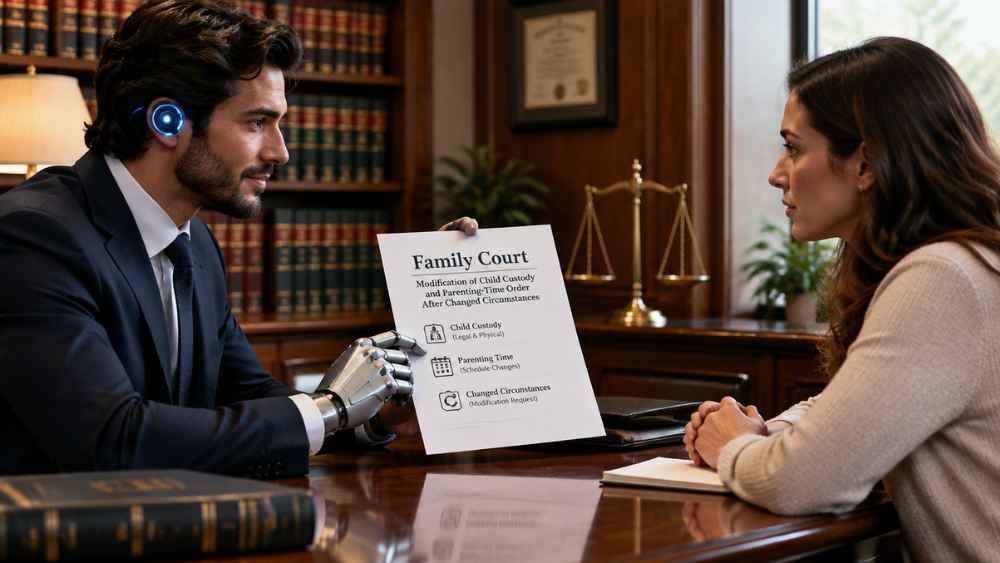
“The parents returned to Family Court to request modification of the custody and parenting-time order after a substantial change in circumstances.”
What Is Family Court?
A Family Court is a court or court division that handles specified family-law matters.
Its jurisdictionLegal DisputeA legal dispute is a disagreement or controversy involving claimed legal rights, duties, liabilities, property, or remedies. It can be resolved through negotiation, mediation, arbitration, administrative proceedings, litigation, or settlement depending on the...View definition and structure vary greatly by state and locality.
Therefore, family-court powers must be researched in the relevant jurisdiction. See Cornell LII’s Family Court overview.
Standard Family Court — Sample Contract Language
The appropriate state trial courtCourt of Common PleasA Court of Common Pleas is a state trial court name used in several jurisdictions; its exact jurisdiction depends on state law and local court structure.View definition applies custody law and enters a parenting order.
Is Family Court a Separate Court Everywhere?
No. Some jurisdictions have a specialized family court.
Others assign family cases to circuit, superior, district, or general trialLawsuitA lawsuit is a legal dispute brought before a court for a decision or remedy. Civil lawsuits can involve pleadings, service, discovery, motions, settlement, trial, judgment, and possible appeal.View definition courts.
Therefore, “family court” can describe either an institution or a division.
What Cases Does Family Court Hear?
Common matters include divorce, child custody, child support, parentage, domestic violence, adoption, and juvenile issues.
Jurisdiction varies substantially.
Therefore, not every family-related case belongs in the same court.
Does Family Court Handle Divorce?
Often, yes.
Some states assign divorce to a general-jurisdiction trial courtTrial CourtA Trial Court is a court where parties present evidence, establish facts, and obtain an initial judgment or verdict. Federal district courts are the primary federal trial courts, while state systems use varied...View definition rather than a separate family court.
Therefore, filing location depends on state structure.
Does Family Court Handle Child Custody?
Yes, family courts commonly decide legal and physical custody disputes.
The best-interests-of-the-child standard is central in many jurisdictions.
Therefore, custody cases focus on child welfare rather than parental preference alone.
Does Family Court Handle Parenting Time?
Yes. Courts can establish visitation or parenting-time schedules.
Orders can address holidays, transportation, communication, and exchanges.
Therefore, detailed orders can reduce later conflict.
Does Family Court Handle Child Support?
Yes. Courts commonly establish, modify, and enforce child-support obligations.
State guidelines and federal requirements influence calculations.
Therefore, support amounts are usually rule-driven rather than purely discretionary.
Does Family Court Handle Spousal Support?
Many family courts can award alimony or spousal maintenance where state law permits.
Factors and duration vary by jurisdiction.
Therefore, marital finances and statutory criteria matter.
Does Family Court Handle Parentage?
Yes. Courts can determine legal parentage and related support or custody rights.
Genetic testing and presumptions can apply.
Therefore, parentage cases can establish multiple legal relationshipsLegal Knowledge GraphA Legal Knowledge Graph represents cases, statutes, courts, concepts, parties, clauses, and other legal entities as connected structured data. It can support research, analytics, AI retrieval, citation analysis, and compliance while preserving source...View definition at once.
Does Family Court Handle Adoption?
Some family courts handle adoptions, while other jurisdictions assign them to probateProbate CourtProbate court is a state court, or a division of a state court, that handles estates and related matters after death. It can validate wills, appoint personal representatives, supervise administration, resolve creditor and...View definition , surrogate, or other courts.
Consent and statutory procedures are strict.
Therefore, adoption jurisdiction must be checked locally.
Does Family Court Handle Guardianship?
Sometimes. GuardianshipLegal GuardianA legal guardian is a court-appointed fiduciary authorized to make specified decisions for a minor or incapacitated adult under state guardianship law.View definition can belong to family, probate, surrogate, or general trial court.
Adult and minor guardianships can follow different rules.
Therefore, the case type matters.
Does Family Court Handle Domestic Violence?
Many family courts can issue civil protection orders or address domestic violence within family cases.
Criminal charges remain separate.
Therefore, one incident can produce both civil and criminal proceedings.
Does Family Court Handle Juvenile Cases?
Some family courts hear juvenile delinquencyJuvenile CourtJuvenile Court is a state court or specialized division handling specified cases involving children and teenagers. Its jurisdiction can include delinquency, dependency, abuse, neglect, status offenses, detention, rehabilitation, and transfer questions, with procedure...View definition or dependency matters.
Other states have separate juvenile courts.
Therefore, youth jurisdiction varies substantially.
What Is Juvenile Dependency?
Dependency proceedings concern whether a child lacks safe parental care because of abuse, neglect, abandonment, or related grounds.
Government agencies can participate.
Therefore, dependency differs from ordinary private custody litigation.
What Is Juvenile Delinquency?
Delinquency proceedings address conduct that would generally be criminal if committed by an adult.
Juvenile justice emphasizes specialized procedures and protections.
Therefore, delinquency is not the same as a custody dispute.
What Is a Best-Interests Standard?
The best-interests standard directs courts to evaluate factors affecting a child’s welfare.
The statutory factors differ by state.
Therefore, custody decisions are highly fact-specific.
What Is Legal Custody?
Legal custody concerns authority to make major decisions for a child.
Those decisions can include education, health care, religion, and other important matters.
Therefore, legal custody differs from where the child lives.
What Is Physical Custody?
Physical custody concerns the child’s residence and day-to-day care.
States use different terms, including residential responsibility or parenting time.
Therefore, terminology should be checked locally.
What Is Joint Custody?
Joint custody allocates specified parenting rights or time to both parents.
It does not always mean an equal 50-50 schedule.
Therefore, the order’s exact terms control.
What Is Sole Custody?
Sole custody gives one parent primary or exclusive authority over specified custody rights.
The other parent can still receive parenting time or other rights.
Therefore, sole custody does not automatically terminate parentage.
What Is a Temporary Family Court Order?
Temporary orders govern issues while a family case is pending.
They can address custody, support, residence, protection, or use of property.
Therefore, early orders can shape practical circumstances before final judgment.
What Is a Final Family Court Order?
A final orderCourt OrderA court order is a legally operative directive or decision issued by a court. Orders can control procedure, resolve motions, require action, prohibit conduct, or provide final or interim relief.View definition resolves claims after trial, settlement, or other final disposition.
Some family orders remain modifiable because circumstances can change.
Therefore, finality in family law can differ from ordinary civil litigationCivil LitigationCivil Litigation is the court process for resolving noncriminal disputes through pleadings, motions, discovery, settlement, trial, judgment, and possible appeal. Federal civil litigation follows the Federal Rules of Civil Procedure, while state systems...View definition .
Can Family Court Orders Be Modified?
Yes, when governing lawBoilerplate ClauseA boilerplate clause is standardized contract language addressing recurring legal mechanics such as notice, assignment, governing law, waiver, severability, and integration.View definition allows modification and the required changed circumstances exist.
Standards differ for custody, support, and other orders.
Therefore, modification requires more than simple dissatisfaction.
Can Family Court Orders Be Enforced?
Yes. Courts can use contempt, income withholding, judgment enforcementWrit of ExecutionA Writ of Execution is court process used to enforce a money judgment against nonexempt property. Federal Rule 69 makes execution the ordinary federal enforcement method while generally incorporating state execution procedure, and...View definition , or other statutory remedies.
Due-process protections still apply.
Therefore, compliance failures can have serious consequences.
What Is Contempt in Family Court?
Contempt can address willful violation of clear court orders.
Civil and criminal contempt use different purposes and protections.
Therefore, contempt procedure should be analyzed carefully.
Can Family Court Issue Protection Orders?
Many family or domestic-relations courts can issue civil protection orders under state law.
Emergency and longer-term procedures can differ.
Therefore, urgent safety cases can receive expedited hearings.
What Is Mediation in Family Court?
Courts often use mediationAlternative Dispute ResolutionAlternative Dispute Resolution, or ADR, includes negotiation, mediation, arbitration, settlement conferences, and other processes used outside ordinary trial adjudication. Each method differs in neutrality, confidentiality, party control, binding effect, cost, and review.View definition to help parties resolve custody, parenting, property, or support disputes.
Domestic-violence concerns can affect suitability.
Therefore, mediation is common but not appropriate in every case.
What Is a Guardian ad Litem?
A guardian ad litem can be appointed to represent or investigate a child’s interests in specified proceedings.
Duties vary by statuteStatutory LawStatutory law is written law enacted by a legislative body through the formal lawmaking process. Federal and state statutes can create rights, duties, prohibitions, causes of action, procedures, penalties, and remedies, and courts...View definition and court order.
Therefore, the role differs from a parent’s attorney.
What Is a Custody Evaluator?
A custody evaluator can assess family circumstances and provide expert opinions.
Appointment, qualifications, and confidentialityEmployment ContractAn employment contract is an agreement defining terms of an employer-employee relationship. It can cover duties, compensation, benefits, equity, confidentiality, intellectual property, restrictive covenants, termination, severance, and dispute procedures while remaining subject to...View definition rules vary.
Therefore, evaluators can influence but do not decide the case.
Can Children Testify?
Sometimes. Courts consider age, maturity, relevanceRelevanceRelevance asks whether evidence tends to make a consequential fact more or less probable. Federal Rules 401 and 402 establish the basic threshold, while Rule 403 permits exclusion when specified dangers substantially outweigh probative value.View definition , emotional impact, and local procedure.
Judges can use interviews or other protected methods.
Therefore, children are not automatically placed on the witness stand.
Are Family Court Records Public?
Access varies by jurisdiction and case type.
Juvenile, adoption, abuse, financial, and identity information often receive greater protection.
Therefore, family-court privacy rules can differ from ordinary civil casesCivil DivisionA Civil Division is a court unit handling noncriminal disputes, with jurisdiction and procedures that vary by court system and locality.View definition .
Can Family Court Cases Have Juries?
Many family matters are decided by judges rather than juries.
Some states allow juries for limited issues.
Therefore, juryJuryA Jury is a group of citizens selected to perform a legal factfinding or charging function. Petit juries decide facts and return verdicts in trials, while grand juries determine whether probable cause supports...View definition rights are highly jurisdiction-specific.
Can Family Court Decisions Be Appealed?
Yes. Final appealable orders can generally be reviewed by the appropriate state appellate courtState Supreme CourtA State Supreme Court is usually the highest court in a state's judicial system and the final authority on state-law questions. It commonly exercises discretionary appellate review, creates binding state precedent, and can...View definition .
Interlocutory review is more limited.
Therefore, deadlines should be checked immediately after an adverse order.
What Is the UCCJEA?
The Uniform Child Custody Jurisdiction and Enforcement Act helps determine which state has jurisdiction over interstate child-custody disputes.
Most states have enacted versions of it.
Therefore, interstate custody cases require jurisdiction analysis before the merits.
What Is the UIFSA?
The Uniform Interstate Family Support Act governs many interstate child-support and spousal-support issues.
It addresses jurisdiction, establishment, enforcement, and modification.
Therefore, support cases across states use specialized interstate rules.
Family Court vs. Probate Court
Family court generally addresses domestic relations and child matters.
Probate court commonly handles estates, wills, and some guardianships.
Therefore, overlapping family issues can be divided between courts.
Family Court vs. Juvenile Court
Some jurisdictions combine juvenile and family jurisdiction.
Others maintain a separate juvenile court.
Therefore, the same case type can have a different court name across states.
Family Court Example
Suppose parents cannot agree on custody after separation.
The appropriate state trial court applies custody law and enters a parenting order.
Therefore, the family-court function is to resolve the domestic dispute under state law.
Why Does Family Court Matter?
Family courts resolve disputes involving children, relationships, safety, and financial support.
Their procedures often emphasize confidentiality, continuing jurisdiction, and child welfare.
Therefore, family-law cases require careful attention to local courtMunicipal CourtA Municipal Court is a local court whose authority is defined by state law, city law, or both. Many municipal courts have limited jurisdiction over traffic, misdemeanors, ordinances, protective orders, or smaller civil...View definition structure and specialized rules.