
Wrongful Termination
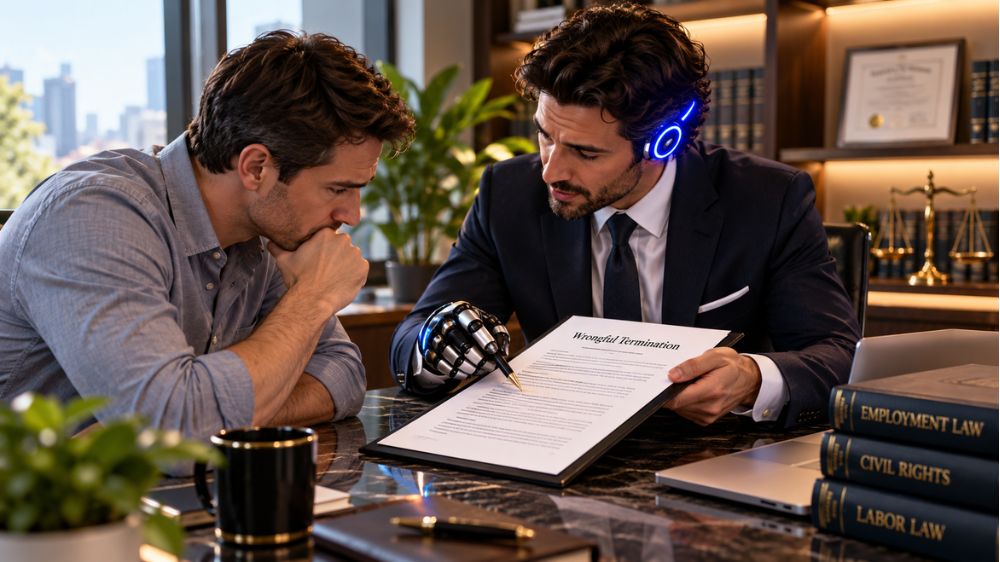
“The employee alleged wrongful termination after being fired shortly after making a protected complaint about workplace discrimination.”
What Is Wrongful Termination?
Wrongful terminationTermination for CauseTermination for cause is an employment termination based on a contractually or legally defined reason that can affect severance, equity, and other post-employment rights.View definition is an unlawful firing that violates a contract, statuteStatutory LawStatutory law is written law enacted by a legislative body through the formal lawmaking process. Federal and state statutes can create rights, duties, prohibitions, causes of action, procedures, penalties, and remedies, and courts...View definition , or recognized public policy. A termination can feel unfair without being legally wrongful.
Most U.S. employment relationships are generally treated as at will unless another rule applies. Therefore, an employer often may end employment for a lawful reason or no stated reason.
However, an employer cannot fire someone for an unlawful reason. Cornell Law School’s Legal Information Institute explains that wrongful termination can involve contract violations or public-policy violations. See Cornell LII’s wrongful termination overview.
Standard Wrongful Termination — Sample Contract Language
Suppose an employee reports race-based harassmentEmployment LawEmployment law is the body of federal, state, and local law that governs relationships between employers and employees. It covers wages, discrimination, harassment, leave, safety, benefits, contracts, employee classification, union rights, and termination.View definition to human resources. Two weeks later, a manager fires the employee because of that complaintCivil LawsuitA civil lawsuit is a noncriminal court action in which a plaintiff seeks a legal remedy from a defendant. The process can include jurisdiction, pleadings, service, discovery, motions, settlement, trial, judgment, enforcement, and...View definition .
What Does Wrongful Termination Mean?
Wrongful termination means the firing violated a legal protection. The source of that protection can come from federal law, state law, a contract, or public policy.
For example, an employer may not lawfully fire a worker because of race when federal discriminationWorkplace HarassmentWorkplace harassment is unwelcome conduct that can violate employment law when it is based on a protected characteristic or protected activity. Federal law generally requires a qualifying job action or conduct severe or...View definition law applies. An employer may also face liability for certain retaliatory firings.
Therefore, the key question is not whether the firing was harsh. The key question is whether the reason or process violated the law.
What Is At-Will Employment?
At-will employmentAt Will EmploymentAt will employment generally means either the employer or employee can end the employment relationship at any time. However, discrimination, retaliation, contracts, public-policy rules, and other laws can limit that default rule.View definition generally allows either the employer or employee to end the relationship at any time. A lawful termination may occur without advance notice or cause.
However, at-will employment has important limits. Discrimination, retaliationEqual Employment Opportunity Commission (EEOC)The Equal Employment Opportunity Commission (EEOC) is the federal agency that enforces major U.S. employment discrimination laws, investigates charges, promotes voluntary resolution, and may litigate violations.View definition , contract rights, and public-policy protections can restrict termination.
Cornell LII describes at-will employment and its common exceptions. See Cornell LII’s employment-at-will overview.
Can an At-Will Employee Be Wrongfully Terminated?
Yes. At-will status does not authorize an employer to use an unlawful reason.
For example, federal law can prohibit firing based on protected characteristics. Other laws can prohibit retaliation for protected conduct.
In addition, state law can create public-policy or contract-based exceptions.
Wrongful Termination Based on Discrimination
A firing can be unlawful when discrimination motivates the decision and the applicable law protects that characteristic. Federal law protects several categories.
The EEOC enforces federal protections involving race, color, religion, sex, national origin, disability, age, and genetic information.
For example, terminating a qualified employee because of religion can violate federal law. State and local laws may protect additional characteristics.
Therefore, the governing jurisdictionLegal DisputeA legal dispute is a disagreement or controversy involving claimed legal rights, duties, liabilities, property, or remedies. It can be resolved through negotiation, mediation, arbitration, administrative proceedings, litigation, or settlement depending on the...View definition matters. See the EEOC’s overview of employment discrimination.
What Is Retaliatory Termination?
Retaliatory termination occurs when an employer fires someone because that person engaged in legally protected activityWhistleblower ProtectionWhistleblower Protection consists of federal and state laws prohibiting retaliation for specified reporting or protected conduct. There is no single universal statute, and protected activity, filing deadlines, causation standards, procedures, and remedies vary...View definition . The protected activity depends on the law involved.
For example, Title VIITitle VIITitle VII prohibits covered employment discrimination because of race, color, religion, sex, or national origin and separately prohibits retaliation. Current Supreme Court decisions also shape injury standards and evidentiary burdens.View definition protects certain complaints about employment discriminationEmployment DiscriminationEmployment Discrimination is unlawful workplace treatment based on a characteristic protected by applicable law. Federal protections cover race, color, religion, sex, national origin, age, disability, genetic information, retaliation, harassment, and related employment practices...View definition . Federal wage, safety, whistleblower, and leave laws can provide other protections.
However, retaliation claims have specific legal elementsPrima FaciePrima Facie means that evidence is sufficient on its face to establish a claim, fact, or legal issue unless rebutted. The required showing depends on the cause of action, statute, or procedural doctrine.View definition . The employee usually must connect protected activity to an adverse action.
Cornell LII explains that retaliation rules vary by statute. See Cornell LII’s retaliation overview.
Wrongful Termination for Reporting Harassment
An employee may receive legal protection for reporting discrimination or harassment covered by employment law. Therefore, firing someone because of a protected complaint can create a retaliation claimWorkplace RetaliationWorkplace Retaliation occurs when an employer punishes or disadvantages someone because that person engaged in legally protected activity. Title VII retaliation generally requires protected activity, a materially adverse action, and a causal connection,...View definition .
For example, an employee may report race-based harassment to human resources. A later firing tied to that complaint can raise retaliation issues.
However, timing alone does not automatically prove retaliation. The full evidence and applicable legal test matter.
Wrongful Termination for Whistleblowing
Whistleblower laws can protect employees who report certain unlawful or unsafe conduct. The exact protection depends on the subject and statute.
For example, a law may protect reports about workplace safety, financial fraud, or government contracting. State whistleblower laws can also apply.
Therefore, the employee must identify the law that protects the report.
Wrongful Termination in Violation of Public Policy
Some states recognize a claim for termination that violates a clear public policy. This rule is an exception to ordinary at-will employment.
Common examples can involve exercising a statutory right, refusing illegal conduct, performing a public duty, or reporting unlawful activity.
For example, firing a worker for serving on a juryJuryA Jury is a group of citizens selected to perform a legal factfinding or charging function. Petit juries decide facts and return verdicts in trials, while grand juries determine whether probable cause supports...View definition can raise public-policy concerns where state law protects that activity.
Cornell LII describes this doctrine in its wrongful termination in violation of public policy overview.
Wrongful Termination and Employment Contracts
An employment contract can limit an employer’s right to terminate. For example, a contract may require good causeGood CauseGood Cause is a legally sufficient reason for a court to grant relief, modify a schedule, excuse conduct, or issue another order. The required showing depends on the governing rule and often considers...View definition or specific procedures.
If the employer violates those terms, the employee may have a contract claimContract DisputeA contract dispute is a disagreement about contract formation, meaning, performance, breach, termination, or remedies.View definition . Therefore, the written agreement should be reviewed carefully.
In addition, collective bargaining agreements can contain termination protections and grievance procedures.
Can an Employee Handbook Create Rights?
Sometimes. State law can treat certain handbook promises as contract terms in particular circumstances.
For example, a handbook may promise progressive disciplineEmployee HandbookAn Employee Handbook is a workplace document explaining employer policies, employee expectations, benefits, procedures, and important legal notices. It can support consistent administration, but policies must be tailored to applicable federal, state, and...View definition before termination. However, a clear disclaimerDisclaimerA disclaimer is language intended to limit or qualify warranties, representations, responsibility, reliance, or liability, subject to contract and statutory limits.View definition can affect the analysis.
Therefore, handbook language and state contract lawContract LawContract law is the body of law that governs enforceable agreements. It explains how contracts form, what duties they create, how courts interpret them, what counts as a breach, and what remedies may...View definition both matter.
What Is For-Cause Employment?
For-cause employment limits termination to specified reasons or sufficient justification. This arrangement differs from ordinary at-will employment.
For example, a contract may allow termination only for misconduct or serious performance failures. The employer must then follow the agreed standard.
However, the exact meaning of cause depends on the contract and governing lawBoilerplate ClauseA boilerplate clause is standardized contract language addressing recurring legal mechanics such as notice, assignment, governing law, waiver, severability, and integration.View definition .
What Is Constructive Discharge?
Constructive dischargeConstructive DischargeConstructive Discharge occurs when unlawful working conditions become so intolerable that a reasonable employee would feel compelled to resign. Federal doctrine treats the resignation as a discharge in qualifying cases, while the employee...View definition can occur when unlawful working conditions become so intolerable that a reasonable employee would feel forced to resign.
Therefore, a resignation can sometimes be treated like a termination. However, ordinary dissatisfaction or workplace stress is usually not enough.
Cornell LII describes wrongful constructive discharge in its constructive discharge overview.
Can Taking Protected Leave Lead to Wrongful Termination?
Some laws protect qualifying leave or prohibit retaliation for using it. For example, the federal Family and Medical Leave ActFMLAFMLA is the federal Family and Medical Leave Act, which provides eligible employees of covered employers job-protected leave for qualifying family and medical reasons. Core rules address eligibility, 12-week leave entitlements, military caregiver...View definition protects eligible employees in covered situations.
An employer may still make lawful decisions unrelated to the leave. However, it cannot use protected leave as an unlawful reason for termination.
State leave laws can provide additional protections.
Can Wage Complaints Be Protected?
Yes. Federal and state wage laws can protect certain complaints about pay.
For example, the Fair Labor Standards ActFair Labor Standards Act (FLSA)The FLSA is the primary federal wage-and-hour law governing minimum wage, overtime, recordkeeping, child labor, and related protections for covered employees.View definition contains an anti-retaliation provision. Therefore, firing an employee because of a protected wage complaint can create legal risk.
However, coverage and claim requirements depend on the governing law.
Can Workplace Safety Complaints Be Protected?
Some workplace safety complaints receive statutory protection. Federal OSHA law includes anti-retaliation protections for covered activity.
For example, a worker may report a serious safety concern. Retaliation tied to that protected report can violate the law.
In addition, state safety programs may provide separate rights.
What Evidence Can Support a Wrongful Termination Claim?
Wrongful termination claims often depend on circumstantial and documentary evidenceDirect EvidenceDirect Evidence proves a fact without requiring an additional inference about that fact. Examples can include eyewitness testimony, admissions, recordings, photographs, contracts, and other evidence that directly addresses the disputed issue.View definition . Therefore, preserving records can be important.
Useful evidence can include:
- Termination letters and emails.
- Performance reviews.
- Disciplinary records.
- Employment contracts.
- Employee handbook provisions.
- Complaints about discrimination or harassment.
- Whistleblower reports.
- Leave requests.
- Messages from supervisors.
- Comparisons with similar employees.
However, one document rarely decides the entire case. Courts usually consider the full factual record.
Does Suspicious Timing Prove Wrongful Termination?
No. Timing can support an inferenceCircumstantial EvidenceCircumstantial Evidence is indirect proof that supports a fact through one or more reasonable inferences. It can prove intent, discrimination, negligence, causation, knowledge, possession, fraud, and other issues, and it is not inherently...View definition , but it usually does not prove the claim by itself.
For example, a firing immediately after a protected complaint can raise questions. The employer may still present a lawful explanation.
Therefore, courts often examine timing together with other evidence.
What Is Pretext?
Pretext means a stated reason may not be the true reason for an employment decision. It often appears in discrimination and retaliation cases.
For example, an employer may cite performance after years of strong reviews. Other evidence may then challenge that explanation.
However, showing that a decision was mistaken does not always prove unlawful motive.
What Remedies Can Be Available?
Available remedies depend on the legal claimCause of ActionA Cause of Action is a recognized set of legal elements supporting a right to judicial relief. Its elements can arise from statutes, constitutions, regulations, or case law, and the claimant generally must...View definition . They can include back pay, reinstatement, front pay, damagesLegal RemedyA legal remedy is the relief a court or other authorized tribunal can provide after a legal right has been violated. Remedies can include damages, injunctions, restitution, specific performance, rescission, declarations, and other...View definition , attorney feesMotion to CompelA motion to compel asks a court to order required discovery or disclosure when another party or person has not responded adequately. In federal civil cases, Rule 37 generally requires good-faith conference efforts...View definition , or other relief.
Some statutesPrimary AuthorityPrimary Authority is law issued by an institution with official power to create or state legal rules. Constitutions, statutes, regulations, court decisions, and court rules can be primary authority, while binding effect depends...View definition limit particular damages. In addition, state law can provide different remedies.
Therefore, the underlying legal theory determines what relief may be available.
How Long Do You Have to Bring a Claim?
Wrongful termination deadlines vary widely. Some claims require an agency filing before a lawsuitLawsuitA lawsuit is a legal dispute brought before a court for a decision or remedy. Civil lawsuits can involve pleadings, service, discovery, motions, settlement, trial, judgment, and possible appeal.View definition .
For example, federal discrimination claims often require an EEOC charge within a statutory filing period. Other statutes use different deadlines.
Therefore, a recently terminated employee should identify applicable deadlines quickly.
Wrongful Termination vs. Unfair Termination
An unfair firing is not always an unlawful firing. An employer can make a poor or harsh decision without violating employment law.
By contrast, wrongful termination requires a legal basis. Therefore, the claim must connect the firing to a protected right or binding obligation.
Wrongful Termination Example
Suppose an employee reports race-based harassment to human resources. Two weeks later, a manager fires the employee because of that complaint.
If the complaint was protected and caused the firing, the termination can violate anti-retaliation law. The evidence would determine the result.
However, the employer may defend the case by showing a legitimate reason unrelated to the complaint.
Why Does Wrongful Termination Matter?
Wrongful termination law limits the reasons an employer may lawfully use to end employment. Therefore, it protects statutory, contractual, and public-policy rights.
At the same time, not every termination creates a legal claim. The employee must identify a specific legal protection.
The key questions are simple. Why did the employer terminate the employee? What law or contract applies? What evidence connects the two?