
Service Level Agreement (SLA)
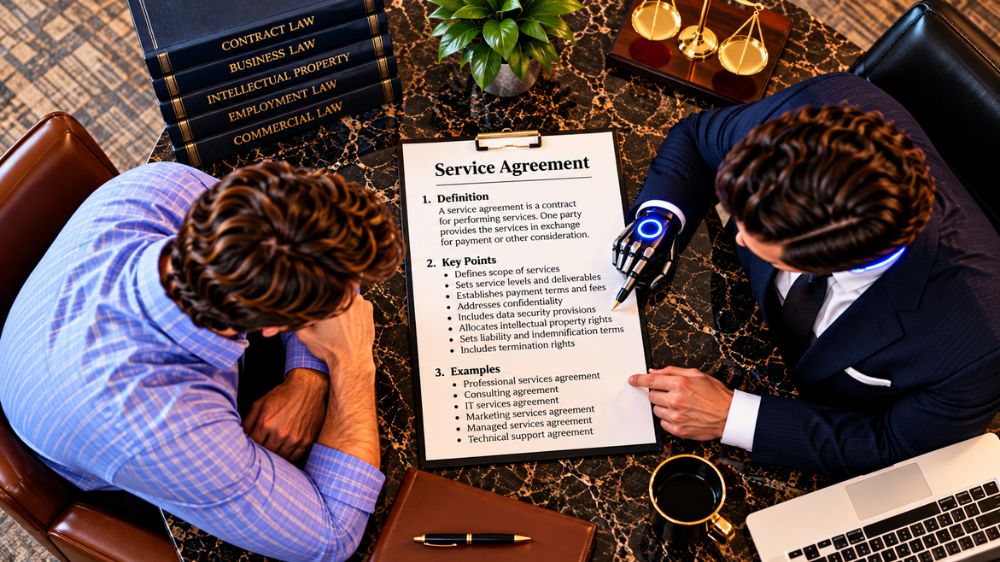
"The retailer reviewed the service level agreement after repeated outages to see whether downtime qualified for service credits under the cloud contract."
What Is a Service Level Agreement (SLA)?
A service level agreementMaster Service Agreement (MSA)A Master Service Agreement, or MSA, sets recurring legal and commercial terms for an ongoing service relationship. The parties can then use SOWs, order forms, or schedules for project-specific scope, pricing, deliverables, and...View definition (SLA) is a contract or contract scheduleContract AddendumA Contract Addendum adds supplemental material to an existing contract or completed document. It commonly contains schedules, specifications, disclosures, or additional terms and should address incorporation, signatures, effective date, and priority with the...View definition that sets measurable expectations for a service provider’s performance. It often identifies availability targets, response times, reporting methods, exclusions, and the remedies available if agreed standards are not met.
For example, a cloud provider may promise 99.9% monthly availability under a defined calculation method. If a qualifying outage causes performance to fall below the threshold, the customer may be eligible for a service credit.
IBM’s guide to service level agreements describes how SLAs establish service expectations, measurement, and responses to shortfalls.
Standard Service Level Agreement (SLA) — Sample Contract Language
Illustrative language only: "The provider will target 99.9% Monthly Availability for the covered production service, calculated using the method in Schedule A. If measured availability falls below that target, the customer may request the service credit specified in Schedule B within 30 days after the measurement period."
Why Are Service Level Agreements Important?
A sales description such as “reliable support” is hard to measure. An SLA translates the promise into observable standards, such as a defined uptime percentage or a response window for critical incidents.
That clarity helps the customer compare vendors and understand its operational risk. It also helps the provider design realistic services and clarify what it can and cannot control.
What Does an SLA Typically Include?
An SLA may define the covered services, measurement periods, support hours, incident priority levels, target response or resolution times, uptime commitments, reporting obligations, exclusions, and service credits.
It should also identify the point of contact for escalating a problem. A technically precise target is less useful when neither party knows how to report a failure or claim an agreed remedyCause of ActionA Cause of Action is a recognized set of legal elements supporting a right to judicial relief. Its elements can arise from statutes, constitutions, regulations, or case law, and the claimant generally must...View definition .
What Is an Uptime SLA?
An uptime SLA describes how available a system is expected to be during a defined period. Many vendors express the target as a percentage, often measured monthly. A 99.9% monthly target permits a small amount of qualifying downtime under the agreement’s formula.
Do not assume that every minute of user-visible disruption counts. The contract may exclude scheduled maintenance, customer-caused incidents, or other listed events.
How Is SLA Availability Calculated?
One common approach divides the number of minutes a service was available by the total eligible minutes in a measurement period, then multiplies by 100. The exact contract may define both availability and eligible minutes differently.
For example, an agreement may exclude approved maintenance windows from the denominator. Compare incident logs with the vendor’s stated methodology before deciding whether a threshold was missed.
Does 99.9% Uptime Mean Zero Outages?
No. A percentage below 100% allows some downtime within the measurement window. The impact can still be serious when outages occur during high-volume business hours or affect important transactions.
Evaluate the target alongside your actual operating needs. A retailer processing payments around the clock may need stronger protections than an internal tool used only during regular office hours.
What Is the Difference Between an SLA and an SLO?
A service level objective (SLO) is a performance goal, such as a target for uptime or request latency. An SLA is the broader agreement that may make particular performance standards contractual commitments and define consequences for missing them.
IBM’s service level objective documentation distinguishes objectives from SLA commitments and credits. The same distinction is useful when comparing vendor materials.
Response Time vs. Resolution Time
Response time is the interval before a support team acknowledges or begins handling a reported incident. Resolution time refers to the interval before the issue is resolved, under whatever definition the agreement provides.
A vendor might promise a one-hour response for a critical issue without promising that the underlying problem will be fixed within an hour. Ask which clock starts at ticket creation and what stops it.
How Are Incident Severity Levels Defined?
Support SLAs often categorize incidents by severity. A total production outage might qualify as critical, while a minor display issue might be lower priority. Each category can have a different response or escalation target.
Check who assigns severity and whether the customer may challenge a classification. A classification that is too narrow can weaken an apparently strong support commitment.
What Are SLA Exclusions?
Exclusions describe events that do not count against a performance target. Common examples include scheduled maintenance, customer configuration mistakes, unsupported integrations, and some third-party failures.
Exclusions vary widely. Broad wording can shift substantial risk to the customer. Compare the exclusions with the service architecture and your dependence on external platforms or contractors.
What Are SLA Service Credits?
Service credits are contract remediesMaterial BreachA Material Breach is a serious contract failure that substantially defeats the other party’s expected benefit. It can excuse further performance, support termination, and trigger damages or other remedies, although materiality depends on...View definition that reduce a future bill or provide another agreed adjustment after qualifying service failures. Some SLAs use different credit levels based on the extent of the missed target.
Review the calculation, maximum credit, minimum incident duration, and whether the credit is the sole remedy for the breach. A small credit may not cover the business loss caused by a severe outage.
How Do Customers Claim Service Credits?
Some providers require customers to file a claim within a short period after an incident, submit timestamps, and provide supporting details. Others may calculate credits through their own reporting systems.
Read the claims procedure before an outage occurs. Missing the deadline or failing to preserve evidence can create disputes about eligibility even when the interruption itself is clear.
SLA vs. Service Agreement: What Is the Difference?
A general service agreement typically sets the commercial and legal terms of the relationship. An SLA focuses on measurable operational commitments. The documents may be separate or combined.
A master service agreement may incorporate service-specific SLAs for hosting, support, or managed services. Make sure the precedence rules explain which document controls if terms conflict.
Do SLAs Include Security or Privacy Requirements?
Some SLAs describe security incident responseData Breach NotificationData Breach Notification is legally required notice after qualifying security incidents. GDPR Articles 33 and 34 use regulator and high-risk individual notice rules, while U.S. states apply their own definitions, triggers, timing, content,...View definition , monitoring, and notification targets. However, detailed privacy obligations and processing terms often appear in separate schedules or a data processing agreement.
Do not treat an uptime target as a promise that data is secure or properly handled. Review security, backup, breach notificationData BreachA data breach is an incident involving unauthorized access, acquisition, disclosure, loss, alteration, or destruction of protected information. Notification duties depend on the data, safeguards, affected individuals, jurisdiction, risk level, contracts, and specific...View definition , and privacy terms on their own merits.
Service Level Agreement Example
Illustrative language only: “The provider will target 99.9% Monthly Availability for the covered production service, calculated using the method in Schedule A. If measured availability falls below that target, the customer may request the service credit specified in Schedule B within 30 days after the measurement period.”
A complete SLA also needs defined exclusions, measurement data, reporting rules, credit tiers, and the relationship between credits and other remedies.
What Are Common SLA Drafting Mistakes?
- Promising uptime without defining the calculation or period.
- Confusing support acknowledgmentNotary PublicA notary public is a state-commissioned official who verifies identity and performs authorized notarial acts such as acknowledgments, jurats, and oaths.View definition with actual issue resolution.
- Using broad exclusions that swallow the performance commitment.
- Leaving the credit request process unclear.
- Failing to identify the covered production environment or service.
- Ignoring dependencies on third-party services and customer actions.
How Can a Business Compare Two SLAs?
Start with the services covered, uptime target, severity definitions, response and resolution commitments, measurement method, exclusions, and remedies. Review those items side by side rather than comparing headline percentages alone.
Then test a realistic failure scenario. If checkout is unavailable for two hours on a busy day, what support is promised, how is downtime recorded, and what remedy is actually available?
What Happens if a Vendor Repeatedly Misses Its SLA?
The agreement may provide service credits, escalation rights, improvement plans, or termination rights after repeated failures. Sometimes credits are the exclusive monetary remedy for the stated performance breach.
Review the SLA together with the general breach of contract and termination provisions. Applicable law and the contract determine whether other remedies remain available.
Can AI Review a Service Level Agreement?
AI contract analysisAI Contract AnalysisAI contract analysis uses artificial intelligence to extract, classify, compare, summarize, and evaluate contract information. It can analyze individual agreements or entire portfolios for diligence, obligations, renewals, risk trends, and structured contract intelligence.View definition can extract performance targets, compare versions, locate exclusions, and summarize credit procedures. It can help a business identify missing definitions or conflicts between the SLA and the master agreement.
Human review is still important for technical feasibility, operational priorities, and enforceability. Confirm that every extracted target uses the same definitions as the original document.
Frequently Asked Questions About Service Level Agreements
Is an SLA legally binding?
It may be, if properly incorporated into an enforceable agreement. Its exact contractual force depends on the document and applicable law.
Are SLAs only used for technology services?
No. They can apply to logistics, facilities, customer support, outsourcing, and other services where measurable standards matter.
Does an SLA guarantee uninterrupted service?
No. SLAs typically describe performance targets, measurement rules, and specified remedies rather than promising that no disruption can ever occur.
Are service credits always automatic?
No. Many contracts require customers to request credits and submit evidence within a defined window.
Key Takeaway
A service level agreement turns operational expectations into measurable commitments. Review the calculation rules, exclusions, support priorities, remedies, and how the SLA fits with the larger contract before relying on its headline promises.
How Are Downtime Exclusions Usually Structured?
Beyond a general exclusions list, parties often negotiate specific downtime models: narrow scheduled-maintenance windows with notice and duration limits; outages caused by customer-controlled environments; defined force majeureForce MajeureForce Majeure is a contract concept that can excuse or delay performance after extraordinary events covered by the agreement. Relief depends on clause wording, causation, notice, mitigation, exclusions, governing law, and the specific...View definition events; named third-party dependencies outside the SLA boundary; limited security-containment suspensions; and separately disclosed beta features. These categories are negotiating options, not automatic legal exemptions.
Exclusions should match the service architecture and fees. Broad wording can remove most practical remedies. Operationally, providers should keep auditable uptime reports that identify which minutes were excluded and why, and customers should reserve a clear path to dispute a maintenance or third-party exclusion that was applied incorrectly.
What Is the Source of Record for SLA Measurements?
Availability math depends on the dataset. Agreements should define each metric’s population, region, interval, and whether partial degradation, latency, authenticationAdmissible EvidenceAdmissible Evidence is evidence a court permits the judge or jury to consider. In federal court, admissibility commonly depends on relevance, Rule 403 balancing, authentication, foundation, hearsay rules, privilege, witness competence, and other...View definition failure, or dependent-component failure counts as downtime. They should name the source of record—vendor telemetry, independent monitors, customer probes, or a combined method—and document dashboards, retention, export rights, and change control.
If monitoring systems fail together, the contract should say whether those intervals are excluded, estimated, or treated as downtime. Clear ownership of metric definitions reduces credit disputes that are really fights about measurement method rather than service quality.