
Unconscionability
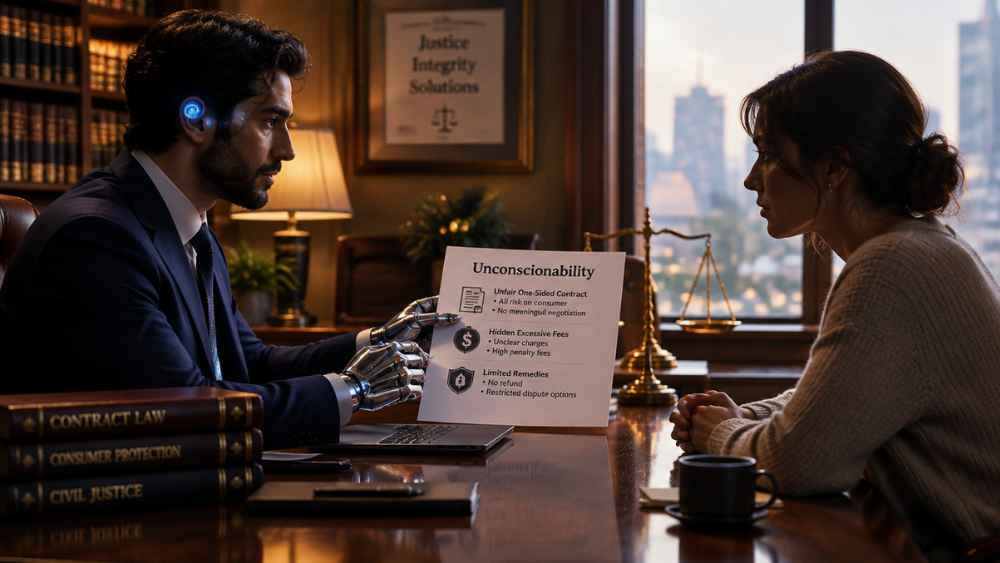
“The consumer argued Unconscionability because the contract hid an extreme fee in dense terms and gave the drafter unusually one-sided remedies.”
What Is Unconscionability?
Unconscionability is a contract doctrine allowing courts to refuse enforcement of extremely unfair terms or agreements.
The doctrine focuses on unfairness at the time of contracting.
Therefore, it operates as a limit on contractual enforcement. See Cornell LII’s unconscionability overview.
Standard Unconscionability — Sample Contract Language
Suppose a consumer contract hides an extreme fee in dense language and provides no meaningful way to avoid it.
What Are the Two Main Types?
Courts commonly distinguish procedural and substantive unconscionability.
Many jurisdictions consider both, although the required balance varies.
Therefore, local lawOrdinanceAn Ordinance is a law enacted by a municipality or other authorized local government. Local authority depends on state constitutions, statutes, charters, home-rule rules, Dillon’s Rule principles, and preemption, while ordinances commonly govern...View definition controls the exact test.
What Is Procedural Unconscionability?
Procedural unconscionability concerns unfairness in the bargaining process.
It can involve surprise, hidden terms, pressure, lack of meaningful choice, or severe bargaining imbalance.
Therefore, contract formationOffer and AcceptanceOffer and Acceptance describes how parties manifest mutual assent to a contract. A valid offer gives another party power to accept, while acceptance must objectively communicate assent through an authorized method, subject to...View definition circumstances matter.
What Is Substantive Unconscionability?
Substantive unconscionability concerns unusually harsh, one-sided, or oppressive contract terms.
Courts examine the actual economic and legal effect of the provision.
Therefore, a difficult bargain is not automatically unconscionable.
Must Both Procedural and Substantive Unconscionability Exist?
Jurisdictions differ.
Many require some degree of both, while others formulate the doctrine differently.
Therefore, lawyers should not assume one nationwide formula.
What Is a Sliding-Scale Approach?
Some courts use a sliding scale between procedural and substantive unfairness.
A stronger showing of one type can reduce the amount needed of the other.
Therefore, the two forms can interact rather than operate as rigid boxes.
What Does UCC Section 2-302 Provide?
UCC Section 2-302 allows courts to address unconscionable sales contracts or clauses as a matter of law.
The court can refuse enforcement, sever a clause, or limit its application.
Therefore, the UCC provides flexible remedies. See UCC § 2-302.
When Is Unconscionability Measured?
UCC Section 2-302 focuses on whether the contract or clause was unconscionable when made.
Later hardship alone generally does not establish formation unfairness.
Therefore, historical bargaining context is important.
Can the Court Hear Evidence About Commercial Context?
Yes. UCC Section 2-302 allows parties a reasonable opportunity to present evidence about commercial setting, purpose, and effect.
This helps the court understand the bargain.
Therefore, unconscionability is not judged in a factual vacuum.
What Is Oppression?
Oppression can describe extreme inequality of bargaining power combined with limited meaningful choice.
Standardized terms can contribute to that concern.
Therefore, bargaining power is relevant but not automatically decisive.
What Is Surprise?
Surprise concerns unexpected terms hidden by drafting, presentation, complexity, or placement.
A term can be formally present yet practically concealed.
Therefore, disclosure design can affect procedural fairness.
Is a Contract of Adhesion Unconscionable?
Not automatically. Adhesion contracts use standardized terms offered on a take-it-or-leave-it basis.
Many are enforceable.
Therefore, courts usually require additional unfairness.
Does Unequal Bargaining Power Prove Unconscionability?
No. Many valid contracts involve unequal bargaining power.
Courts look for stronger evidence of unfair choice or oppressive terms.
Therefore, inequality alone is rarely enough.
Does a High Price Prove Unconscionability?
Not necessarily. Courts generally do not rewrite contracts merely because a price is unfavorable.
Extreme price disparity combined with other unfairness can matter.
Therefore, commercial context is essential.
Can Fees Be Unconscionable?
Yes. Excessive fees, penalties, or cost-shifting provisions can face unconscionability challenges.
The analysis depends on purpose, amount, and bargaining context.
Therefore, fee clauses should be proportionate and transparent.
Can Arbitration Clauses Be Unconscionable?
Yes. Generally applicable state unconscionability principles can apply to arbitrationAlternative Dispute ResolutionAlternative Dispute Resolution, or ADR, includes negotiation, mediation, arbitration, settlement conferences, and other processes used outside ordinary trial adjudication. Each method differs in neutrality, confidentiality, party control, binding effect, cost, and review.View definition agreements.
However, the Federal Arbitration ActCommercial ArbitrationCommercial Arbitration is private, contract-based dispute resolution in which neutral arbitrators decide business disputes and issue enforceable awards.View definition can preempt rules that uniquely disfavor arbitration.
Therefore, courts must apply neutral contract principles.
Can Class-Action Waivers Be Unconscionable?
The answerCivil LitigationCivil Litigation is the court process for resolving noncriminal disputes through pleadings, motions, discovery, settlement, trial, judgment, and possible appeal. Federal civil litigation follows the Federal Rules of Civil Procedure, while state systems...View definition depends on federal arbitration law, state doctrine, and contract context.
Arbitration-specific state restrictions can face federal preemption.
Therefore, waiver analysis requires current FAAArbitrationArbitration is a private dispute process where a neutral arbitrator decides a legal dispute and usually issues an award. Binding arbitration often provides more flexible procedures but much narrower judicial review than ordinary...View definition precedentMajority OpinionA majority opinion states the reasoning and result supported by more than half of the judges participating in an appellate decision and can provide binding precedent.View definition .
Can Choice-of-Law Clauses Be Unconscionable?
Potentially. A clause can face challenge under contract doctrine and conflict-of-laws principles.
The result depends on jurisdictionLegal DisputeA legal dispute is a disagreement or controversy involving claimed legal rights, duties, liabilities, property, or remedies. It can be resolved through negotiation, mediation, arbitration, administrative proceedings, litigation, or settlement depending on the...View definition and relationship to the chosen law.
Therefore, governing-law clauses should have a legitimate basis.
Can Forum-Selection Clauses Be Unconscionable?
Potentially. Courts examine notice, fairness, inconvenience, public policy, and governing precedent.
Many forum clauses remain enforceable.
Therefore, severe practical barriers can be relevant.
Can Limitation-of-Liability Clauses Be Unconscionable?
Yes, in extreme circumstances.
Sophisticated commercial parties often receive greater freedom to allocate risk.
Therefore, context and bargaining sophistication matter.
Can Warranty Disclaimers Be Unconscionable?
Yes. UCC warrantyBreach of WarrantyA breach of warranty occurs when an express or implied assurance about title, quality, condition, or performance is false or not honored, potentially giving rise to contractual or statutory remedies.View definition disclaimers also face statutory conspicuousness and wording requirements.
Consumer context can increase scrutiny.
Therefore, disclaimerDisclaimerA disclaimer is language intended to limit or qualify warranties, representations, responsibility, reliance, or liability, subject to contract and statutory limits.View definition validity involves more than unconscionability alone.
Can Employment Agreements Be Unconscionable?
Yes. Courts can review arbitration, fee, remedyCause of ActionA Cause of Action is a recognized set of legal elements supporting a right to judicial relief. Its elements can arise from statutes, constitutions, regulations, or case law, and the claimant generally must...View definition , confidentialityEmployment ContractAn employment contract is an agreement defining terms of an employer-employee relationship. It can cover duties, compensation, benefits, equity, confidentiality, intellectual property, restrictive covenants, termination, severance, and dispute procedures while remaining subject to...View definition , or restrictive provisions for unfairness.
State law varies substantially.
Therefore, employment contracts need jurisdiction-specific review.
Can Consumer Contracts Be Unconscionable?
Yes. Consumer transactions frequently raise concerns about hidden terms, bargaining inequality, and one-sided remedies.
Consumer-protection statutesPrimary AuthorityPrimary Authority is law issued by an institution with official power to create or state legal rules. Constitutions, statutes, regulations, court decisions, and court rules can be primary authority, while binding effect depends...View definition can add separate restrictions.
Therefore, unconscionability can operate alongside statutory lawStatutory LawStatutory law is written law enacted by a legislative body through the formal lawmaking process. Federal and state statutes can create rights, duties, prohibitions, causes of action, procedures, penalties, and remedies, and courts...View definition .
Can Commercial Contracts Be Unconscionable?
Yes, although courts can be less willing to intervene between sophisticated businesses with negotiated terms.
Gross unfairness can still matter.
Therefore, commercial sophistication affects but does not eliminate the doctrine.
What Is Conspicuousness?
Conspicuousness concerns whether a reasonable personDuty of CareDuty of care is the legal obligation to act with the care required by the circumstances. In negligence, it establishes the obligation that must be breached before causation and damages can support liability.View definition should notice a term.
Formatting, headings, font, placement, and interface design can matter.
Therefore, important limitations should not be buried.
What Is Meaningful Choice?
Meaningful choice asks whether the weaker party had a realistic opportunity to understand and reject the term.
Alternatives and bargaining process can matter.
Therefore, formal consent may not end the inquiry.
What Is a One-Sided Remedy?
A one-sided remedy gives one party broad rights while severely restricting the other party’s remedies.
Extreme asymmetry can support substantive unconscionability.
Therefore, mutuality and practical effect matter.
Can a Court Sever an Unconscionable Clause?
Yes. Courts can sever a clause when governing lawBoilerplate ClauseA boilerplate clause is standardized contract language addressing recurring legal mechanics such as notice, assignment, governing law, waiver, severability, and integration.View definition and contract structure permit.
UCC Section 2-302 expressly authorizes enforcement of the remainder without the offending clause.
Therefore, the entire contract need not always fail.
Can a Court Limit a Clause Instead?
Yes. A court can limit an unconscionable clause to avoid an unconscionable result where law allows.
This remedy preserves more of the bargain.
Therefore, judicial relief can be tailored.
Can a Court Refuse the Entire Contract?
Yes. If unfairness infects the agreement broadly, a court can refuse enforcement.
That remedy is more drastic than severance.
Therefore, courts often consider whether narrower relief is workable.
Who Decides Unconscionability?
UCC Section 2-302 treats unconscionability as a question of law for the court.
Other jurisdictions similarly assign the issue to judges.
Therefore, the court can consider supporting factual evidence without sending the ultimate issue to a juryJuryA Jury is a group of citizens selected to perform a legal factfinding or charging function. Petit juries decide facts and return verdicts in trials, while grand juries determine whether probable cause supports...View definition .
What Evidence Supports an Unconscionability Claim?
Relevant evidenceAdmissible EvidenceAdmissible Evidence is evidence a court permits the judge or jury to consider. In federal court, admissibility commonly depends on relevance, Rule 403 balancing, authentication, foundation, hearsay rules, privilege, witness competence, and other...View definition can include contract presentation, negotiations, alternatives, language ability, sophistication, market prices, and actual term effects.
Expert evidence can sometimes help.
Therefore, both formation and substance should be documented.
What Is the Difference Between Unconscionability and Fraud?
Fraud focuses on material misrepresentation, knowledge, reliance, and injury.
Unconscionability focuses on extreme unfairness in formation or terms.
Therefore, the doctrines can overlap but have different elements.
What Is the Difference Between Unconscionability and Duress?
Duress focuses on improper threats that leave no reasonable alternative.
Unconscionability can exist without a specific threat.
Therefore, coercion and unfairness are related but distinct.
Unconscionability Example
Suppose a consumer contract hides an extreme fee in dense language and provides no meaningful way to avoid it.
The fee also bears little relation to actual cost.
Therefore, procedural and substantive unconscionability could both be argued.
Why Does Unconscionability Matter?
Unconscionability prevents contract enforcementNon-Waiver ClauseA non-waiver clause states that delayed or selective enforcement does not necessarily surrender contract rights. Learn its limits, uses, and practical examples.View definition from becoming a tool for extreme oppression or unfair surprise.
However, courts also respect freedom of contract and ordinary hard bargains.
Therefore, the doctrine is reserved for serious unfairness.