
County Court
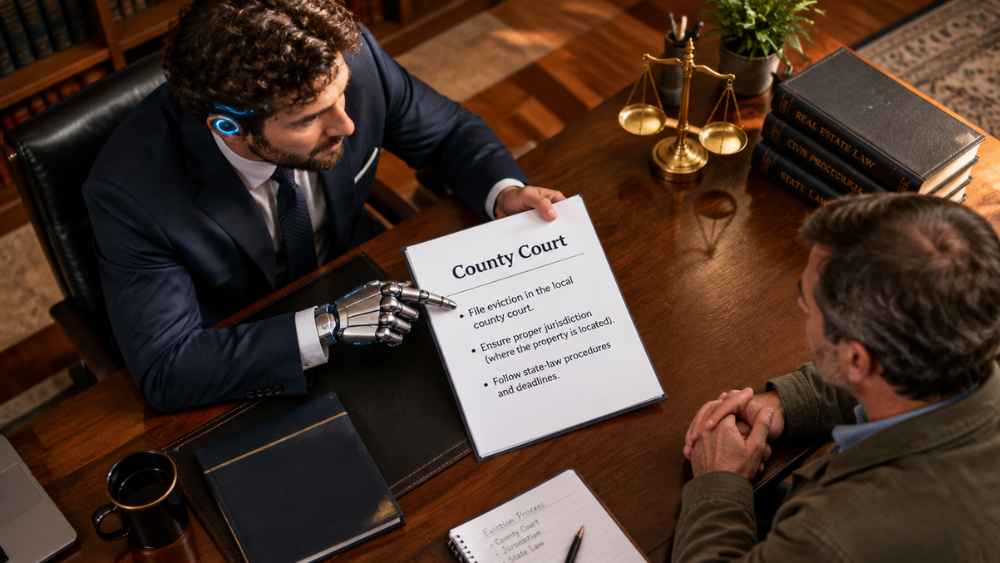
“The landlord filed the eviction in County Court because state law assigned that type of local civil dispute to the county-level trial court.”
What Is a County Court?
A County CourtCourt of Common PleasA Court of Common Pleas is a state trial court name used in several jurisdictions; its exact jurisdiction depends on state law and local court structure.View definition is a state or local courtMunicipal CourtA Municipal Court is a local court whose authority is defined by state law, city law, or both. Many municipal courts have limited jurisdiction over traffic, misdemeanors, ordinances, protective orders, or smaller civil...View definition whose jurisdictionLegal DisputeA legal dispute is a disagreement or controversy involving claimed legal rights, duties, liabilities, property, or remedies. It can be resolved through negotiation, mediation, arbitration, administrative proceedings, litigation, or settlement depending on the...View definition is usually tied to a county.
Its authority varies substantially from one state to another.
Therefore, the name alone does not identify the court’s powers.
Standard County Court — Sample Contract Language
Suppose a Florida landlord files an eviction and related qualifying civil claim.
Is County Court a Federal Court?
No. County courts are parts of state or local judicial systems.
Federal courts use district, bankruptcy, magistrate, appellate, and other federal structures.
Therefore, county-court jurisdiction comes from state law.
Are County Courts Courts of Limited Jurisdiction?
Many county courts have limited jurisdictionFederal CourtA federal court is a court within the U.S. federal judicial system. Federal courts have limited jurisdiction, so they hear only cases authorized by the Constitution or federal law, including many federal-question and...View definition over defined case categories or dollar amounts.
Some states use the name for broader trialLawsuitA lawsuit is a legal dispute brought before a court for a decision or remedy. Civil lawsuits can involve pleadings, service, discovery, motions, settlement, trial, judgment, and possible appeal.View definition courts.
Therefore, local statutesPrimary AuthorityPrimary Authority is law issued by an institution with official power to create or state legal rules. Constitutions, statutes, regulations, court decisions, and court rules can be primary authority, while binding effect depends...View definition and constitutions control.
What Cases Can County Courts Hear?
Common subjects include misdemeanors, traffic cases, small claims, landlord-tenant matters, ordinance violations, and lower-value civil disputes.
The exact list varies by state.
Therefore, filers should check local rules.
Can County Courts Hear Felonies?
Some county courts do not conduct felony trials but can handle preliminary criminal matters.
Other states organize criminal jurisdiction differently.
Therefore, county-court criminal authority is state-specific.
Can County Courts Hear Civil Cases?
Yes. Many county courts hear civil disputes below a statutory monetary ceiling.
Other states use county courts for specialized or broader matters.
Therefore, amount in controversy can be important.
Can County Courts Hear Small Claims?
Yes, in many states.
Small claims can operate within county court or as a separate division.
Therefore, filers should verify the small-claims limit and procedure.
Can County Courts Hear Landlord-Tenant Cases?
Often, yes.
Eviction and rent disputes frequently fall within local or county-level jurisdiction.
Therefore, expedited procedures can apply.
Can County Courts Hear Traffic Cases?
Many county courts hear traffic infractions and related offenses.
Other states assign traffic matters to municipal or district courts.
Therefore, court names vary even for similar cases.
Can County Courts Hear Misdemeanors?
Many county courts hear misdemeanor criminal cases.
Felonies can belong to a higher trial courtTrial CourtA Trial Court is a court where parties present evidence, establish facts, and obtain an initial judgment or verdict. Federal district courts are the primary federal trial courts, while state systems use varied...View definition .
Therefore, offense classification can determine forum.
Can County Courts Hear Ordinance Violations?
Yes, in some states.
State law can assign local code and ordinanceOrdinanceAn Ordinance is a law enacted by a municipality or other authorized local government. Local authority depends on state constitutions, statutes, charters, home-rule rules, Dillon’s Rule principles, and preemption, while ordinances commonly govern...View definition cases to county, municipal, or other limited-jurisdiction courts.
Therefore, local structure matters.
How Does Florida Use County Courts?
Florida establishes a limited-jurisdiction trial court in each county.
They hear traffic, landlord-tenant, small claims, misdemeanors, ordinance matters, and qualifying civil disputes.
Therefore, Florida illustrates the common limited-jurisdiction model. See Florida Courts: Trial Courts – County.
What Is Florida’s Current County Civil Jurisdiction?
Florida county courts currently hear qualifying civil disputes up to $50,000.
The limit is statutory and can change.
Therefore, filers should check current official sources before filing.
How Many County Courts Does Florida Have?
Florida’s constitution establishes a county court in each of its 67 counties.
JudgeJudgeA Judge is a judicial officer who presides over legal proceedings, applies law, manages procedure, rules on motions and evidence, and issues orders or judgments. Trial, appellate, Article III, magistrate, bankruptcy, and state...View definition numbers vary with caseload and other statutory factors.
Therefore, county boundaries structure the trial system.
County Court vs. Circuit Court
In Florida, circuit courts have general trial jurisdiction while county courts have limited statutory jurisdiction.
Other states use different names and divisions.
Therefore, lawyers must research the relationship state by state.
County Court vs. Municipal Court
A county court generally serves county-level jurisdiction, while a municipal court serves a city or municipality.
Both often operate with limited jurisdiction.
Therefore, geography and enabling law distinguish them.
County Court vs. District Court
Some states call their principal trial courts district courts rather than county courts.
Other states have both.
Therefore, labels do not provide a nationwide hierarchy.
County Court vs. Small Claims Court
Small claims can be a division of county court rather than a separate institution.
Simplified rules and lower monetary limits usually apply.
Therefore, filers should check court organization before filing.
Are County Court Judges Elected?
Selection methods vary by state.
States can elect, appoint, retain, or otherwise select county judges through mixed systems.
Therefore, there is no national county-judge selection rule.
Do County Courts Use Juries?
Some county-court cases permit juryJuryA Jury is a group of citizens selected to perform a legal factfinding or charging function. Petit juries decide facts and return verdicts in trials, while grand juries determine whether probable cause supports...View definition trials, while others proceed before a judge.
Constitutional rights and state statutes govern.
Therefore, case type affects jury availability.
Can County Court Decisions Be Appealed?
Yes. Appeals generally go to a higher state courtState CourtA state court is a court established under a state constitution and state law. State courts hear the vast majority of U.S. civil and criminal cases, and their structures, names, procedural rules, and...View definition under local appellate rules.
The reviewing court can be a circuit, district, superior, or appellate courtCourt of AppealsA court of appeals is a court that reviews decisions from lower courts. Federal courts of appeals usually examine the existing record for legal error rather than conducting a new trial or hearing...View definition .
Therefore, appeal paths vary by state.
What Is County Court Venue?
County venueVenueVenue determines the proper geographic court location for a lawsuit within a court system that otherwise has authority over the dispute. Federal civil venue commonly turns on defendant residence, substantial events or property,...View definition rules determine which county is proper for filing.
Residence, events, property location, or statutory venue can matter.
Therefore, county jurisdiction and county venue are separate questions.
What Is Subject-Matter Jurisdiction?
Subject-matter jurisdiction defines the kinds of cases the county court can decide.
A statutory monetary ceiling is one common limitation.
Therefore, parties cannot usually create subject-matter jurisdiction by agreement.
What Is Personal Jurisdiction?
Personal jurisdictionMotion to DismissA motion to dismiss asks a court to end all or part of a case because of a legal or procedural defect. In federal civil cases, Rule 12 lists grounds including jurisdiction, venue,...View definition concerns the court’s power over the defendantCivil CourtCivil court is a general term for a court handling noncriminal disputes involving people, businesses, organizations, or government entities. Civil cases can involve contracts, injuries, property, employment, civil rights, and other disputes and...View definition .
County-level filing does not remove constitutional and statutory service requirements.
Therefore, proper court level alone is not enough.
How Does Service of Process Work?
State procedural rules govern service in county court.
Small-claims and eviction cases can use specialized service procedures.
Therefore, parties should follow local rules precisely.
What Is a County Court Clerk?
The clerk maintains case records, receives filings, collects fees, and performs administrative functions.
Clerk authority varies by state.
Therefore, clerks manage procedure but do not provide legal advice.
Are County Court Records Public?
Many filings and dockets are public subject to sealing, privacy, and statutory restrictions.
Criminal, juvenile, family, and identity information can receive special protection.
Therefore, record access depends on case type.
Can a County Court Issue Injunctions?
Authority to issue injunctions depends on the court’s statutory jurisdiction.
Some limited-jurisdiction courts lack broad equitable powers.
Therefore, requested relief can determine the proper court.
Can a County Court Enter Money Judgments?
Yes, when the dispute falls within the court’s civil jurisdiction.
Parties can enforce judgments through state collection procedures.
Therefore, limited jurisdiction can still produce enforceable final judgments.
Can Cases Be Transferred to Another Court?
State law can permit transfer when a claim exceeds jurisdiction or belongs in another court.
Rules can also permit consolidation or reassignmentReasonable AccommodationReasonable Accommodation is a workplace change that enables a protected applicant or employee to obtain equal employment opportunity. Federal duties arise under the ADA, Title VII, and the PWFA, with different rules for...View definition .
Therefore, jurisdictional mistakes do not always require complete refiling.
What Happens If the Claim Exceeds the Limit?
A court lacking subject-matter jurisdiction cannot simply decide a larger claim.
State law determines dismissal, transfer, waiver of excess, or other options.
Therefore, damagesLegal RemedyA legal remedy is the relief a court or other authorized tribunal can provide after a legal right has been violated. Remedies can include damages, injunctions, restitution, specific performance, rescission, declarations, and other...View definition estimates should be made before filing.
County Court Example
Suppose a Florida landlord files an eviction and related qualifying civil claim.
The county court can have statutory jurisdiction over the dispute.
Therefore, the case can proceed at the county trial-court level.
Why Does County Court Matter?
County courts often provide accessible forums for everyday civil and criminal disputes.
However, jurisdiction, monetary limits, appeals, and procedure differ widely by state.
Therefore, users should check the official state court structure first.