
Copyright Registration
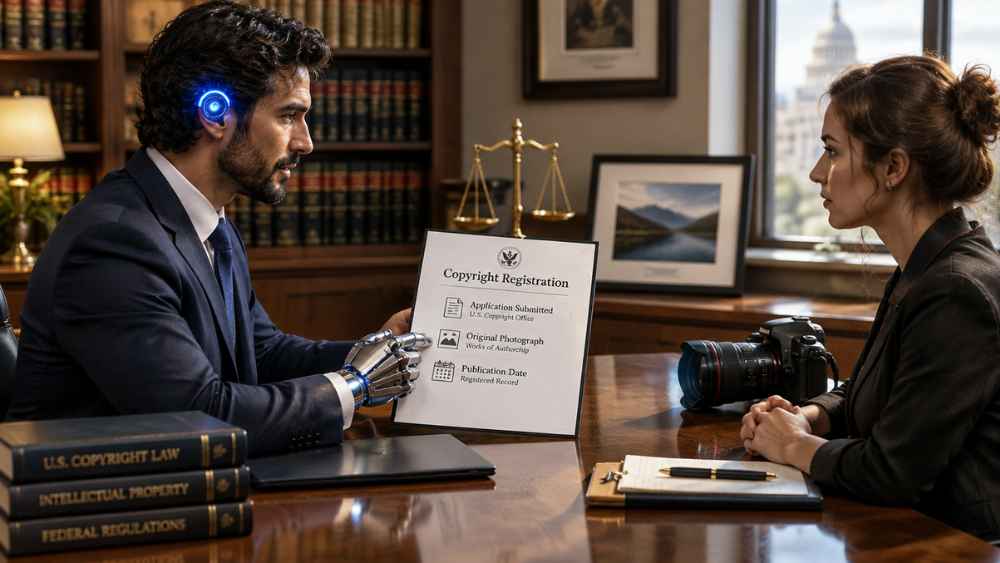
“The photographer completed Copyright Registration soon after publication to create a public record and preserve important enforcement remedies.”
What Is Copyright Registration?
Copyright RegistrationCopyright InfringementCopyright infringement occurs when someone violates an exclusive copyright right without authorization or another valid legal basis. Claims can involve copying, derivative works, distribution, performance, display, or secondary liability, subject to defenses and...View definition is the process of recording a copyright claim with the U.S. Copyright Office.
Registration creates a public record and can provide important litigationLegal DisputeA legal dispute is a disagreement or controversy involving claimed legal rights, duties, liabilities, property, or remedies. It can be resolved through negotiation, mediation, arbitration, administrative proceedings, litigation, or settlement depending on the...View definition and evidentiary benefits.
Therefore, registration is separate from copyright ownershipWork Made for HireA Work Made for Hire is a copyrighted work created by an employee within the scope of employment or a qualifying specially commissioned work meeting strict statutory and written-agreement requirements. The classification determines...View definition itself. See U.S. Copyright Office Registration Portal.
Standard Copyright Registration — Sample Contract Language
Suppose a photographer creates and publishes a series of original photographs.
Does Copyright Exist Before Registration?
Yes. Copyright generally arises automatically when an author fixes an original work in a tangible medium.
Registration is not required to create the underlying copyright.
Therefore, lawyers should analyze ownership and federal registration separately.
Why Register a Copyright?
Registration can support enforcement, public notice, evidentiary presumptions, statutory damages, and attorney-fee eligibility in qualifying cases.
The timing of registration affects some remedies.
Therefore, early registration can provide significant legal advantages.
Who Can Apply for Registration?
An author, copyright claimantPlaintiffA Plaintiff is the party who initiates a civil lawsuit and asks a court for legal relief. The plaintiff generally files the complaint, establishes standing and jurisdiction, serves the defendant, proves the elements...View definition , owner of exclusive rights, or authorized agent can generally file a qualifying application.
Special application types can impose narrower eligibility rules.
Therefore, the correct claimant and application type matter.
What Does a Registration Application Require?
A complete claim generally requires an application, filing fee, and required deposit copy or copies.
The Copyright Office examines the submitted claim.
Therefore, applicants should submit every required component accurately. See Copyright Office Circular 2.
What Is a Deposit Copy?
A deposit is the copy or copies of the work submitted with the registration claim.
Deposit requirements vary by work type, publication status, and publication format.
Therefore, applicants should follow the specific Copyright Office instructions for the work.
Can Copyright Registration Be Filed Online?
Yes. The Copyright Office offers electronic registration through its online system.
Online filing is generally faster and less expensive than paper filing.
Therefore, most applicants use the electronic process.
What Is the Standard Application?
The Standard Application can register many works, including joint works, works made for hire, compilations, and derivative works.
It is the appropriate application for many ordinary registrations.
Therefore, applicants should not force an ineligible claim into the Single Application.
What Is the Single Application?
The Single Application covers only one work by one individual author who is also the sole claimant.
Applicants cannot use it for works made for hire or many collaborative works.
Therefore, applicants should check eligibility before filing.
Can Multiple Works Be Registered Together?
Sometimes. The Copyright Office offers specific group-registration options for qualifying categories of works.
Each group option has its own eligibility rules.
Therefore, one application cannot automatically cover any collection of works.
What Is a Group Registration?
A group registration covers multiple qualifying works through one registration procedure.
Examples can include certain photographs, unpublished works, periodical contributions, and online literary works.
Therefore, applicants should use only the group option matching their works.
What Is the Effective Date of Registration?
Under 17 U.S.C. § 410(d), the effective dateStatuteA Statute is a law enacted by a legislative body such as Congress or a state legislature. Federal statutes move from enactment through slip laws and the Statutes at Large, while general and...View definition is when the Office receives an acceptable application, deposit, and fee.
The Office can issue the certificate later.
Therefore, certificate date and effective date can differ. See 17 U.S.C. § 410.
When Does the Copyright Office Register the Claim?
The Office registers a claim after confirming copyrightability and all legal and formal requirements.
It can also refuse registration.
Therefore, filing alone does not guarantee registration.
What Happens if Registration Is Refused?
The Copyright Office sends a written refusal explaining the reasons.
Administrative reconsideration procedures can be available.
Therefore, applicants can sometimes challenge or correct a refusal.
Is Registration Required Before an Infringement Lawsuit?
For many U.S. works, Section 411 generally requires registration or preregistration before filing a civil infringement action.
A refused registration can also permit suit after statutory notice procedures.
Therefore, enforcement planning should account for registration timing.
What Did Fourth Estate Establish?
The Supreme CourtSupreme CourtThe Supreme Court of the United States is the nation’s highest federal court. It reviews selected cases involving the Constitution and federal law, resolves important federal legal questions, and sits at the top...View definition held that registration occurs when the Copyright Office acts, not merely when an applicantLetter of CreditA Letter of Credit is a documentary undertaking by an issuer to pay a beneficiary when a complying presentation is made.View definition files.
That rule matters for Section 411 litigation timing.
Therefore, early filing can reduce enforcement delay.
What Is Preregistration?
Preregistration is a limited Copyright Office procedure for specified classes of works vulnerable to pre-release infringement.
It does not replace ordinary registration.
Therefore, only qualifying works should use it. See 37 C.F.R. § 202.16.
What Works Can Be Preregistered?
Eligible classes include specified motionMotionA Motion is a formal request asking a court to issue an order or grant specific relief. Federal Rule 7(b) generally requires motions to state their grounds with particularity and identify the relief...View definition pictures, sound recordings, musical works, books, computer programs, and advertising photographs.
The work must also satisfy regulatory requirements.
Therefore, preregistration is intentionally narrow.
Does Preregistration Prove Valid Copyright?
No. Preregistration does not create a presumptionPresumptionA presumption is a legal rule that gives specified facts an evidentiary consequence, often shifting the burden of producing evidence without shifting the ultimate burden of persuasion.View definition that the work is copyrightable or will later register.
The applicant still needs ordinary registration.
Therefore, preregistration is mainly an enforcement-timing tool.
How Does Registration Affect Statutory Damages?
Section 412 limits statutory damages when registration occurs too late relative to infringement and publication.
Therefore, courts apply the exact timing rules to the facts.
Therefore, prompt registration can preserve valuable remedies.
How Does Registration Affect Attorney Fees?
Section 412 also limits attorney-fee awards in infringement actions when registration timing requirements are not satisfied.
These rules can materially affect litigation economics.
Therefore, delayed registration can reduce available remedies.
What Is the Three-Month Publication Rule?
Section 412 can preserve these remedies when a published work registers within three months after first publication.
Other timing rules apply to unpublished works.
Therefore, the first-publication date can be critical.
What Evidentiary Benefit Can Registration Provide?
A timely certificate can provide prima facie evidencePrima FaciePrima Facie means that evidence is sufficient on its face to establish a claim, fact, or legal issue unless rebutted. The required showing depends on the cause of action, statute, or procedural doctrine.View definition of copyright validity and facts stated in the certificate.
Later registrations can receive evidentiary weight at the court’s discretion.
Therefore, timely registration can simplify proof.
What Is First Publication?
Publication is a technical copyright concept concerning distribution or offers to distribute copies under statutory rules.
Online posting does not produce the same answerCivil LitigationCivil Litigation is the court process for resolving noncriminal disputes through pleadings, motions, discovery, settlement, trial, judgment, and possible appeal. Federal civil litigation follows the Federal Rules of Civil Procedure, while state systems...View definition in every context.
Therefore, applicants should determine publication status carefully.
Can Published and Unpublished Works Use the Same Claim?
Registration procedures often distinguish published from unpublished works.
Group options can also require all included works to share a qualifying status.
Therefore, applicants should classify publication accurately.
What Is a Work Made for Hire Registration?
Applicants can register a work made for hire through the proper application and identify the proper claimant.
The authorship rules remain statutory.
Therefore, registration entries should match the underlying ownership analysis.
Can a Derivative Work Be Registered?
Yes. Registration can cover new copyrightable authorship added to preexisting material.
The application should identify and exclude preexisting material appropriately.
Therefore, the registration does not expand protection to unclaimed public-domain material.
Can a Compilation Be Registered?
Yes, when selection, coordination, or arrangement contains sufficient original authorship.
Registration does not automatically cover every component work.
Therefore, scope depends on the authorship claimed.
Can a Website Be Registered?
Applicants can register copyrightable website content under applicable work categories and Office procedures.
Frequently updated content can require special planning.
Therefore, a single registration does not necessarily cover every future website revision.
What Is Supplementary Registration?
A supplementary registration can correct or amplify information in an existing basic registration.
It does not erase the original public record.
Therefore, supplementary registration is a correction tool rather than a replacement certificate.
Can Copyright Ownership Be Recorded Separately?
Yes. Parties can record transfers and other copyright documents through separate Copyright Office procedures.
Recordation is not the same as registering a work.
Therefore, registration and ownership-chain records serve different purposes.
Are Copyright Registration Fees Fixed Forever?
No. The Copyright Office periodically reviews and adjusts fees.
Applicants should check the current official fee schedule before filing.
Therefore, older articles can contain outdated amounts. See Copyright Office fee schedule.
Copyright Registration Example
Suppose a photographer creates and publishes a series of original photographs.
The photographer uses the qualifying Copyright Office registration procedure and submits the required deposit.
Therefore, the resulting registration can strengthen later enforcement rights.
Why Does Copyright Registration Matter?
Registration creates an official public record and can unlock important enforcement and evidentiary advantages.
Its value depends heavily on accuracy and timing.
Therefore, creators should consider registration before infringement occurs.