
Biometric Information
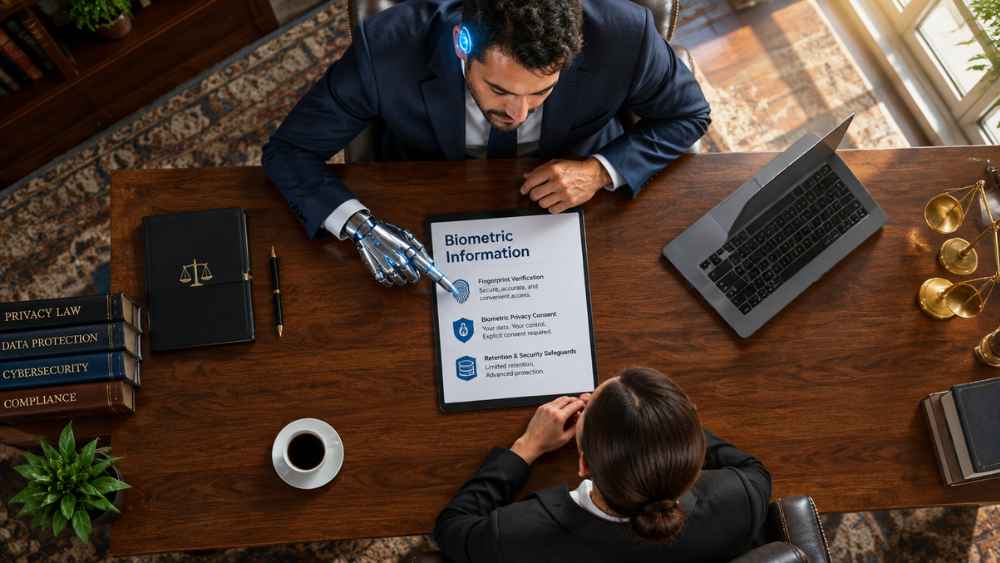
“The company reviewed Biometric Information requirements before deploying fingerprint authentication and created notice, consent, retention, and security controls.”
What Is Biometric Information?
Biometric InformationSensitive Personal InformationSensitive Personal Information is the CCPA category covering specified identifiers, account credentials, precise geolocation, message contents, genetic data, identifying biometrics, and other sensitive traits. Consumers can have additional rights to limit certain uses...View definition generally means information derived from biological or behavioral characteristics used for recognition, verificationVerified ComplaintA verified complaint is a complaint accompanied by a sworn verification or declaration under penalty of perjury confirming specified factual allegations.View definition , or identification.
Definitions vary among privacy laws.
Therefore, the governing statuteStatutory LawStatutory law is written law enacted by a legislative body through the formal lawmaking process. Federal and state statutes can create rights, duties, prohibitions, causes of action, procedures, penalties, and remedies, and courts...View definition controls.
Standard Biometric Information — Sample Contract Language
Suppose an employer uses a fingerprint-based time clock for employees in Illinois.
How Does the GDPR Define Biometric Data?
GDPRData PrivacyData privacy concerns how personal information is collected, used, shared, retained, and controlled. It includes transparency, data minimization, individual rights, vendor management, security, retention, and compliance with laws such as GDPR, CCPA, and...View definition Article 4 defines biometric dataSensitive DataSensitive data is information requiring heightened protection because misuse or exposure can create significant privacy, discrimination, financial, or safety risks.View definition as personal dataPersonally Identifiable Information (PII)Personally Identifiable Information (PII) is information that can distinguish or trace an individual’s identity alone or with other linked or linkable information. Common examples include identifiers, contact details, biometrics, financial information, health information,...View definition resulting from specific technical processing of physical, physiological, or behavioral characteristics.
The data must allow or confirm unique identification.
Therefore, raw images are not automatically biometric data in every GDPR use. See GDPR Article 4(14).
When Is Biometric Data a Special Category?
GDPR Article 9 treats biometric data used to uniquely identify a person as special-category data.
Processing generally requires an Article 9 exception.
Therefore, unique identification creates heightened restrictions.
What Does Illinois BIPA Cover?
Illinois BIPABIPABIPA is an Illinois law regulating private entities' collection, use, disclosure, retention, and protection of biometric identifiers and biometric information.View definition separately defines biometric identifiersCOPPACOPPA is the federal Children’s Online Privacy Protection Act and Rule governing covered online services that collect personal information from children under 13. The amended Rule now strengthens parental consent, third-party disclosure, data...View definition and biometric information.
Biometric identifiers include retina or iris scans, fingerprints, voiceprints, and hand or face geometry scans.
Therefore, BIPA uses its own statutory categories. See 740 ILCS 14/10.
What Is Biometric Information Under BIPA?
BIPA defines biometric information as information based on a covered biometric identifier and used to identify a person.
Information derived from statutory exclusions does not qualify.
Therefore, source data and use both matter.
What Does BIPA Exclude?
BIPA excludes items such as ordinary photographs, written signatures, certain health-care data, and listed medical images.
The statutory exclusions are detailed.
Therefore, not every image or body-related record is a biometric identifier.
What Consent Does BIPA Require?
Covered private entities generally must provide written notice about collection, purpose, and duration before obtaining biometric data.
They also need a written releaseWaiver DefinitionA waiver is the intentional relinquishment of a known legal right, claim, privilege, or protection. A waiver can be express or implied, although enforceability depends on the right involved, the evidence of intent,...View definition .
Therefore, consent must occur before covered collection. See 740 ILCS 14/15.
What Is the BIPA Retention Rule?
Covered private entities must publish a retention and destruction policy.
The policy uses the earlier of purpose completion or three years after the individual’s last interaction.
Therefore, biometric retention should not be indefinite.
Can Biometric Data Be Sold?
BIPA restricts profiting from covered biometric identifiers and information.
Other laws can impose additional sale or sharing restrictions.
Therefore, commercialization creates significant legal risk.
How Does the CCPA Treat Biometrics?
California personal information includes biometric information.
Biometric information processed to identify a consumer can also qualify as sensitive personal information.
Therefore, CCPA rights can apply to biometric processing. See California Privacy Protection Agency FAQ.
What Are Common Biometric Uses?
Examples include fingerprint access, facial recognition, voice authenticationAdmissible EvidenceAdmissible Evidence is evidence a court permits the judge or jury to consider. In federal court, admissibility commonly depends on relevance, Rule 403 balancing, authentication, foundation, hearsay rules, privilege, witness competence, and other...View definition , iris scans, and some behavioral identification systems.
The legal classification depends on processing purpose.
Therefore, authentication design should start with privacy analysis.
What Security Risks Are Special?
Biometric traits can be difficult or impossible to replace after compromise.
Templates and derived identifiers therefore require strong security.
Therefore, breach consequences can differ from password compromise.
Biometric Information Example
Suppose an employer uses a fingerprint-based time clock for employees in Illinois.
BIPA notice, consent, retention, and disclosure rules can apply.
Therefore, the employer should assess compliance before enrollment.
Why Does Biometric Information Matter?
Biometric systems combine convenience with persistent identity and surveillance risks.
GDPR, CCPA, BIPA, and other laws regulate them differently.
Therefore, organizations should map each use to every applicable jurisdictionLegal DisputeA legal dispute is a disagreement or controversy involving claimed legal rights, duties, liabilities, property, or remedies. It can be resolved through negotiation, mediation, arbitration, administrative proceedings, litigation, or settlement depending on the...View definition .