
Service Mark
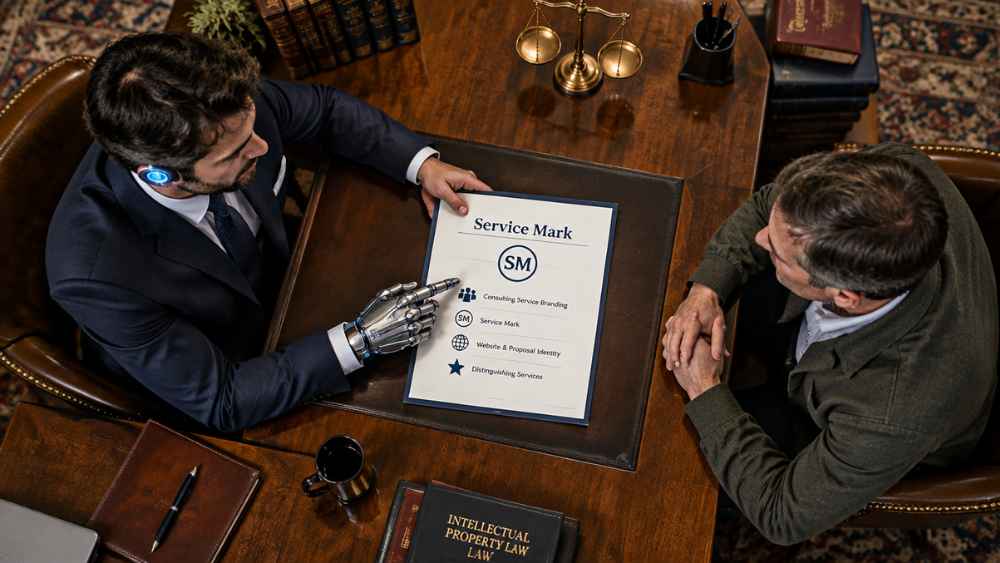
“The consulting company used its Service Mark on its website and proposals to identify the source of consulting services and distinguish competing providers.”
What Is a Service Mark?
A Service MarkTrademark DefinitionA trademark is a word, phrase, symbol, design, or other source identifier that distinguishes one seller’s goods or services from others. U.S. rights can arise through use, while federal registration can provide additional...View definition identifies and distinguishes the source of services rather than goods.
Federal trademark law generally treats service marks under the broader trademark framework.
Therefore, “trademark” often includes service marks. See USPTO trademark basics.
Standard Service Mark — Sample Contract Language
Suppose a consulting firm uses a distinctive name on its website and client proposals for consulting services.
Service Mark vs. Trademark
A trademark traditionally identifies goods, while a service mark identifies services.
The legal registration system generally handles both through the same federal framework.
Therefore, the distinction mainly concerns what the mark identifies.
What Can Function as a Service Mark?
Words, phrases, symbols, designs, sounds, and other source identifiers can function as service marks.
The designation must identify a single commercial source.
Therefore, not every slogan or design qualifies.
What Is a Service?
For trademark purposes, a service is an activity performed for the benefit of someone other than the applicantLetter of CreditA Letter of Credit is a documentary undertaking by an issuer to pay a beneficiary when a complying presentation is made.View definition .
The activity must qualify as a registrable service.
Therefore, ordinary internal business activity may not qualify. See USPTO goods and services guidance.
What Does Source Identification Mean?
A service mark tells consumers whose services they are encountering.
It distinguishes that source from competing providers.
Therefore, the mark must perform a branding function rather than merely describe the service.
Can a Business Name Be a Service Mark?
Yes, when consumers encounter the name as a source identifier for services.
A legal entity name alone does not automatically create trademark significance.
Therefore, use in the marketplace matters.
Can a Logo Be a Service Mark?
Yes. A logo can identify and distinguish service source.
Its protectability depends on distinctiveness and other trademark rules.
Therefore, logos and words can both serve as service marks.
Can a Slogan Be a Service Mark?
Yes, if consumers perceive the slogan as identifying service source.
Pure advertising messages can fail to function as marks.
Therefore, commercial impression matters.
Can a Sound Be a Service Mark?
Yes. Distinctive sounds can function as service marks when consumers associate them with a service source.
Registration uses specialized drawing and specimen requirements.
Therefore, service marks are not limited to visual signs.
What Is the SM Symbol?
The SM symbol signals a claim of service-mark rights.
A business can use SM even without a federal registration.
Therefore, SM differs from the federal registration symbol.
What Is the ® Symbol?
The ® symbol indicates federal registration.
It should be used only with goods or services covered by the registration.
Therefore, unregistered service marks should not use ®.
Do Rights Exist Without Federal Registration?
Yes. U.S. trademark rights can arise through use of a mark in commerce.
Unregistered rights can be geographically limited.
Therefore, registration strengthens rather than creates every trademark right.
Why Register a Service Mark?
Federal registration can provide nationwide presumptions, public notice, enforcement benefits, and access to federal registration remedies.
The precise benefits depend on the registration.
Therefore, registration can materially strengthen brand protection.
What Is Use in Commerce for Services?
A service mark is used in commerce when it is used in selling, advertising, or rendering services.
The services must actually be rendered in qualifying commerce.
Therefore, advertising alone is not enough before services exist. See USPTO filing-basis guidance.
What Is a Use-in-Commerce Application?
A Section 1(a)Trademark RegistrationTrademark Registration is the federal process for recording qualifying trademark rights with the USPTO. Registration can provide nationwide notice and legal presumptions, but applicants must satisfy ownership, filing-basis, goods or services, examination, publication,...View definition application relies on actual qualifying use of the mark in commerce.
The applicant supplies dates of use and an acceptable specimen.
Therefore, factual use must exist by the filing date for that basis.
What Is an Intent-to-Use Application?
A Section 1(b) application is based on a bona fide intent to use the service mark in commerce.
Registration cannot issue until qualifying use is shown.
Therefore, intent-to-use filing can reserve an earlier application date without immediate registration.
What Is a Service-Mark Specimen?
A specimen is real-world evidence showing how consumers encounter the mark with the services.
Examples can include webpages, advertisements, brochures, or signage.
Therefore, the specimen must create a direct association with the services. See USPTO specimen guidance.
What Makes a Service Specimen Acceptable?
The specimen should show the mark and reference the services sufficiently to create source association.
A webpage specimen also needs required URL and access-date information.
Therefore, a logo displayed without service context can fail.
What Is Failure to Function?
A proposed mark can be refused when consumers would not perceive it as a service-source identifier.
Common phrases, informational wording, and ordinary ornamentation can create this issue.
Therefore, distinctiveness alone is not the only concern.
What Is Distinctiveness?
Distinctiveness measures how effectively a designation identifies source.
Fanciful, arbitrary, and suggestive marks are generally stronger than descriptive marks.
Therefore, stronger marks usually receive broader protection.
Can a Descriptive Service Mark Register?
Yes, sometimes after acquiring distinctiveness through marketplace recognition.
Descriptive marks can also qualify for the Supplemental Register in certain circumstances.
Therefore, descriptiveness can delay or narrow protection.
Can a Generic Service Term Be Protected?
No. A generic term names the service itself rather than its source.
Generic matter cannot function as an exclusive trademark.
Therefore, businesses should avoid relying on category names as brands.
What Is Likelihood of Confusion?
A proposed service mark can be refused or challenged when consumers are likely to confuse source with another mark.
Similarity and related services are major considerations.
Therefore, clearance searching should occur before filing.
What Is a Service-Mark Search?
A search checks federal records and marketplace sources for potentially conflicting marks.
A USPTO database search does not capture every unregistered right.
Therefore, broader clearance can reduce launch risk.
Can the Same Mark Cover Goods and Services?
Yes. One brand can function as a trademark for goods and a service mark for services.
The application must identify each item correctly.
Therefore, mixed businesses can need multiple classes.
What Are International Classes for Services?
The Nice ClassificationTrademark ClassA trademark class organizes goods and services in a trademark application under the Nice Classification. The class number helps administration, while the precise identification of goods and services is critical to examination and...View definition system groups services primarily in Classes 35 through 45.
Some businesses need multiple service classes.
Therefore, classification follows the actual service identification.
What Is Service-Mark Infringement?
Infringement generally involves unauthorized use likely to cause confusion about source, sponsorship, affiliation, or approval.
Registration is helpful but not always necessary for a claim.
Therefore, marketplace context matters.
Can a Service Mark Be Diluted?
Yes, if the mark is famous under federal dilutionCommon StockCommon stock is a corporate equity class that typically carries voting and residual economic rights, subject to any superior rights granted to preferred stock or other classes.View definition law.
Dilution does not require likely confusion.
Therefore, exceptionally famous service marks can receive broader protection.
How Long Can a Federal Service-Mark Registration Last?
A federal registration can continue indefinitely if the owner files required maintenance documents and continues qualifying use.
Deadlines recur over the registration’s life.
Therefore, registration is not permanently self-sustaining.
Can a Service Mark Be Licensed?
Yes. Owners can license service marks while maintaining appropriate quality controlLicensing AgreementA Licensing Agreement is a contract granting permission to use specified property, technology, or intellectual property while the licensor generally retains ownership. Key terms commonly address scope, exclusivity, territory, term, royalties, sublicensing, quality...View definition .
Uncontrolled licensing can create legal risk.
Therefore, license agreements should address standards and monitoring.
Service Mark Example
Suppose a consulting firm uses a distinctive name on its website and client proposals for consulting services.
Consumers recognize the name as the source of those services.
Therefore, the name can function as a service mark.
Why Does a Service Mark Matter?
Service marks protect brand identity for businesses that sell activities rather than physical goods.
Federal registration can strengthen nationwide rights.
Therefore, service providers should treat brand clearance and use evidence seriously.