
Trademark Registration
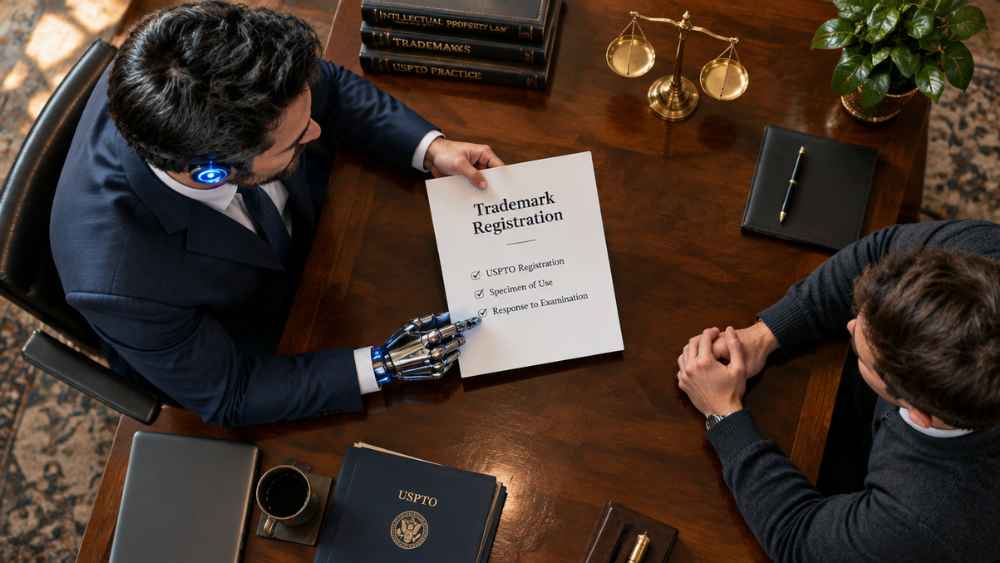
“The startup pursued Trademark Registration after clearance searching, then responded to the USPTO examiner and submitted acceptable use evidence.”
What Is Trademark Registration?
Trademark RegistrationTrademark DefinitionA trademark is a word, phrase, symbol, design, or other source identifier that distinguishes one seller’s goods or services from others. U.S. rights can arise through use, while federal registration can provide additional...View definition is the federal process for recording qualifying trademark rights with the U.S. Patent and Trademark Office.
Registration can provide nationwide legal presumptions and enforcement advantages.
Therefore, federal registration strengthens brand protection. See USPTO Trademark Basics.
Standard Trademark Registration — Sample Contract Language
Suppose a software company clears a distinctive brand and files an intent-to-use application before launch.
Does a Trademark Exist Before Registration?
Yes. U.S. trademark rights can arise through qualifying use in commerceTrademark ApplicationA trademark application asks the USPTO to register a mark for specified goods or services and must satisfy requirements concerning ownership, filing basis, identification, and use.View definition even without federal registration.
Those unregistered rights can be geographically limited.
Therefore, registration is valuable but not the sole source of trademark rights.
Why Register a Trademark?
Federal registration can provide nationwide notice, legal presumptions, federal-court access, and other enforcement benefits.
It can also support customs recordation and international filing strategies.
Therefore, registration can increase both defensive and enforcement leverage.
What Can Be Registered?
Words, names, logos, slogans, designs, sounds, and other source identifiers can qualify.
The designation must function as a mark and satisfy statutory requirements.
Therefore, not every business phrase or design is registrable.
What Is the Principal Register?
The Principal Register is the primary federal trademark register.
Qualifying registrations receive important statutory presumptions and benefits.
Therefore, most applicants seek Principal Register protection.
What Is the Supplemental Register?
The Supplemental Register can accept certain marks not yet eligible for the Principal Register.
Its benefits are more limited.
Therefore, descriptive marks can sometimes use it as an interim option.
Should an Applicant Search First?
Yes. A clearance search can identify earlier marks that create likelihood-of-confusion risk.
USPTO searching should be supplemented when business risk justifies broader review.
Therefore, filing without clearance can waste launch and application costs.
What Is Likelihood of Confusion?
The USPTO can refuse a mark likely to confuse consumers with an earlier registered or pending mark.
Similarity and related goods or services are central factors.
Therefore, exact identity is not required.
What Is a Filing Basis?
A filing basis is the legal basis supporting a federal trademark application.
Common bases include use in commerce, intent to useService MarkA Service Mark identifies and distinguishes the source of services rather than goods. U.S. trademark law generally treats service marks within the broader trademark system, allowing rights through use and federal registration through...View definition , and specified foreign rights.
Therefore, every application needs an appropriate basis. See USPTO Filing Basis guidance.
What Is Section 1(a) Use in Commerce?
Section 1(a) applies when the applicantLetter of CreditA Letter of Credit is a documentary undertaking by an issuer to pay a beneficiary when a complying presentation is made.View definition already uses the mark in commerce for the listed goods or services.
The application generally requires a specimen.
Therefore, claimed use should match actual marketplace use.
What Is Section 1(b) Intent to Use?
Section 1(b) allows filing based on a bona fide intent to use the mark in commerce.
The mark cannot register until qualifying use is later established.
Therefore, intent-to-use filing can secure an earlier application date before launch.
What Is Section 44(d)?
Section 44(d) can provide priority based on a qualifying foreign application filed within the statutory period.
The U.S. application must satisfy the requirements of that basis.
Therefore, international applicants should coordinate filing dates carefully.
What Is Section 44(e)?
Section 44(e) permits registration based on a qualifying foreign registration from the applicant’s country of origin.
Additional U.S. requirements still apply.
Therefore, foreign registration does not guarantee U.S. approval.
What Is the Madrid Protocol Basis?
Section 66(a) covers requests to extend protection of an international registration to the United States.
The USPTO still examines the request under U.S. trademark law.
Therefore, Madrid filings can face U.S. refusals.
What Information Does an Application Need?
An application identifies the owner, mark, goods or services, filing basis, and required declarations.
Some filings also need specimens or other supporting evidence.
Therefore, owner identity and goods wording should be accurate from the start.
Who Should Own the Application?
The legal owner of the mark must ordinarily be named as applicant.
An application filed in the wrong owner’s name can create serious validity problems.
Therefore, entity formation and ownership should be confirmed before filing.
What Are Goods and Services?
The application must identify the goods or services connected to the mark.
The wording determines the scope of the registration.
Therefore, overly narrow or inaccurate descriptions can create long-term problems.
What Are International Classes?
The Nice ClassificationTrademark ClassA trademark class organizes goods and services in a trademark application under the Nice Classification. The class number helps administration, while the precise identification of goods and services is critical to examination and...View definition system groups goods and services into numbered classes.
An application can include multiple classes when the business uses or intends to use the mark broadly.
Therefore, filing feesClerk of CourtA Clerk of Court manages a court’s major nonjudicial functions, including dockets, records, filings, notices, fees, jury administration, and operational systems. The clerk supports judicial work but does not decide the merits of...View definition and proof requirements can increase by class.
What Is the Current Base Application Fee?
The USPTO currently lists a $350 base application filing fee per class for qualifying Section 1 or Section 44 applications.
Additional fees can apply when an application requires extra processing.
Therefore, applicants should check the current fee page before filing. See USPTO Trademark Fee Information.
What Is a Specimen?
A specimen is evidence showing real-world use of the mark with the listed goods or services.
Acceptable specimens differ between goods and services.
Therefore, marketing mockups usually do not prove actual use.
How Does the USPTO Examine an Application?
A USPTO examining attorney reviews formal requirements and substantive registrability issues.
Potential refusals include confusion, descriptiveness, genericness, and failure to function.
Therefore, filing begins an examination process rather than automatic registration.
What Is an Office Action?
An Office ActionPatent ApplicationA Patent Application is a filing asking the USPTO to examine an invention for patent protection. Provisional and nonprovisional applications differ in purpose, requirements, examination, timing, publication, and their relationship to later patent...View definition is an official USPTO communication raising refusals or requirements.
Applicants must respond within the stated deadline.
Therefore, missing a response deadline can abandon the application.
What Is a Nonfinal Office Action?
A nonfinal Office Action gives the applicant an opportunity to address the examiner’s initial refusals or requirements.
A persuasive response can overcome or narrow the issues.
Therefore, legal argument and factual evidence can both matter.
What Is a Final Office Action?
A final Office Action maintains refusals or requirements after examination reaches a final stage.
Applicants can have response, reconsideration, or appealCourt of AppealsA court of appeals is a court that reviews decisions from lower courts. Federal courts of appeals usually examine the existing record for legal error rather than conducting a new trial or hearing...View definition options.
Therefore, a final refusal does not always end the application immediately.
What Is Publication for Opposition?
Approved applications are published in the Trademark Official GazetteTrademark OppositionTrademark Opposition is a TTAB proceeding challenging federal registration of a published trademark application. A notice generally must be filed within 30 days after publication or within a valid extension period.View definition before registration.
Third parties generally receive a 30-day oppositionMotionA Motion is a formal request asking a court to issue an order or grant specific relief. Federal Rule 7(b) generally requires motions to state their grounds with particularity and identify the relief...View definition period.
Therefore, examiner approval does not eliminate third-party challenge.
What Is a Trademark Opposition?
An opposition is a proceeding before the Trademark TrialLawsuitA lawsuit is a legal dispute brought before a court for a decision or remedy. Civil lawsuits can involve pleadings, service, discovery, motions, settlement, trial, judgment, and possible appeal.View definition and Appeal Board challenging registration.
A party must establish recognized grounds and standingJudicial ReviewJudicial review is the power of courts to examine government action and determine whether it complies with the Constitution, statutes, and other controlling law. It can apply to legislation, executive action, and administrative...View definition requirements.
Therefore, registration can become contested even after examination approval.
What Happens to a Use-Based Application After Publication?
If no successful opposition blocks a qualifying use-based application, the USPTO can issue registration.
Processing time varies.
Therefore, publication is a major but not final milestone.
What Happens to an Intent-to-Use Application?
After publication, an intent-to-use applicant usually receives a Notice of Allowance rather than immediate registration.
The applicant then proves use through an allegation of use.
Therefore, actual use remains necessary before registration.
What Is a Statement of Use?
A Statement of Use is the filing used to show qualifying commerce use after a Notice of Allowance.
It includes specimens and required declarations.
Therefore, intent alone cannot complete registration.
Can the Statement-of-Use Deadline Be Extended?
Yes. Federal rules allow qualifying extension requests within statutory limits.
Fees and deadlines apply to each extension.
Therefore, applicants should track the post-allowance calendar carefully.
What Rights Does Registration Provide?
A Principal Register registration can create presumptions concerning validity, ownership, and exclusive nationwide rights for listed goods or services.
Those presumptions remain subject to statutory defenses and challenges.
Therefore, registration is powerful but not absolute.
When Can the ® Symbol Be Used?
The federal registration symbol can be used only after federal registration issues.
It should be used for the goods or services covered by that registration.
Therefore, pending applications should use TM or SM instead.
How Is a Trademark Registration Maintained?
Most non-Madrid registrations require a Section 8 filing between years five and six.
Sections 8 and 9 filings are due between years nine and ten and every ten years thereafter.
Therefore, registration requires ongoing maintenance. See USPTO maintenance guidance.
What Is Section 15 Incontestability?
A qualifying Principal Register owner can file a Section 15 declarationSummary JudgmentSummary judgment is a court ruling entered without a full trial when no genuine dispute exists over any material fact and the moving party is entitled to judgment as a matter of law....View definition after five years of continuous use.
The filing can create statutory incontestability benefits.
Therefore, Section 15 is optional and distinct from required maintenance.
Can a Trademark Registration Be Cancelled?
Yes. Registrations can be cancelled through TTAB proceedings, federal litigationLegal DisputeA legal dispute is a disagreement or controversy involving claimed legal rights, duties, liabilities, property, or remedies. It can be resolved through negotiation, mediation, arbitration, administrative proceedings, litigation, or settlement depending on the...View definition , or failure to maintain the registration.
Nonuse and abandonment can also create vulnerability.
Therefore, registration must be used and defended appropriately.
Trademark Registration Example
Suppose a software company clears a distinctive brand and files an intent-to-use application before launch.
After publication and commercial launch, it files acceptable use evidence.
Therefore, the USPTO can issue a registration if all requirements are satisfied.
Why Does Trademark Registration Matter?
Federal registration can expand notice, presumptions, enforcement options, and nationwide brand protection.
However, registration begins with accurate ownership, clearance, and goods identification.
Therefore, careful filing strategy can prevent costly corrections.