
Motion to Dismiss
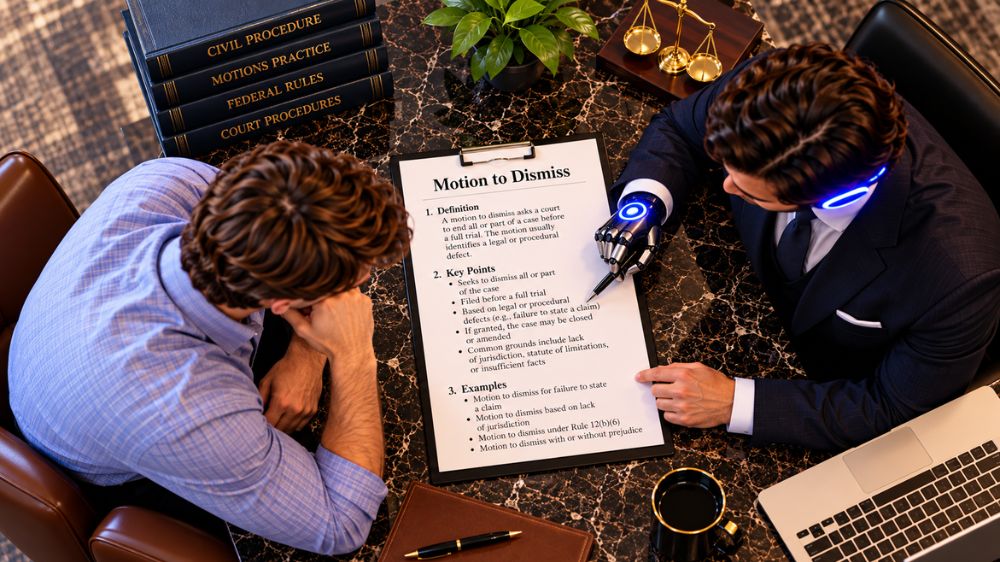
“The defendant filed a motion to dismiss under Rule 12(b)(6), arguing that the complaint did not state a legally sufficient claim.”
What Is a Motion to Dismiss?
A motion to dismissCivil LawsuitA civil lawsuit is a noncriminal court action in which a plaintiff seeks a legal remedy from a defendant. The process can include jurisdiction, pleadings, service, discovery, motions, settlement, trial, judgment, enforcement, and...View definition asks a court to end all or part of a case before a full trialLawsuitA lawsuit is a legal dispute brought before a court for a decision or remedy. Civil lawsuits can involve pleadings, service, discovery, motions, settlement, trial, judgment, and possible appeal.View definition . The motionMotionA Motion is a formal request asking a court to issue an order or grant specific relief. Federal Rule 7(b) generally requires motions to state their grounds with particularity and identify the relief...View definition usually identifies a legal or procedural defect.
In federal civil casesCivil DivisionA Civil Division is a court unit handling noncriminal disputes, with jurisdiction and procedures that vary by court system and locality.View definition , Rule 12 lets parties raise several defenses by motion.
See Federal Rule of Civil Procedure 12.
Standard Motion to Dismiss — Sample Contract Language
Suppose a plaintiffCivil CourtCivil court is a general term for a court handling noncriminal disputes involving people, businesses, organizations, or government entities. Civil cases can involve contracts, injuries, property, employment, civil rights, and other disputes and...View definition files a federal complaintComplaintA Complaint is the pleading that ordinarily begins a civil lawsuit and states the plaintiff’s claims for relief. Federal complaints generally identify jurisdiction, factual allegations, legal claims, and requested relief while complying with...View definition alleging breach of contractBreach of ContractA breach of contract occurs when a party fails to perform an obligation required by an enforceable agreement. Examples include nonpayment, missed deadlines, defective performance, refusal to perform, or violation of another contract...View definition but omits facts showing a legally enforceable agreement.
What Does a Motion to Dismiss Do?
A motion to dismiss tests whether a case or claim should continue. It does not always ask the court to decide disputed facts.
For example, a defendant may argue that the complaint fails to state a legally sufficient claim.
However, different dismissal grounds use different standards.
Who Can File a Motion to Dismiss?
A defendant commonly files a motion to dismiss in response to a complaint. Other parties can use dismissal motions in appropriate procedural settings.
Therefore, the governing rule and pleadingPleadingA pleading is a formal court document stating a party’s claims, defenses, or responses in a civil case. Federal Rules 7 and 8 identify permitted pleadings and govern claims, admissions, denials, affirmative defenses,...View definition posture matter.
When Is a Motion to Dismiss Filed?
Parties must file many Rule 12 motions before serving a responsive pleadingAnswer to ComplaintAn Answer to Complaint is the defendant’s formal pleading responding to a civil complaint. It typically admits or denies allegations, states insufficient knowledge where appropriate, asserts defenses, and can include counterclaims, jury demands,...View definition .
However, Rule 12(h) allows some defenses to be raised later.
Therefore, parties should check timing and waiver rules carefully.
What Are the Rule 12(b) Grounds?
Federal Rule 12(b) lists seven defenses parties can raise by motion.
- Lack of subject-matter jurisdictionLegal DisputeA legal dispute is a disagreement or controversy involving claimed legal rights, duties, liabilities, property, or remedies. It can be resolved through negotiation, mediation, arbitration, administrative proceedings, litigation, or settlement depending on the...View definition .
- Lack of personal jurisdictionJurisdiction DefinitionJurisdiction is a court’s legal authority to hear a case, issue orders, and bind the parties. Courts may need subject matter jurisdiction over the type of dispute and personal jurisdiction over the defendant...View definition .
- Improper venueVenueVenue determines the proper geographic court location for a lawsuit within a court system that otherwise has authority over the dispute. Federal civil venue commonly turns on defendant residence, substantial events or property,...View definition .
- Insufficient processSummonsA summons is a court-issued document notifying a defendant that a lawsuit has been filed and requiring a response. In federal civil cases, Rule 4 governs summons contents, issuance, service, waiver, proof of...View definition .
- Insufficient service of processService of ProcessService of Process is the formal delivery of court papers through legally authorized procedures. Federal Rule 4 governs service of the summons and complaint, who may serve, methods for different defendants, waiver, proof,...View definition .
- Failure to state a claim upon which relief can be granted.
- Failure to join a required party under Rule 19JoinderJoinder is the procedural process for combining claims or parties in one lawsuit when federal or state rules permit or require related disputes to be litigated together.View definition .
Therefore, “motion to dismiss” can refer to several different procedural arguments.
What Is a Rule 12(b)(1) Motion?
A Rule 12(b)(1) motion argues that the court lacks subject-matter jurisdiction.
For example, a federal courtFederal CourtA federal court is a court within the U.S. federal judicial system. Federal courts have limited jurisdiction, so they hear only cases authorized by the Constitution or federal law, including many federal-question and...View definition may lack authority when no federal jurisdictional basis exists.
A party can raise subject-matter jurisdiction later because ordinary waiver rules do not apply in the same way.
What Is a Rule 12(b)(2) Motion?
A Rule 12(b)(2) motion argues that the court lacks personal jurisdiction over the defendant.
The analysis can involve the defendant’s contacts with the forum and applicable jurisdictional rules.
However, a party can waive a personal-jurisdiction objectionObjectionAn Objection is a formal challenge to evidence, testimony, questions, argument, or procedure. Under Federal Rule of Evidence 103, timely and specific objections can prevent inadmissible evidence and preserve evidentiary issues for appeal.View definition by failing to raise it properly.
What Is a Rule 12(b)(3) Motion?
A Rule 12(b)(3) motion challenges venue. Venue concerns the proper geographic location for the lawsuit.
However, some venue disputes use transfer statutesPrimary AuthorityPrimary Authority is law issued by an institution with official power to create or state legal rules. Constitutions, statutes, regulations, court decisions, and court rules can be primary authority, while binding effect depends...View definition or other procedures rather than dismissal alone.
What Is a Rule 12(b)(4) Motion?
A Rule 12(b)(4) motion challenges the legal sufficiency of the process itself.
For example, the summons can contain a defect.
A party can waive this defense by missing the proper time.
What Is a Rule 12(b)(5) Motion?
A Rule 12(b)(5) motion challenges the manner or sufficiency of service of processAffidavit of ServiceAn affidavit of service is a sworn statement documenting how and when legal papers were served and can provide proof of notice for jurisdiction, deadlines, and court procedure.View definition .
For example, the defendant may argue that required papers were not properly served.
However, this defense also has waiver rules.
What Is a Rule 12(b)(6) Motion?
A Rule 12(b)(6)Cause of ActionA Cause of Action is a recognized set of legal elements supporting a right to judicial relief. Its elements can arise from statutes, constitutions, regulations, or case law, and the claimant generally must...View definition motion argues that the complaint does not state a legally sufficient claim.
The court generally examines the complaint and applies federal pleading standards.
Therefore, the motion focuses on legal sufficiency rather than whether the plaintiff will ultimately prove the case.
What Is a Rule 12(b)(7) Motion?
A Rule 12(b)(7) motion argues that the lawsuit fails to join a person required under Rule 19.
The court examines whether Rule 19 requires the absent person and whether the case can continue without that person.
What Is the Pleading Standard Under Rule 12(b)(6)?
A federal complaint must contain enough factual matter to state a plausible claim for relief.
Courts generally accept well-pleaded factual allegations as true for the motion.
However, courts do not have to accept bare legal conclusions as factual allegations.
What Does Plausibility Mean?
Plausibility means the pleaded facts support a reasonable inferenceCircumstantial EvidenceCircumstantial Evidence is indirect proof that supports a fact through one or more reasonable inferences. It can prove intent, discrimination, negligence, causation, knowledge, possession, fraud, and other issues, and it is not inherently...View definition that the defendant may be liable under the asserted legal theory.
It requires more than a purely speculative possibility.
However, the plaintiff does not need to prove the case in the complaint.
Can the Court Consider Evidence on a Motion to Dismiss?
It depends on the dismissal ground. A Rule 12(b)(6) motion generally focuses on the pleadings and materials properly considered with them.
If the court considers outside material under Rule 12(d), the motion can convert to summary judgment.
Therefore, outside evidence can change the procedural framework.
What Is Rule 12(d) Conversion?
Rule 12(d) addresses outside materials presented with a Rule 12(b)(6) or Rule 12(c) motion.
If the court does not exclude those materials, it must treat the motion as one for summary judgment.
The parties must then receive a reasonable opportunity to present pertinent material.
What Is Dismissal With Prejudice?
A dismissal with prejudiceSettlement AgreementA settlement agreement is a contract that resolves a legal dispute and can end existing litigation. Common terms include payment, releases, dismissal obligations, confidentiality, enforcement provisions, and other negotiated promises.View definition generally prevents the plaintiff from refiling the same claim.
Courts can use this result when amendment would not cure the legal defect or when other grounds justify final dismissal.
Therefore, dismissal with prejudice has significant consequences.
What Is Dismissal Without Prejudice?
A dismissal without prejudiceLachesLaches is an equitable defense based on unreasonable delay that materially prejudices another party. It differs from a statute of limitations and is subject to important limits when federal statutes establish specific filing...View definition generally allows the plaintiff to correct the problem and refile when law and deadlines permit.
For example, a court may dismiss a defective pleading while allowing amendment.
However, the statute of limitationsStatute of LimitationsA statute of limitations is a law that sets a deadline for starting a legal claim. The deadline varies by jurisdiction and claim type, and rules about accrual, discovery, tolling, or repose can...View definition can still affect refiling.
Can a Plaintiff Amend After a Motion to Dismiss?
Often, yes, depending on Rule 15Motion for LeaveA motion for leave asks a court for permission to take a procedural step that is not available as of right, such as filing an amended pleading.View definition and the case posture. A plaintiff can sometimes amend as a matter of course.
Otherwise, the plaintiff may need consent or court permission.
Therefore, amendment can resolve pleading defects before a final dismissal.
What Is a Motion for a More Definite Statement?
Rule 12(e) allows a more-definite-statement motion when a pleading is too vague or ambiguous for a reasonable response.
This motion seeks clarification rather than dismissal.
Therefore, it serves a different purpose from Rule 12(b).
What Is a Motion to Strike?
Rule 12(f) lets a court strike insufficient defenses or certain improper matter from a pleading.
Therefore, a motion to strikeMotion to StrikeA Motion to Strike asks a court to remove specified material from a pleading. Federal Rule 12(f) permits striking insufficient defenses and redundant, immaterial, impertinent, or scandalous matter, subject to timing and judicial...View definition targets particular pleading content rather than necessarily ending the case.
Can Rule 12 Defenses Be Waived?
Yes. Rule 12(h) provides waiver rules for personal jurisdiction, venue, process, and service defenses.
For example, a defendant can waive a personal-jurisdiction objection by omitting it from the required initial response.
Therefore, parties should evaluate Rule 12 defensesDefendantA Defendant is the person or entity against whom a civil claim or criminal charge is brought. Civil defendants respond to complaints, preserve defenses, challenge jurisdiction, use discovery, assert counterclaims, seek dismissal or...View definition together before filing.
Can Subject-Matter Jurisdiction Be Waived?
No. If a federal court determines at any time that subject-matter jurisdiction is missing, the court must dismiss the action.
Therefore, subject-matter jurisdiction receives different treatment from several other Rule 12 defenses.
Motion to Dismiss vs. Summary Judgment
A motion to dismiss often tests the legal sufficiency of the pleadings. Summary judgment tests whether evidence creates a genuine dispute requiring trial.
Therefore, summary judgment usually occurs after more factual development.
However, Rule 12(d) can convert certain dismissal motions into summary judgment motions.
Motion to Dismiss vs. Motion for Judgment on the Pleadings
A party files a Rule 12(c) motion for judgment on the pleadings after the pleadings close.
By contrast, parties file many Rule 12(b) motions before the answerCivil LitigationCivil Litigation is the court process for resolving noncriminal disputes through pleadings, motions, discovery, settlement, trial, judgment, and possible appeal. Federal civil litigation follows the Federal Rules of Civil Procedure, while state systems...View definition .
However, the legal standards can overlap for some issues.
What Happens If a Motion to Dismiss Is Granted?
The court can dismiss one claim, several claims, or the entire case.
It can dismiss with prejudice or without prejudice.
In addition, the court can allow an amended complaint.
What Happens If a Motion to Dismiss Is Denied?
If the court denies the motion, the case usually continues. The defendant can then answer and proceed into discovery.
However, the court may narrow legal issues through its ruling.
Therefore, denial does not decide who ultimately wins the case.
Can a Motion to Dismiss Be Appealed?
A party can often appealCourt of AppealsA court of appeals is a court that reviews decisions from lower courts. Federal courts of appeals usually examine the existing record for legal error rather than conducting a new trial or hearing...View definition a final dismissal after entry of final judgmentTrial CourtA Trial Court is a court where parties present evidence, establish facts, and obtain an initial judgment or verdict. Federal district courts are the primary federal trial courts, while state systems use varied...View definition .
However, an order denying dismissal is usually not immediately appealable.
Special doctrines or statutes can create exceptions.
Motion to Dismiss Example
Suppose a plaintiff files a federal complaint alleging breach of contract but omits facts showing a legally enforceable agreement.
The defendant files a Rule 12(b)(6) motion. Next, the court examines whether the pleaded facts state a plausible contract claimContract DisputeA contract dispute is a disagreement about contract formation, meaning, performance, breach, termination, or remedies.View definition .
If amendment can fix the defect, the court may dismiss the claim and allow amendment.
Why Does a Motion to Dismiss Matter?
A motion to dismiss can resolve legally defective claims before expensive discovery and trial.
However, different dismissal grounds have different standards, timing rules, and waiver consequences.
The key questions are practical. Which Rule 12 ground applies? Was it raised on time? What materials can the court consider? Can amendment cure the defect?