
Legal Technology
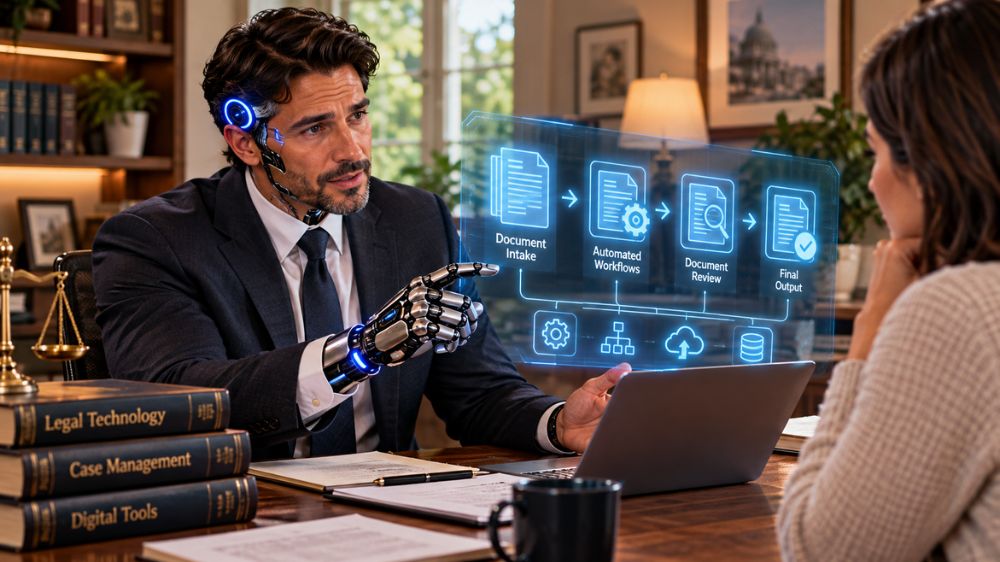
“The firm upgraded its legal technology by adopting case-management software, digital signatures, online legal research, and document-review tools so its lawyers could manage legal work electronically instead of relying on separate paper files and manual systems.”
What Is Legal Technology?
Legal technologyContract Review SoftwareContract review software helps users examine agreements, identify important provisions, compare language, apply playbooks, suggest redlines, and manage review workflows. Some platforms use AI, while others rely on rules, templates, comparison tools, and...View definition , often shortened to legal tech, means software, digital tools, and technology systems used to perform, support, organize, or improve legal work. It can be used by lawyers, law firms, legal departments, courts, businesses, government agencies, and individuals dealing with legal matters.
Legal technology is a broad category. It includes traditional tools such as electronic billing and case-management software as well as newer systems for legal researchLegal ResearchLegal research is the process of finding, evaluating, updating, and applying legal authority to answer a legal question. Strong research identifies controlling primary law, uses secondary sources efficiently, checks jurisdiction and hierarchy, validates...View definition , contract analysis, document automationLegal Document GeneratorA legal document generator creates legal documents from approved templates, structured data, and automated logic, often with optional AI-assisted drafting and review.View definition , e-discoveryCivil LitigationCivil Litigation is the court process for resolving noncriminal disputes through pleadings, motions, discovery, settlement, trial, judgment, and possible appeal. Federal civil litigation follows the Federal Rules of Civil Procedure, while state systems...View definition , digital signatures, online dispute resolutionOnline Dispute ResolutionOnline Dispute Resolution uses digital technology to help parties resolve disputes through negotiation, mediation, arbitration, court-connected processes, or hybrid procedures. Effective ODR systems address fairness, notice, neutrality, privacy, security, accessibility, evidence, enforceability, and...View definition , and artificial intelligence.
The defining idea is simple: the technology is being used to make a legal task easier, faster, more consistent, more accessible, or easier to manage.
Standard Legal Technology — Sample Contract Language
Legal technology can appear at almost every stage of legal work. Common examples include:
Examples of Legal Technology
Legal technology can appear at almost every stage of legal work. Common examples include:
- Legal research platforms that help users find cases, statutesPrimary AuthorityPrimary Authority is law issued by an institution with official power to create or state legal rules. Constitutions, statutes, regulations, court decisions, and court rules can be primary authority, while binding effect depends...View definition , regulations, and other legal authorities.
- Practice-management software that organizes matters, clients, deadlines, billing, calendars, and communications.
- Contract-management systems that store, search, compare, track, and analyze agreements.
- Document automation tools that generate legal documents from templates and structured information.
- E-discovery software used to collect, search, review, and organize electronic evidenceDigital EvidenceDigital Evidence is electronically stored, transmitted, or generated information offered to prove a fact. Emails, texts, video, photographs, metadata, logs, cloud data, and device records can be evidence, but relevance, authentication, hearsay, integrity,...View definition in litigationLegal DisputeA legal dispute is a disagreement or controversy involving claimed legal rights, duties, liabilities, property, or remedies. It can be resolved through negotiation, mediation, arbitration, administrative proceedings, litigation, or settlement depending on the...View definition .
- Electronic signatureDigital SignatureA digital signature is a cryptographic form of electronic signature used to authenticate a signer and verify the integrity of an electronic record.View definition platforms that allow documents to be signed digitally.
- Client intake systems that collect information, screen matters, and route new inquiries.
- Legal AINatural Language Processing (NLP)Natural Language Processing (NLP) enables computers to analyze, transform, search, classify, or generate human language. Legal NLP supports research, contract analysis, e-discovery, extraction, semantic search, and summarization, but outputs require evaluation for accuracy,...View definition tools that assist with research, drafting, document reviewLegal Document ReviewLegal document review is the structured examination of documents for relevant facts, obligations, legal risk, privilege, evidence, and required action.View definition , contract analysis, or matter organization.
- Online dispute-resolution tools that support negotiationAlternative Dispute ResolutionAlternative Dispute Resolution, or ADR, includes negotiation, mediation, arbitration, settlement conferences, and other processes used outside ordinary trial adjudication. Each method differs in neutrality, confidentiality, party control, binding effect, cost, and review.View definition , mediation, or resolution through digital workflows.
- Compliance technologyRegTechRegTech is technology used to support regulatory compliance, monitoring, reporting, and risk management. Common applications include regulatory intelligence, AML and KYC, surveillance, reporting, workflow controls, and AI-assisted compliance, but regulated organizations remain responsible...View definition that helps organizations track obligations, policies, approvals, and regulatory requirements.
Why Is Legal Technology Important?
Legal work often involves large amounts of text, repetitive processes, strict deadlines, complex records, and information spread across many systems. Technology can help legal professionals organize those demands and reduce time spent on routine administrative work.
For clients and businesses, legal technology can also make legal services easier to access and understand. A person may be able to upload a contract, track a matter, sign a document, research a legal issue, or communicate with a legal professional without relying entirely on paper files and in-person processes.
Technology does not remove the need for professional judgmentCivil LawsuitA civil lawsuit is a noncriminal court action in which a plaintiff seeks a legal remedy from a defendant. The process can include jurisdiction, pleadings, service, discovery, motions, settlement, trial, judgment, enforcement, and...View definition . Instead, it changes how legal information is created, reviewed, stored, searched, shared, and acted on.
Legal Technology vs. Legal AI
Legal technology is the broader category. Legal AI is one type of legal technology.
A billing system, e-signatureContract Lifecycle ManagementContract Lifecycle Management, or CLM, manages contracts from request and drafting through negotiation, approval, execution, storage, obligation tracking, renewal, and termination. CLM software can automate workflows, metadata, alerts, reporting, and integrations.View definition platform, document-management system, or case calendar can be legal technology even if it does not use artificial intelligence. Legal AI specifically uses AI techniques to perform tasks such as generating text, analyzing documents, finding relevant authorities, extracting information, or answering questions.
| Legal Technology | Legal AI |
|---|---|
| Includes all kinds of technology used for legal work | Refers specifically to AI used for legal work |
| Can include billing, e-signatures, case management, and document storage | Can include AI research, drafting, contract analysis, and legal assistants |
| May use simple rules, databases, workflows, or software logic | Uses artificial intelligence or machine-learning capabilities |
Legal Technology vs. Legal Automation
Legal automationLegal Workflow AutomationLegal workflow automation uses forms, rules, integrations, and AI to move repeatable legal work through defined steps, reducing manual coordination while preserving appropriate review and escalation.View definition is also part of legal technology, but the terms are not identical.
Legal technology describes the tools themselves. Legal automation describes using technology to perform steps in a legal workflow automatically, often with little or no manual action once the process has been configured.
For example, an online client-intake system is legal technology. If that system automatically creates a matter, sends a welcome email, schedules a task, and generates a standard engagement document after the client submits a form, those automated steps are legal automation.
How Do Law Firms Use Legal Technology?
Law firms can use legal technology across both legal work and business operations. A firm may use separate systems for client intake, legal research, document review, billing, accounting, communications, calendaring, discoveryCivil CourtCivil court is a general term for a court handling noncriminal disputes involving people, businesses, organizations, or government entities. Civil cases can involve contracts, injuries, property, employment, civil rights, and other disputes and...View definition , contract drafting, and knowledge management.
Technology can also help lawyers collaborate. Instead of keeping information in isolated email threads or local folders, a legal team can work from a shared matter record containing documents, notes, deadlines, research, and client communications.
Technology Competence and Lawyers
Technology has become important enough to legal practice that professional responsibility guidance addresses it directly. Comment 8 to the American Bar Association’s Model Rule 1.1 on competence states that lawyers should keep abreast of changes in the law and its practice, including the benefits and risks associated with relevant technology.
That does not mean every lawyer must be a software engineer. It does mean that lawyers need to understand technology well enough to use it responsibly when it affects their work, clients, confidentialityEmployment ContractAn employment contract is an agreement defining terms of an employer-employee relationship. It can cover duties, compensation, benefits, equity, confidentiality, intellectual property, restrictive covenants, termination, severance, and dispute procedures while remaining subject to...View definition , competence, or professional obligations.
What Are the Benefits of Legal Technology?
- Efficiency: Repetitive work can often be completed faster.
- Organization: Documents, communications, deadlines, and matter information can be kept in structured systems.
- Consistency: Templates and workflows can reduce variation in routine processes.
- Access: Digital tools can make legal information and services easier to reach.
- Searchability: Large collections of documents or legal authorities can be searched more quickly.
- Collaboration: Lawyers, staff, clients, and business teams can work from shared information.
- Visibility: Dashboards and matter-management systems can make status, deadlines, and workload easier to track.
What Are the Risks of Legal Technology?
Technology can create new risks as well as efficiencies. Those risks may include data breaches, confidentiality failures, incorrect permissions, unreliable software output, loss of access to important records, poor vendor security, inaccurate automated decisions, and excessive reliance on technology without human review.
When artificial intelligence is involved, additional concerns may include inaccurate generated content, false citations, insufficient context, and uncertainty about how uploaded information is stored or used.
The appropriate safeguards depend on the type of tool and the sensitivity of the work. Legal professionals commonly need to consider security, privacy, access controls, vendor terms, data retentionRight to DeleteThe Right to Delete allows individuals to request deletion of qualifying personal information under laws such as the GDPR and CCPA. The right is subject to legal exceptions, identity verification, response deadlines, vendor...View definition , backup practices, accuracy, and the need for human review.
Who Uses Legal Technology?
Legal technology is not limited to lawyers. It can be used by:
- Law firms
- Solo attorneys
- In-house legal departments
- Compliance teams
- Courts and government agencies
- Legal aid organizations
- Small businesses
- Freelancers and independent professionals
- Individuals managing legal documents or disputes
The Bottom Line
Legal technology is the broad category of digital tools used to support legal work. It includes everything from case-management and e-signature software to contract platforms, document automation, legal research systems, and AI-powered legal assistants.
The best legal technology does not merely digitize an old process. It helps users understand information, reduce unnecessary manual work, organize legal matters, and make the next step clearer while preserving the judgment and safeguards that legal work requires.