
Trademark Dilution
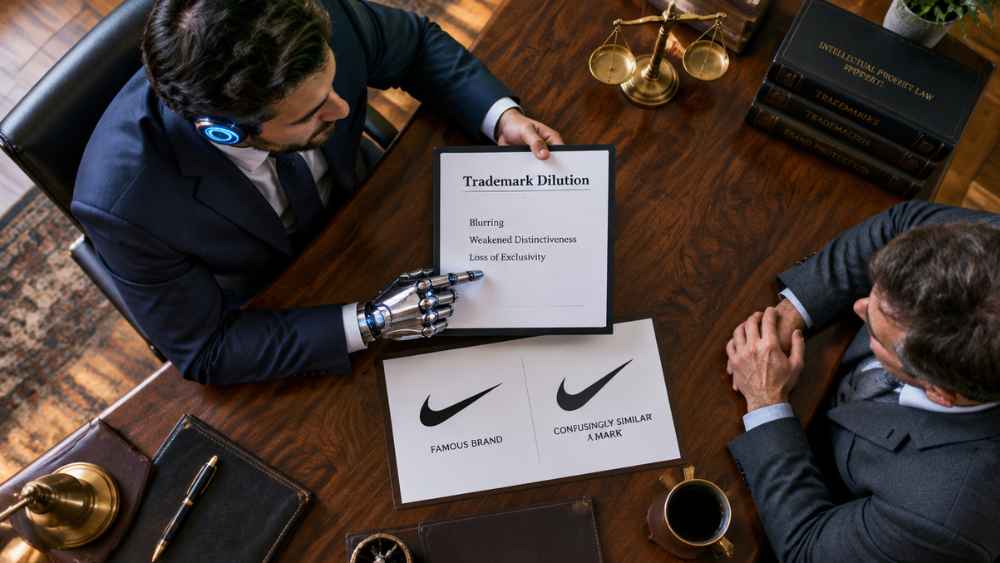
“The famous-brand owner alleged Trademark Dilution by blurring because the defendant’s similar mark allegedly weakened the famous mark’s unique source significance.”
What Is Trademark Dilution?
Trademark DilutionTrademark InfringementTrademark infringement is unauthorized use of a protected mark in a way likely to cause confusion about source, sponsorship, affiliation, or approval. Federal claims can protect registered and qualifying unregistered marks, with remedies...View definition protects qualifying famous marks from uses that weaken distinctivenessTrademark DefinitionA trademark is a word, phrase, symbol, design, or other source identifier that distinguishes one seller’s goods or services from others. U.S. rights can arise through use, while federal registration can provide additional...View definition or harm reputation.
Federal dilutionCommon StockCommon stock is a corporate equity class that typically carries voting and residual economic rights, subject to any superior rights granted to preferred stock or other classes.View definition law appears in Section 43(c) of the Lanham Act.
Therefore, dilution differs from ordinary confusion-based infringement. See 15 U.S.C. § 1125(c).
Standard Trademark Dilution — Sample Contract Language
Suppose an unrelated company adopts a very similar designation to an exceptionally famous national brand.
What Marks Receive Federal Dilution Protection?
Federal dilution protection applies only to famous marks that are distinctive.
The mark must be widely recognized by the general consuming public of the United States.
Therefore, niche fame ordinarily is not enough.
What Does Famous Mean?
A famous mark has broad recognition among the general U.S. consuming public as a source identifier.
Courts consider all relevant evidenceAdmissible EvidenceAdmissible Evidence is evidence a court permits the judge or jury to consider. In federal court, admissibility commonly depends on relevance, Rule 403 balancing, authentication, foundation, hearsay rules, privilege, witness competence, and other...View definition .
Therefore, ordinary commercial success does not automatically establish fame.
What Fame Factors Can Courts Consider?
Courts can consider advertising reach, sales volume, geographic scope, actual recognition, and federal registration.
No single listed factor always controls.
Therefore, fame requires a substantial evidentiary showing.
When Must the Mark Become Famous?
The plaintiff’s mark must become famous before the defendantCivil CourtCivil court is a general term for a court handling noncriminal disputes involving people, businesses, organizations, or government entities. Civil cases can involve contracts, injuries, property, employment, civil rights, and other disputes and...View definition begins the challenged use.
Later-acquired fame does not retroactively create federal dilution liability.
Therefore, timing is an element.
What Is Dilution by Blurring?
Dilution by blurring is an association that impairs a famous mark’s distinctiveness.
The concern is erosion of the mark’s unique source-identifying power.
Therefore, competing goods are not required.
What Blurring Factors Apply?
The statuteStatutory LawStatutory law is written law enacted by a legislative body through the formal lawmaking process. Federal and state statutes can create rights, duties, prohibitions, causes of action, procedures, penalties, and remedies, and courts...View definition identifies six nonexclusive blurring factors.
They address similarity, distinctiveness, exclusivity, recognition, intent, and actual association.
Therefore, courts evaluate the overall association risk.
How Important Is Similarity?
Similarity between the challenged mark and famous mark is a statutory blurring factor.
Exact identity is not always required.
Therefore, overall commercial impression can matter.
What Is Substantially Exclusive Use?
Substantially exclusive use supports the argument that the famous mark uniquely identifies one source.
Widespread third-party use can weaken that showing.
Therefore, marketplace policing can influence dilution strength.
Does Intent Matter for Blurring?
Intent to create an association with the famous mark is one statutory blurring factor.
Intent is not the only factor.
Therefore, deliberate reference can strengthen a claim without being universally required.
Does Actual Association Matter?
Yes. Evidence that consumers mentally associate the challenged mark with the famous mark is relevant.
Actual association does not necessarily prove actual economic harm.
Therefore, surveys can become useful evidence.
What Is Dilution by Tarnishment?
Dilution by tarnishment is an association that harms the reputation of a famous mark.
The challenged use links the famous mark with damaging or unsavory associations.
Therefore, tarnishment focuses on reputation rather than distinctiveness alone.
Does Dilution Require Likelihood of Confusion?
No. Federal law expressly allows dilution claims regardless of actual or likely confusion.
Competition is also unnecessary.
Therefore, dilution can reach uses outside the owner’s product category.
Does Dilution Require Actual Economic Injury?
No. Section 1125(c) does not require actual economic injury for injunctive reliefTemporary Restraining OrderA Temporary Restraining Order is short-term emergency injunctive relief intended to prevent immediate harm until a court can consider longer-lasting relief. Federal TROs are governed by Rule 65’s notice, duration, and procedural requirements.View definition .
Likelihood of dilution is enough when statutory elements are met.
Therefore, owners need not wait for measurable lost sales.
Trademark Dilution vs. Infringement
Infringement generally focuses on likely consumer confusion.
Dilution protects the exceptional distinctiveness and reputation of famous marks.
Therefore, the same use can implicate one doctrine, both doctrines, or neither.
Can an Unregistered Famous Mark Be Protected?
Potentially. Federal dilution protection does not categorically require federal registration.
The owner must still prove fame and distinctiveness.
Therefore, registration helps but is not the sole path.
Can Trade Dress Be Diluted?
Yes, but special statutory burdens apply to unregistered trade dressTrade DressTrade Dress is the overall commercial appearance of a product, package, store, or service environment that identifies source. Federal protection generally requires distinctiveness, nonfunctionality, and likely consumer confusion, while product design specifically requires...View definition .
The claimantPlaintiffA Plaintiff is the party who initiates a civil lawsuit and asks a court for legal relief. The plaintiff generally files the complaint, establishes standing and jurisdiction, serves the defendant, proves the elements...View definition must prove nonfunctionality and fame of the claimed trade dress as a whole.
Therefore, trade-dress dilution can be particularly demanding.
What Is Fair Use in Dilution Law?
Federal law excludes qualifying fair uses that do not use the famous mark as the defendant’s source designation.
Comparative advertising can qualify.
Therefore, truthful reference is not automatically dilution.
Is Parody Excluded?
Qualifying parody, criticism, or commentary can fall within the statutory fair-use exclusion.
The exclusion is narrower when the famous mark is used as the defendant’s own source identifier.
Therefore, source use matters.
Is News Reporting Excluded?
Yes. All forms of news reporting and news commentary are excluded from federal dilution liability.
The statute protects those uses expressly.
Therefore, reporting on a famous brand is not dilution.
Is Noncommercial Use Excluded?
Yes. Noncommercial use of a mark is excluded under Section 1125(c).
The boundary between commercial and noncommercial use can become contested.
Therefore, context matters.
What Remedy Is Usually Available?
Injunctive relief is the primary federal dilution remedyCause of ActionA Cause of Action is a recognized set of legal elements supporting a right to judicial relief. Its elements can arise from statutes, constitutions, regulations, or case law, and the claimant generally must...View definition .
A court can stop qualifying uses likely to blur or tarnish the famous mark.
Therefore, dilution law is strongly preventive.
When Are Monetary Remedies Available?
Additional remedies can be available for qualifying willful dilution involving post-October 6, 2006 uses.
The statute distinguishes willful blurring and willful tarnishment.
Therefore, intent can affect remedies even when not essential to basic injunctive relief.
What Is Willful Blurring?
For additional remedies, the defendant must willfully intend to trade on the recognition of the famous mark.
The statutory remedyLegal RemedyA legal remedy is the relief a court or other authorized tribunal can provide after a legal right has been violated. Remedies can include damages, injunctions, restitution, specific performance, rescission, declarations, and other...View definition rule is specific.
Therefore, enhanced relief requires more than ordinary likelihood of dilution.
What Is Willful Tarnishment?
For additional remedies, the defendant must willfully intend to harm the famous mark’s reputation.
Proof can come from conduct and surrounding circumstances.
Therefore, bad-faith evidence can become important.
Can a Valid Federal Registration Bar Some State Dilution Claims?
Yes. Section 1125(c)(6) gives qualifying federal registrations a statutory bar against specified state dilution actions.
The protection applies to the registered mark.
Therefore, federal registration can affect defensive rights too.
Can a Trademark Owner Oppose an Application for Dilution?
Yes. A famous-mark owner can pursue dilution grounds before the Trademark TrialLawsuitA lawsuit is a legal dispute brought before a court for a decision or remedy. Civil lawsuits can involve pleadings, service, discovery, motions, settlement, trial, judgment, and possible appeal.View definition and AppealCourt of AppealsA court of appeals is a court that reviews decisions from lower courts. Federal courts of appeals usually examine the existing record for legal error rather than conducting a new trial or hearing...View definition Board when legal requirements are met.
The owner still must prove fame at the required time.
Therefore, dilution can arise during registration disputes.
Can a Registration Be Cancelled for Dilution?
Potentially. A qualifying famous-mark owner can seek cancellation on dilution grounds under applicable TTAB procedures.
Timing and statutory requirements remain important.
Therefore, federal registration does not immunize every later mark from challenge.
What Evidence Proves Fame?
Evidence can include sales data, advertising, media coverage, surveys, geographic reach, licensing, and recognition studies.
National public recognition is the key concept.
Therefore, fame cases often require extensive proof.
What Evidence Proves Blurring?
Useful evidence can include similarity analysis, surveys, third-party-use evidence, marketing materials, intent evidence, and actual associations.
The statutory factors organize the inquiry.
Therefore, dilution cases often rely on both market and linguistic evidence.
What Evidence Proves Tarnishment?
Evidence can show that the challenged association damages the famous mark’s reputation.
The nature of the goods, message, and public reaction can matter.
Therefore, reputational context is central.
Is Every Strong Trademark Famous?
No. A mark can be strong within a market without being famous among the general U.S. consuming public.
Federal dilution requires a much higher level of recognition.
Therefore, fame is exceptional. See USPTO guidance on famous and well-known marks.
Trademark Dilution Example
Suppose an unrelated company adopts a very similar designation to an exceptionally famous national brand.
Consumers may not expect common ownership, yet the association weakens the famous mark’s uniqueness.
Therefore, the owner can consider a blurring claim.
Why Does Trademark Dilution Matter?
Dilution law gives exceptionally famous marks protection beyond ordinary confusion rules.
The doctrine also contains important free-speech and fair-use safeguards.
Therefore, fame, association, timing, and exclusions must all be analyzed carefully.