
Data Breach
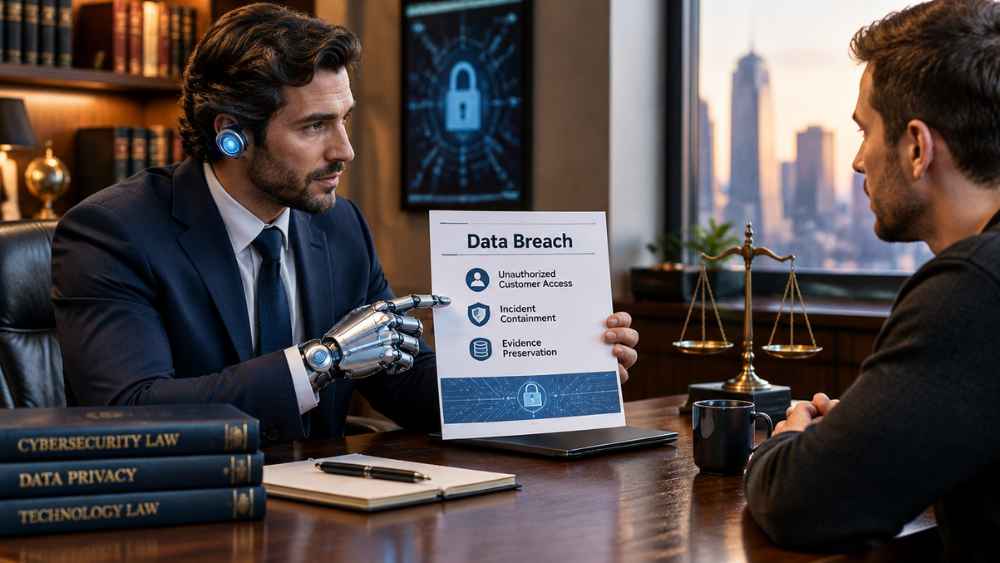
“After discovering unauthorized access to customer account data, the company contained the incident, preserved evidence, investigated the scope, and evaluated breach-notification duties in each affected jurisdiction.”
What Is a Data Breach?
A data breachData PrivacyData privacy concerns how personal information is collected, used, shared, retained, and controlled. It includes transparency, data minimization, individual rights, vendor management, security, retention, and compliance with laws such as GDPR, CCPA, and...View definition is an incident involving unauthorized access, acquisitionMergerA merger is a corporate transaction combining entities under statute so that one survives or a new entity results, with assets and liabilities transferring according to law.View definition , disclosure, loss, alteration, or destruction of protected information.
However, legal definitions differ among privacy and security laws.
Therefore, not every cybersecurity incident triggers the same notification duties.
Standard Data Breach — Sample Contract Language
Suppose an attacker steals employee credentials and downloads customer account data from a cloud system.
What Is a Personal Data Breach Under the GDPR?
The GDPR defines a personal-data breach as a security breach involving accidental or unlawful destruction, loss, alteration, disclosure, or access.
The definition applies to personal dataPersonally Identifiable Information (PII)Personally Identifiable Information (PII) is information that can distinguish or trace an individual’s identity alone or with other linked or linkable information. Common examples include identifiers, contact details, biometrics, financial information, health information,...View definition transmitted, stored, or otherwise processed.
See GDPR Articles 4, 33, and 34.
Data Breach vs. Security Incident
A security incident is any event affecting information security or systems.
A data breach is a legal or practical subset involving protected data in a qualifying way.
Therefore, malware detection does not automatically mean a notifiable breach occurred.
Data Breach vs. Cyberattack
A cyberattack is hostile activity directed at systems, networks, or data.
For example, a cyberattack can fail without exposing information.
Therefore, attack and breach are related but not identical concepts.
What Causes Data Breaches?
Data breaches can result from malicious attacks, human error, lost devices, vendor failures, or unauthorized disclosures.
- Phishing.
- Credential theft.
- Ransomware.
- Cloud misconfiguration.
- Lost laptops.
- Misdirected email.
- Insider misuse.
- Software vulnerabilities.
- Vendor compromise.
- Improper data sharingPrivacy PolicyA Privacy Policy is a public statement explaining how an organization collects, uses, discloses, retains, protects, and otherwise handles personal information. Applicable privacy laws can require specific disclosures about purposes, rights, recipients, retention,...View definition .
Therefore, breach prevention requires both technical and organizational controls.
What Is Unauthorized Access?
Unauthorized access occurs when a person or system accesses information without appropriate permission.
It can involve stolen credentials, privilege abuse, or external intrusion.
Therefore, access logs can become important evidence.
What Is Unauthorized Acquisition?
Unauthorized acquisition means someone obtained protected information without legal or permitted authority.
Some U.S. breach-notification laws focus on acquisition or a reasonable belief of acquisition.
Therefore, mere exposure and confirmed acquisition can receive different treatment.
What Is Unauthorized Disclosure?
Unauthorized disclosure occurs when protected information is shared with a person or entity not authorized to receive it.
For example, an employee can email a customer list to the wrong recipient.
Therefore, a breach does not require hacking.
Can Accidental Loss Be a Data Breach?
Yes. Losing a device or deleting data can qualify under some laws.
The legal result depends on the data, safeguards, accessibility, and governing definition.
Therefore, accidental incidents require the same disciplined triage as attacks.
Can Ransomware Be a Data Breach?
Yes. Ransomware can involve unauthorized access, encryption, exfiltration, or destruction of data.
However, notification analysis depends on what occurred and which law applies.
Therefore, forensic investigation should examine both access and data movement.
Can a Lost Laptop Be a Data Breach?
Potentially. A lost device can expose personal information if an unauthorized person can access it.
Strong encryption can affect legal notification requirements under some laws.
Therefore, device encryption is an important risk-reduction measure.
Can a Misdirected Email Be a Data Breach?
Yes. Sending personal information to the wrong recipient can create unauthorized disclosure.
Risk depends on content, recipient, retrieval, and applicable law.
Therefore, simple human error can trigger formal breach analysis.
Can Employee Misuse Be a Data Breach?
Yes. Insider access can become unauthorized when an employee exceeds permitted purposes or discloses information improperly.
However, the exact legal definition varies.
Therefore, access-control design should reflect job responsibilities.
What Is Personal Information in a Breach Law?
U.S. state breach laws define protected personal information differently.
Common combinations can include names with government identifiers, financial credentials, medical information, or account credentialsSensitive Personal InformationSensitive Personal Information is the CCPA category covering specified identifiers, account credentials, precise geolocation, message contents, genetic data, identifying biometrics, and other sensitive traits. Consumers can have additional rights to limit certain uses...View definition .
Therefore, notification analysis must use the relevant state definition.
What Is Sensitive Personal Information?
Sensitive informationSensitive DataSensitive data is information requiring heightened protection because misuse or exposure can create significant privacy, discrimination, financial, or safety risks.View definition can include credentials, financial data, government identifiers, health data, biometric information, or precise location.
Exposure can create greater identity, financial, safety, or discriminationWorkplace HarassmentWorkplace harassment is unwelcome conduct that can violate employment law when it is based on a protected characteristic or protected activity. Federal law generally requires a qualifying job action or conduct severe or...View definition risk.
Therefore, breach severity depends on more than record count.
What Is Unsecured Information?
Unsecured information generally means protected information that lacks recognized encryption or another qualifying safeguard under the applicable law.
Therefore, the definition varies by statuteStatutory LawStatutory law is written law enacted by a legislative body through the formal lawmaking process. Federal and state statutes can create rights, duties, prohibitions, causes of action, procedures, penalties, and remedies, and courts...View definition .
Therefore, security controls can affect whether notice is required.
Does Encryption Prevent a Data Breach?
No. Encryption reduces risk but does not prevent every breach.
Attackers can steal encryption keys or access decrypted information through compromised accounts.
Therefore, encryption should be part of layered security.
Can Encryption Affect Notification Duties?
Yes. Some laws provide notification exceptions or different treatment for properly secured information.
For example, California law focuses on specified unencrypted personal information in its core resident-notice rule.
Therefore, encryption status should be documented promptly.
What Does California Require After a Data Breach?
California law requires notice to residents in qualifying breaches involving defined personal information.
A sample notice must also go to the California Attorney General when notice reaches more than 500 California residents.
See California Attorney General breach guidance.
Do All U.S. States Have the Same Breach Law?
No. However, state breach-notification statutesPrimary AuthorityPrimary Authority is law issued by an institution with official power to create or state legal rules. Constitutions, statutes, regulations, court decisions, and court rules can be primary authority, while binding effect depends...View definition vary in definitions, timing, regulator notice, content, and exceptions.
In addition, one incident can trigger duties in many states.
Therefore, multistate breaches require a jurisdiction-by-jurisdiction matrix.
What Is a Breach Notification?
A breach notificationBreach NotificationBreach notification is the process of notifying legally required parties after a qualifying security incident involving protected information.View definition informs affected people, regulators, business partners, or other required recipients about a qualifying incident.
Therefore, content and timing vary by law.
Therefore, one generic letter cannot satisfy every legal regime automatically.
When Must GDPR Regulators Be Notified?
Under GDPR Article 33Data Breach NotificationData Breach Notification is legally required notice after qualifying security incidents. GDPR Articles 33 and 34 use regulator and high-risk individual notice rules, while U.S. states apply their own definitions, triggers, timing, content,...View definition , a controllerData SubjectA Data Subject is an identified or identifiable natural person to whom personal data relates under the GDPR. Data subjects can be customers, employees, applicants, users, children, or other individuals, and they receive...View definition must notify the supervisory authority without undue delay when required.
Where feasible, notification must occur within 72 hours after awareness.
The exception applies when the breach is unlikely to risk individual rights and freedoms.
What If the GDPR 72-Hour Deadline Cannot Be Met?
The controller can provide information in phases where necessary.
A late notification must include reasons for the delay.
Therefore, investigation should proceed quickly without waiting for every fact.
What Must a GDPR Regulator Notice Include?
Article 33 requires information about the breach nature, contact point, likely consequences, and response measures.
Where possible, it also includes approximate affected data subjects and records.
Therefore, incident documentation should begin immediately.
When Must Individuals Be Notified Under the GDPR?
Article 34 generally requires individual communication when a breach is likely to create a high risk to rights and freedoms.
The communication must use clear and plain language.
Therefore, regulator notification and individual notification use different risk thresholds.
When Can GDPR Individual Notice Be Avoided?
Article 34 contains exceptions, including certain effective technical protections such as appropriate encryption.
Later measures eliminating high risk can also matter.
Therefore, risk mitigationForce MajeureForce Majeure is a contract concept that can excuse or delay performance after extraordinary events covered by the agreement. Relief depends on clause wording, causation, notice, mitigation, exclusions, governing law, and the specific...View definition can affect notice duties.
What Must a GDPR Processor Do?
A processor must notify the controller without undue delay after becoming aware of a personal-data breach.
The processor helps the controller meet applicable Article 33 and 34 duties.
Therefore, DPAMaster Service Agreement (MSA)A Master Service Agreement, or MSA, sets recurring legal and commercial terms for an ongoing service relationship. The parties can then use SOWs, order forms, or schedules for project-specific scope, pricing, deliverables, and...View definition incident-notification clauses are operationally important.
What Is a HIPAA Breach?
HIPAA uses a specific breach definition for impermissible uses or disclosures of protected health informationHIPAAHIPAA is the Health Insurance Portability and Accountability Act of 1996. Its Privacy, Security, and Breach Notification Rules protect certain health information handled by covered entities and business associates and give individuals important...View definition .
HIPAA generally presumes an impermissible event is a breach. However, a required risk assessment can support a low probability of compromise.
Therefore, HIPAA analysis differs from ordinary state breach law.
What Is the HIPAA Breach Notification Rule?
The HIPAA Breach Notification Rule requires notices after qualifying breaches of unsecured protected health information.
Covered entities can need to notify individuals, HHS, and sometimes the media.
See HHS breach notification guidance.
How Fast Is HIPAA Individual Notice Required?
HIPAA individual notice must occur without unreasonable delayLachesLaches is an equitable defense based on unreasonable delay that materially prejudices another party. It differs from a statute of limitations and is subject to important limits when federal statutes establish specific filing...View definition and no later than 60 days after discoveryCivil CourtCivil court is a general term for a court handling noncriminal disputes involving people, businesses, organizations, or government entities. Civil cases can involve contracts, injuries, property, employment, civil rights, and other disputes and...View definition .
Earlier notice can still be required by the “without unreasonable delay” standard.
Therefore, 60 days is an outside limit rather than a waiting period.
What Must a HIPAA Business Associate Do?
A business associate must notify the covered entity after discovering a qualifying breach.
The federal outside deadline is generally 60 days, subject to the no-unreasonable-delay requirement.
Therefore, BAAs often require much faster contractual notice.
What Is the FTC Health Breach Notification Rule?
The FTC Health Breach Notification Rule applies to specified personal-health-record vendors and related entities outside HIPAA coverage.
The FTC updated the rule in 2024 to clarify coverage of health apps and similar technologies.
See FTC Health Breach Notification Rule materials.
Who Must Be Notified Under the FTC Health Breach Rule?
Covered entities can need to notify affected people, the FTC, and sometimes the media.
Service providers also have duties to notify covered entities.
Therefore, consumer health applications can face federal breach duties even outside HIPAA.
What Is an Incident Response Plan?
An incident response plan describes how an organization detects, investigates, contains, communicates, and recovers from security incidents.
It assigns responsibilities before an emergency occurs.
Therefore, breach response should not begin with deciding who is in charge.
What Are the Main Incident Response Steps?
Response usually involves several coordinated activities.
- Detection.
- Containment.
- Evidence preservationEvidence PreservationEvidence preservation requires reasonable steps to protect potentially relevant information and physical evidence when litigation is pending or reasonably foreseeable.View definition .
- Forensic investigation.
- Legal analysisLegal MemorandumA legal memorandum is an organized written analysis of a legal issue based on facts, research, and relevant authority. It typically frames the question, states a brief answer, presents material facts, analyzes governing...View definition .
- Risk assessment.
- Notification.
- Remediation.
- Recovery.
- Post-incident review.
Therefore, technical and legal teams should work together.
What Is Breach Containment?
Containment limits ongoing unauthorized access or data loss.
Actions can include disabling accounts, isolating systems, rotating credentials, or blocking malicious traffic.
Therefore, containment should preserve evidence when possible.
What Is Digital Forensics?
Digital forensicsDigital EvidenceDigital Evidence is electronically stored, transmitted, or generated information offered to prove a fact. Emails, texts, video, photographs, metadata, logs, cloud data, and device records can be evidence, but relevance, authentication, hearsay, integrity,...View definition examines systems, logs, devices, and other evidence to reconstruct an incident.
The investigation can identify access, persistence, exfiltration, and affected data.
Therefore, forensic scope should support legal notification decisions.
What Is a Breach Risk Assessment?
A risk assessment evaluates the likelihood and severity of harm created by the incident.
Relevant factors can include data type, volume, recipient, encryption, misuse, and mitigation.
Therefore, risk analysis should be documented rather than guessed.
What Is Data Mapping?
Data mapping records where personal information originates, moves, and remains stored.
It can speed breach scoping and notification analysis.
Therefore, organizations should build data inventories before incidents occur.
What Is Breach Scoping?
Breach scoping identifies systems, individuals, records, jurisdictions, and information affected by an incident.
It can change as forensic evidence develops.
Therefore, response teams should update assumptions continuously.
What Is a Breach Notification Matrix?
A notification matrix maps affected jurisdictions to legal definitions, deadlines, recipients, and content requirements.
It is useful for multistate or multinational incidents.
Therefore, one breach can require several separate legal analyses.
What Is a Data Breach Notice to a Regulator?
Regulator notice informs an authority about a qualifying breach under applicable law.
Examples include GDPR supervisory authorities, HHS, the FTC, or state attorneys general.
Therefore, regulator obligations can exist even when individual notice differs.
What Is a Data Breach Notice to Individuals?
Individual notice tells affected people what happened and how they can protect themselves.
Required content can include dates, data types, response steps, and contact information.
Therefore, notices should be accurate, clear, and coordinated.
What Is Credit Monitoring?
Credit monitoring alerts people to changes in credit files.
Organizations sometimes offerOffer and AcceptanceOffer and Acceptance describes how parties manifest mutual assent to a contract. A valid offer gives another party power to accept, while acceptance must objectively communicate assent through an authorized method, subject to...View definition it after breaches involving identity information.
However, offering monitoring does not replace legal notification duties.
What Is Identity Theft Protection?
Identity-theft protection services can include monitoring, restoration assistance, or insurance features.
The appropriate response depends on the compromised data.
Therefore, remediation should match likely harm.
Should Law Enforcement Be Contacted?
Serious cyber incidents can justify contacting law enforcement.
Some breach laws allow notice delays when authorized law enforcement determines notice would impede an investigation.
Therefore, any delay should be documented and legally supported.
Can a Breach Trigger Contractual Notice Duties?
Yes. Customer contracts, DPAs, BAAs, insurance policies, and vendor agreements can require separate incident notices.
Contractual deadlines can be shorter than statutory deadlines.
Therefore, the response team should review contracts immediately.
What Is Cyber Insurance Notice?
Cyber insurance policies often require prompt notice of incidents and insurer consent for certain response costs.
Late notice can create coverage disputes.
Therefore, insurance review should occur early.
Can a Data Breach Lead to Litigation?
Yes. Breaches can lead to consumer claims, contract disputes, regulatory enforcementRegulatory ComplianceRegulatory compliance means following the laws, regulations, rules, and official requirements that apply to an organization or activity. Effective compliance programs identify obligations, assign responsibility, implement controls, monitor performance, and correct problems.View definition , shareholder litigationShareholder DisputeA shareholder dispute involves ownership, governance, voting, fiduciary duties, transactions, or alleged harm to shareholders or the corporation.View definition , or class actions.
StandingJudicial ReviewJudicial review is the power of courts to examine government action and determine whether it complies with the Constitution, statutes, and other controlling law. It can apply to legislation, executive action, and administrative...View definition and damagesLegal RemedyA legal remedy is the relief a court or other authorized tribunal can provide after a legal right has been violated. Remedies can include damages, injunctions, restitution, specific performance, rescission, declarations, and other...View definition standards differ by claim and jurisdictionLegal DisputeA legal dispute is a disagreement or controversy involving claimed legal rights, duties, liabilities, property, or remedies. It can be resolved through negotiation, mediation, arbitration, administrative proceedings, litigation, or settlement depending on the...View definition .
Therefore, litigation risk should be assessed separately from notification duties.
Can a Data Breach Lead to Regulatory Fines?
Yes. Privacy, security, health, financial, and sector-specific regulators can impose penalties where statutory requirements are met.
Penalty exposure depends on the law and conduct.
Therefore, a breach does not automatically produce a maximum fine.
What Is a Post-Incident Review?
A post-incident review examines what happened, which controls failed, and how response can improve.
It can lead to technical, policy, training, and vendor-management changes.
Therefore, remediation should continue after notifications are sent.
Data Breach Example
Suppose an attacker steals employee credentials and downloads customer account data from a cloud system.
The company disables access, preserves logs, investigates affected records, and evaluates notice duties across relevant jurisdictions.
It then notifies required parties and strengthens authenticationAdmissible EvidenceAdmissible Evidence is evidence a court permits the judge or jury to consider. In federal court, admissibility commonly depends on relevance, Rule 403 balancing, authentication, foundation, hearsay rules, privilege, witness competence, and other...View definition controls.
Why Does a Data Breach Matter?
A data breach can create privacy harm, identity risk, operational disruption, legal duties, and reputational damage.
However, notification requirements depend on specific facts and laws.
The key questions are practical. What happened? Which data was affected? Who was affected? Which jurisdictions and deadlines apply?